When people hear “hip mobility,” they often think about bringing their knee toward their chest or stretching their hips.
But there's another direction that's just as important in everyday movement: hip extension.
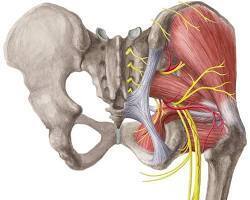
Hip extension is the movement of bringing your thigh backward relative to your pelvis.
You use it when you walk, run, climb stairs, stand up and drive your leg backward.
It's also part of many lifting and athletic movements.
What happens when you walk?
Walking isn't just moving one foot in front of the other.
As you move through a step, your hip moves through different positions.
Near the end of the stance phase, the hip extends as your body moves forward and you prepare to bring the opposite leg through.
You don't need to consciously think about this during normal walking.
Your body handles it automatically.
But if hip movement is limited or uncomfortable, your movement strategy can change.
Running increases the demand
Running requires your body to repeatedly absorb and produce force.
Your hips contribute to that process along with your knees, ankles and trunk.
This doesn't mean that limited hip extension automatically causes running injuries.
It means hip motion and strength can be relevant pieces of a runner's overall movement assessment.
The same principle applies to athletes in other sports.
Hip extension matters when you lift too
Stand up from a chair.
Climb a step.
Perform a deadlift.
Drive your hips forward after the bottom of a squat.
These tasks all involve the hips producing force as they extend.
Your glutes are important contributors, but they're not working alone. The muscles around your trunk and lower extremities also contribute to controlling the movement.
What if your hip doesn't extend very well?
Your body still has to move.
You may change your stride.
You may rotate your pelvis differently.
You may alter how your low back moves.
You may simply shorten the movement.
None of those strategies is automatically a problem.
The question is whether the movement limitation is meaningful for you.
Does it affect your symptoms?
Does it limit your performance?
Does it prevent you from doing something you want to do?
That's where clinical reasoning comes in.
More hip extension isn't always better
This is another important distinction.
The goal isn't to maximize every measurement.
You don't need the most hip extension possible.
You need enough usable movement for the activities you care about, combined with the strength and control to use it.
Someone training for a marathon may have different demands from someone whose main goal is comfortably walking the dog.
Someone recovering from back pain may temporarily need a different strategy while symptoms settle.
How might we address it?
If limited hip extension is relevant to your presentation, treatment may include mobility work, strengthening, movement retraining or progressive activity.
Sometimes hands-on treatment may be useful as part of the process.
But the long-term objective isn't simply to make your hip move farther on a treatment table.
It's to help you use that movement during walking, lifting, running or whatever else matters to you.
Think function, not just flexibility
A joint can have a certain amount of available motion, but that doesn't automatically mean you can use it effectively under load.
That's why mobility is only one part of the picture.
Strength, endurance, coordination and confidence matter too.
If you're dealing with back pain, looking at hip extension may help us understand part of how you're moving.
But it should be one piece of the evaluation, not an automatic explanation for your symptoms.