You come in because your ankle hurts, so why would a clinician ask you to squat, balance on one leg, or move your hip?
Because the painful area is only one part of the movement involved in walking, climbing stairs, running, and sport.
That doesn't mean the problem must originate somewhere else. The ankle still deserves a direct assessment. Looking at the surrounding joints can provide additional information when it helps explain your symptoms or functional limitations.
Walking and running involve the whole leg
Your foot adapts to the ground, your ankle moves as your body progresses forward, and your knee and hip help manage movement and loading.
During a single-leg task, the body must coordinate balance and control across several joints. A limitation in one area may change how you perform the task, but the effects vary from person to person.
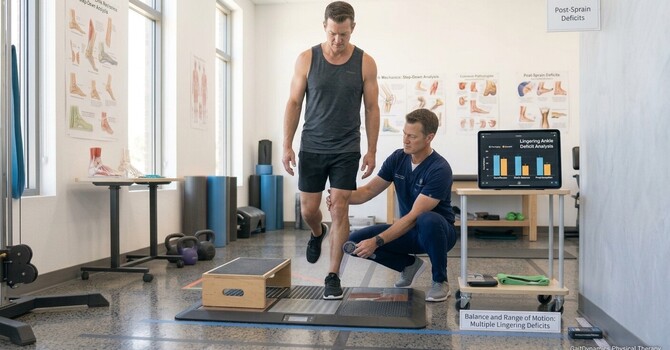
For example, after an ankle sprain, someone may regain basic walking but still struggle with single-leg balance or changing direction. The ankle may need attention, and assessing the knee and hip during functional movement can help show how the person currently manages those demands.
What might the evaluation include?
The assessment begins with your history and symptoms. A clinician may ask how the problem started, whether you've had previous sprains, what activities aggravate it, and whether the ankle feels stiff, weak, painful, or unstable.
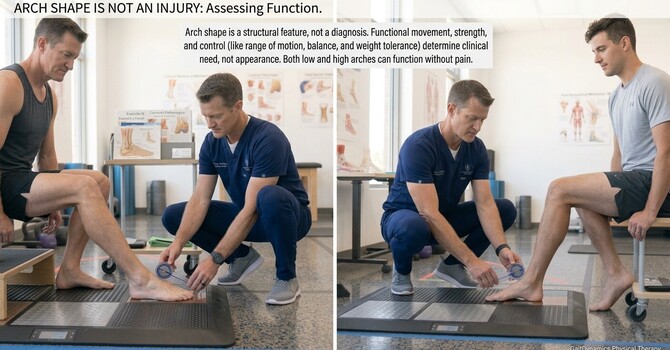
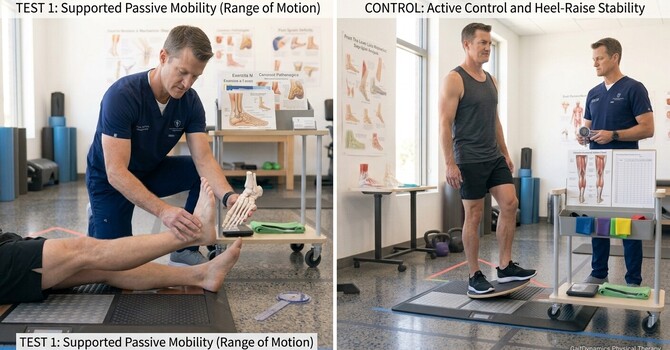
The ankle itself may be assessed for swelling, range of motion, strength, and tenderness. Depending on the presentation, functional tests may include walking, heel raises, single-leg balance, a step-down, or other appropriate tasks.
The clinician may also examine knee and hip strength or movement control if those findings could be relevant. More demanding activities should only be tested when they are appropriate for your condition and stage of recovery.
Why look beyond the painful spot?
The purpose is to gather useful information, not to find something wrong with every joint.
If ankle mobility is limited and affects a squat, that may be worth addressing. If recurrent sprains are accompanied by balance difficulties, rehabilitation may need to focus on ankle strength and sensorimotor control. If another finding doesn't relate to the symptoms or functional goal, it may not need to be a priority.
A movement difference doesn't automatically explain pain. The clinician must consider the full history, examination findings, and response to activity.
The findings should shape the plan
Depending on the problem, care may include mobility exercises, strengthening, balance training, activity modification, or a gradual return to more demanding movements.
If symptoms suggest a fracture, significant ligament injury, tendon problem, or another condition requiring additional medical care, referral or further investigation may be necessary. Severe pain, major swelling, deformity, or inability to bear weight after an injury deserves prompt assessment.
The plan should be specific to your needs and should be reassessed as your function changes.
Connect the evaluation to your life
Perhaps you want to walk longer distances, get back to running, return to a sport, or simply trust your ankle on uneven ground. Those goals help determine which movements and capacities matter most.
At Optimal Health, the aim is to understand your foot or ankle symptoms, examine relevant movement and functional limitations, and use the findings to guide an individualized approach.
CTA: If foot or ankle symptoms are keeping you from walking, exercising, or participating in activities you enjoy, schedule an evaluation to discuss your goals and determine which findings may help guide your care.