You sprained your ankle months ago. The swelling went down, and you can walk again. But your ankle still feels stiff when you squat, go downstairs, or try to return to exercise.
Sometimes it feels as though you never quite got your full range of motion back. Other times, the ankle moves reasonably well but doesn't feel reliable when you change direction or walk on uneven ground.
These lingering symptoms are worth paying attention to.
Recovery can involve more than pain and swelling
An ankle sprain usually involves injury to one or more ligaments that help support the joint. The severity varies, and recovery isn't identical for everyone.
As the initial pain and swelling settle, some people still have reduced dorsiflexion, weakness, balance difficulties, or discomfort with higher-demand activities.
Others experience recurrent episodes of the ankle giving way. Persistent instability can affect confidence and make sport or uneven-ground walking more difficult.
Being able to walk around the house is a positive step, but it doesn't necessarily mean the ankle has regained everything needed for running, jumping, or quick changes of direction.
Why might stiffness persist?
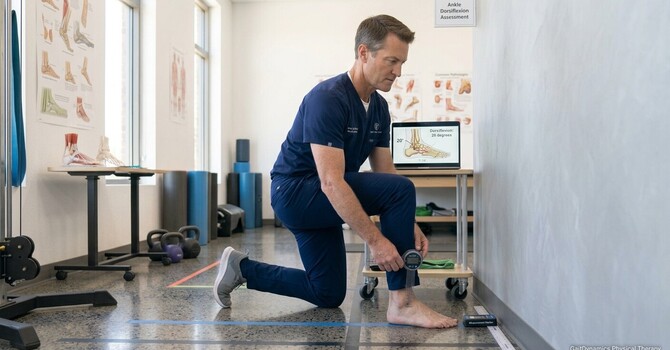
The reason depends on the injury and the current findings. Reduced motion may relate to joint mobility, calf flexibility, swelling, pain, or changes following a period of reduced activity.
Sometimes the sensation of stiffness is present even when the measured range of motion is relatively good. In that case, simply stretching harder may not address the issue.
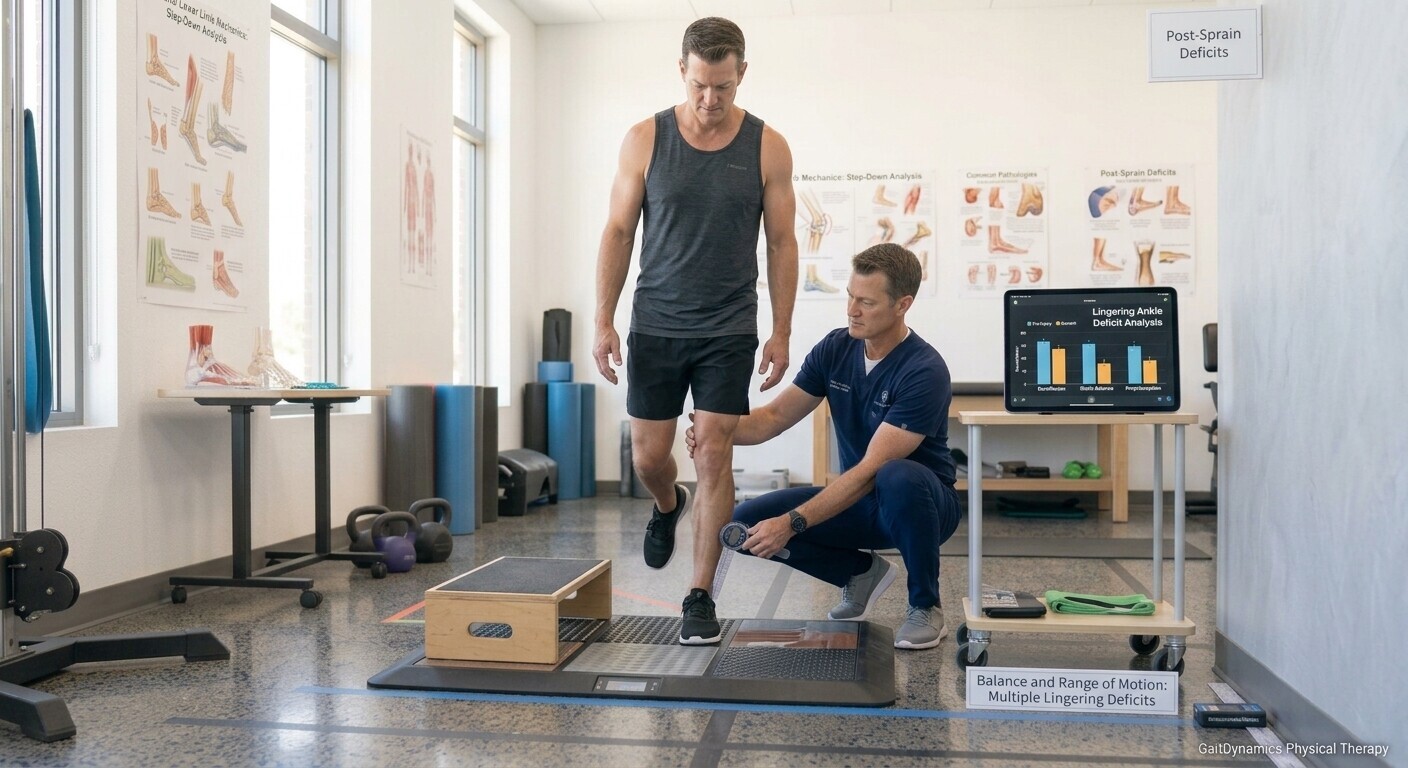
A previous sprain can also leave deficits in balance, strength, or the ability to respond to unexpected movement. These factors matter when your ankle needs to support you on uneven ground or during sport.
Persistent pain, marked swelling, locking, or an inability to bear weight should not be dismissed as routine post-sprain stiffness. Those symptoms warrant medical evaluation.
What should an evaluation examine?
A clinician may ask how the injury happened, how many times you've sprained the ankle, and which activities still feel difficult.
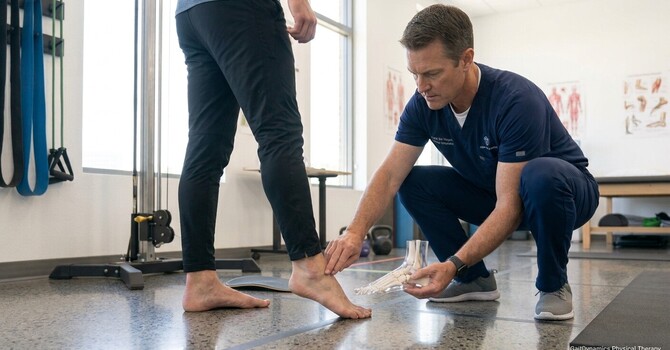
The physical examination may include swelling, ankle range of motion, calf strength, balance, and functional tasks such as a heel raise or step-down. More demanding tests may be appropriate when your symptoms and recovery stage allow.
The assessment may also include the knee and hip, particularly if balance and control during single-leg tasks remain limited.
These findings help determine whether the main priority is mobility, strength, balance, confidence with loading, or further medical assessment.
Rehabilitation should match what you're returning to
For some people, a plan may start with comfortable range-of-motion work and basic strengthening. Others may need more challenging balance exercises, hopping, landing, or sport-specific progression as they recover.
The sequence depends on the injury, symptoms, and functional demands. Repeating ankle circles alone may not prepare someone for cutting during basketball, just as advanced jumping drills may be inappropriate when the ankle is still painful and swollen.
Reassessment helps determine whether the plan is improving the things that matter.
Don't let an old sprain define your activity
If you're still avoiding hikes, exercise classes, running, or sports because your ankle doesn't feel right, an evaluation may help clarify what is holding you back.
At Optimal Health, the focus is on understanding the current limitations and developing care that matches your goals rather than treating the injury as though it happened yesterday.
CTA: If your ankle still feels stiff, weak, or unreliable after an old sprain, schedule an evaluation to identify the limitations that may be affecting your recovery and activity.