If your ankle is stiff, should you be concerned about your knee or hip?
Possibly, depending on your symptoms and what happens when you move. The joints of the lower body work together, and changing the available motion at one joint can influence how you complete a task.
But the phrase “up the chain” can be misleading if it suggests that every ankle restriction creates a predictable problem in the knee or hip.
Human movement is more adaptable than that.
Your leg works as a connected system
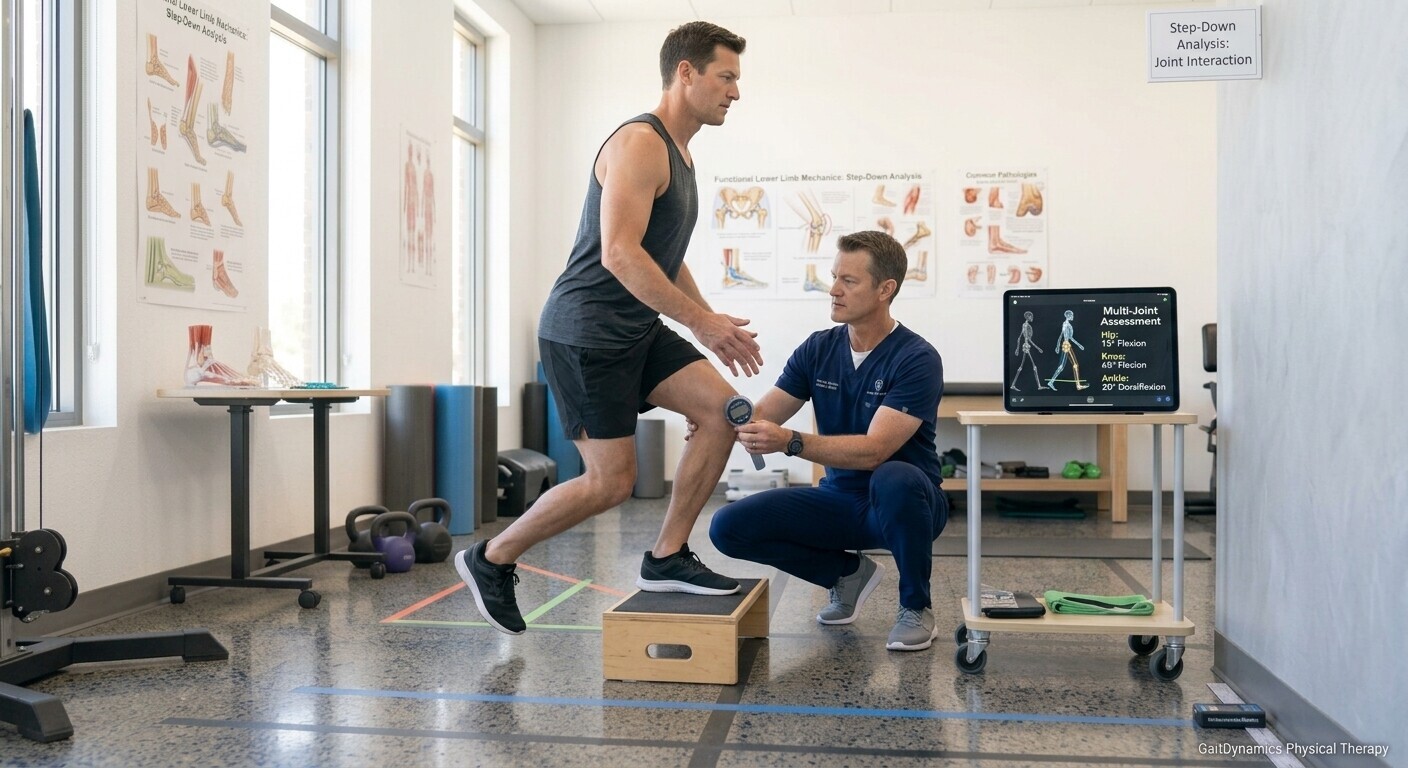
During a squat, your ankle allows the shin to move forward while your knee bends and your hip moves to lower your body. Your foot provides contact with the ground, and muscles throughout the leg help manage balance and control.
Walking and running involve similar coordination, although the demands change with speed, terrain, stride, and fatigue.
If ankle movement is limited, you may adjust how you perform the activity. For example, you might lift your heels during a squat, change your stance, or move your trunk differently.
Those changes can influence the demands placed on other parts of the leg. Whether they matter clinically depends on the task and the person.
Does a stiff ankle cause knee pain?
Not necessarily.
A relationship between two findings doesn't prove that one caused the other. Someone can have limited ankle mobility without knee pain. Another person can have knee pain despite having adequate ankle motion.
The knee symptoms may relate to several factors, including training load, strength, a specific knee condition, previous injury, or other health considerations.
That is why an assessment should start with the complaint and history rather than assuming the ankle is the source.
How do you know whether the ankle matters?
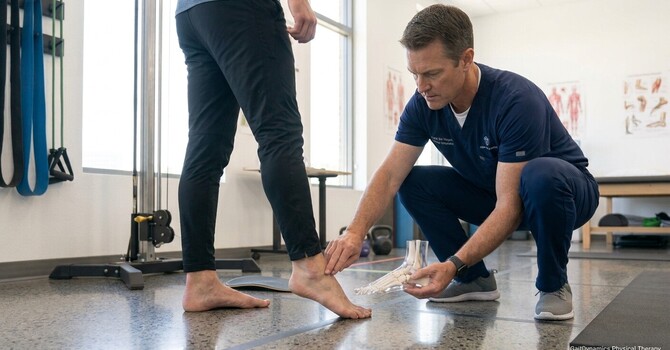
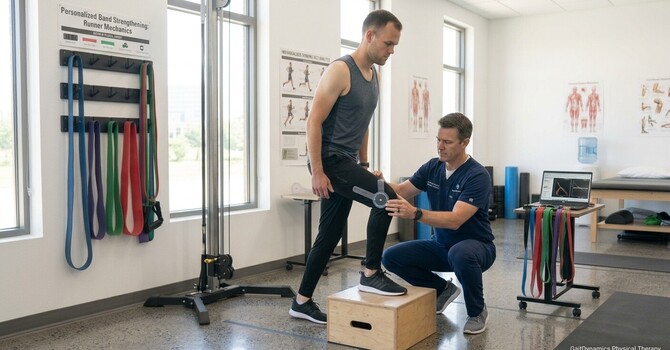
A clinician may compare ankle motion between sides, check strength and balance, and observe the activity that brings on symptoms. If knee pain occurs during a squat, for example, the assessment may examine how the foot, ankle, knee, and hip contribute to that movement.
A clinician may also modify the task to see whether changing the ankle position or available range affects the symptoms or performance.
That response can provide useful information, but it is only one part of the clinical picture. A change in movement doesn't by itself prove the original cause of pain.
The aim is to identify limitations that are both present and relevant, not to find something unusual in every joint.
What might treatment involve?
If the assessment identifies a meaningful ankle mobility limitation, care may include appropriate mobility work. If the main issue is strength, balance, or tolerance for repeated loading, those areas may need attention instead.
Some people benefit from a combination of approaches. Others need more focused treatment for a specific ankle or knee condition.
If the ankle has been repeatedly sprained or feels unstable, rehabilitation may need to address balance and functional control as well as range of motion. Persistent symptoms following an injury deserve a proper assessment.
Follow the evidence from your own movement
The most useful question isn't simply whether your ankle moves differently. It's whether that difference affects your ability to walk, squat, run, work, or participate in the activities you value.
At Optimal Health, a functional assessment considers the painful area and the surrounding joints when relevant, then uses those findings to guide an individualized plan.
CTA: If ankle stiffness and knee or hip discomfort seem to occur together, schedule an evaluation to clarify which findings may be relevant and what deserves attention first.