Have you ever tried to squat and felt your heels lift off the floor? Maybe one ankle feels stiffer when you walk downstairs, or you notice a difference between your legs during exercise.
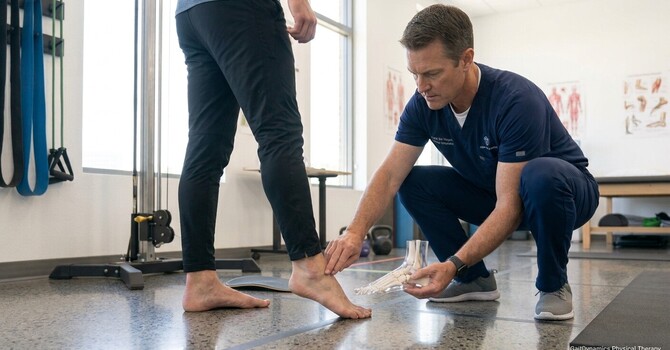
One possible factor is ankle dorsiflexion: the movement that allows your shin to travel forward over your foot while the foot remains on the ground.
This motion is important in many everyday activities, but limited dorsiflexion doesn't automatically explain pain or mean you need to stretch your calves.
Where do you use ankle dorsiflexion?
You use dorsiflexion when lowering into a squat, walking down stairs, moving forward over your foot during walking, and absorbing and transferring forces during running.
The amount of motion required varies with the task. A deep squat may require more ankle movement than standing from a high chair. Running speed, terrain, footwear, and individual movement strategies can also influence what the ankle needs to do.
People naturally differ in their available range of motion. The relevant question is whether your ankle can move comfortably enough for the activities you want to perform.
Why might ankle motion be limited?
Several factors may contribute, including calf muscle stiffness, joint restrictions, swelling, previous ankle injuries, or changes following a period of immobilization.
After an ankle sprain, for example, someone may regain the ability to walk but still notice stiffness during deeper squats or when moving quickly.
The sensation of tightness alone doesn't tell you which structure is responsible. It also doesn't prove that the ankle joint itself is restricted.
Does limited dorsiflexion change your squat?
It can influence how you perform a squat, but people use different strategies to complete the same task.
Someone with less available ankle motion may lift the heels, change their stance, alter squat depth, or lean the trunk differently. Some of these adjustments may be perfectly workable for that individual. Others may make the desired task more difficult or uncomfortable.
There isn't one ideal squat position that everyone must achieve. The goal is to determine whether the available movement is adequate for your purpose and whether it relates to any symptoms.
The same principle applies to running and walking. A mobility measurement should be interpreted alongside your function, symptoms, and overall movement pattern.
Should you stretch your calves?
Maybe, but stretching isn't the automatic answer.
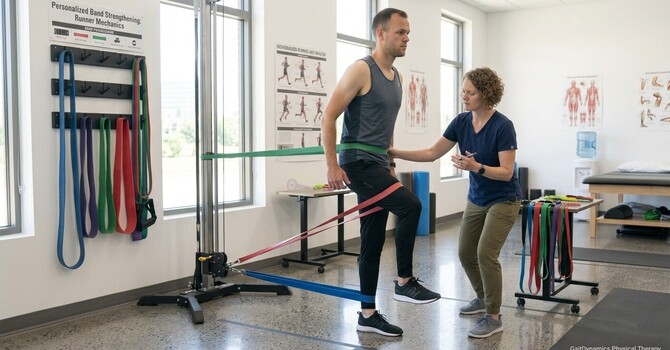
If calf flexibility is contributing to a relevant limitation, targeted mobility work may help. If the issue relates to joint motion, pain, swelling, or another factor, stretching alone may not address it.
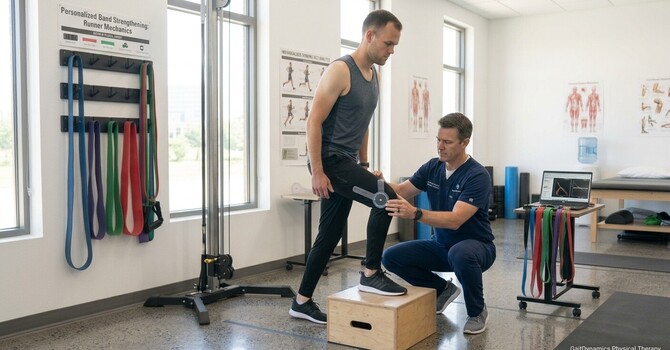
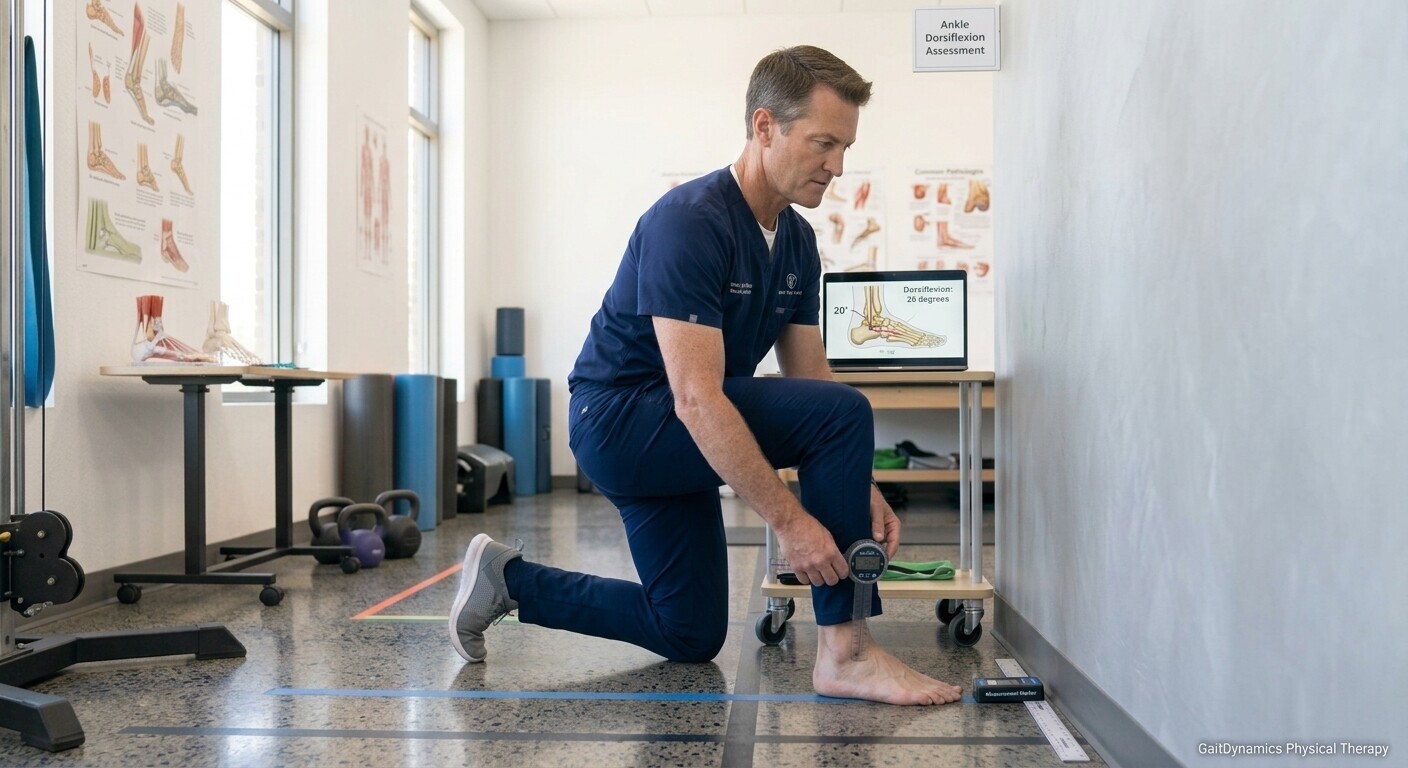
An assessment may compare ankle movement between sides, examine calf strength, and observe a squat, step-down, or walking task. The clinician can then determine whether mobility work, strengthening, balance training, or another approach fits the findings.
If ankle pain or stiffness began after a significant injury, or you have substantial swelling or difficulty bearing weight, seek appropriate medical evaluation rather than forcing the joint through a stretch.
Make mobility useful
If your goal is a comfortable squat, a longer walk, or a return to running, the plan should help you perform that activity rather than chase a number on a mobility test.
At Optimal Health, an evaluation can help determine whether ankle dorsiflexion is a meaningful limitation for you and how it fits into the rest of your movement and function.
CTA: If ankle stiffness is limiting squats, walking, or running, schedule an evaluation to find out whether mobility is part of the picture and what approach may help.