When your knee hurts during running, you may wonder whether you should stop completely or keep training through it.
Neither option is automatically right for every situation.
The decision depends on the cause of the pain, its severity, your current function, and how your knee responds to different levels of activity.
When reducing activity makes sense
If every run makes your symptoms worse, temporarily reducing the distance, speed, hills, or frequency may help lower the demands on your knee.
Relative rest means adjusting the activity that aggravates symptoms while maintaining other suitable activities when possible. It isn't the same as forcing yourself to remain completely inactive.
However, if you have significant swelling, severe pain, a locked knee, instability, inability to bear weight, or symptoms after a substantial injury, seek medical assessment before trying to manage the problem through training adjustments alone.
What does progressive loading mean?
Progressive loading means gradually rebuilding the demands your body needs to tolerate.
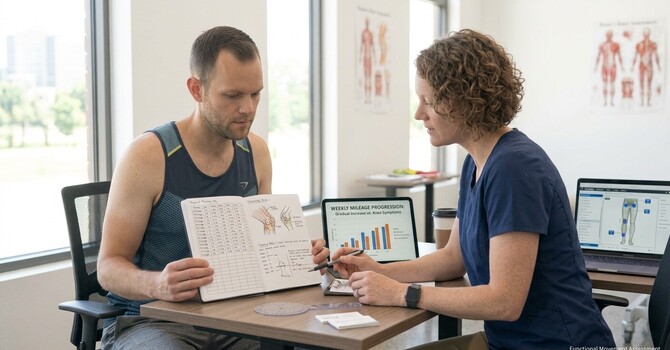
For a runner, that might eventually involve comfortable walking, a walk-run session, longer running intervals, or a return to more demanding workouts. The starting point and progression depend on the condition and the person's response.
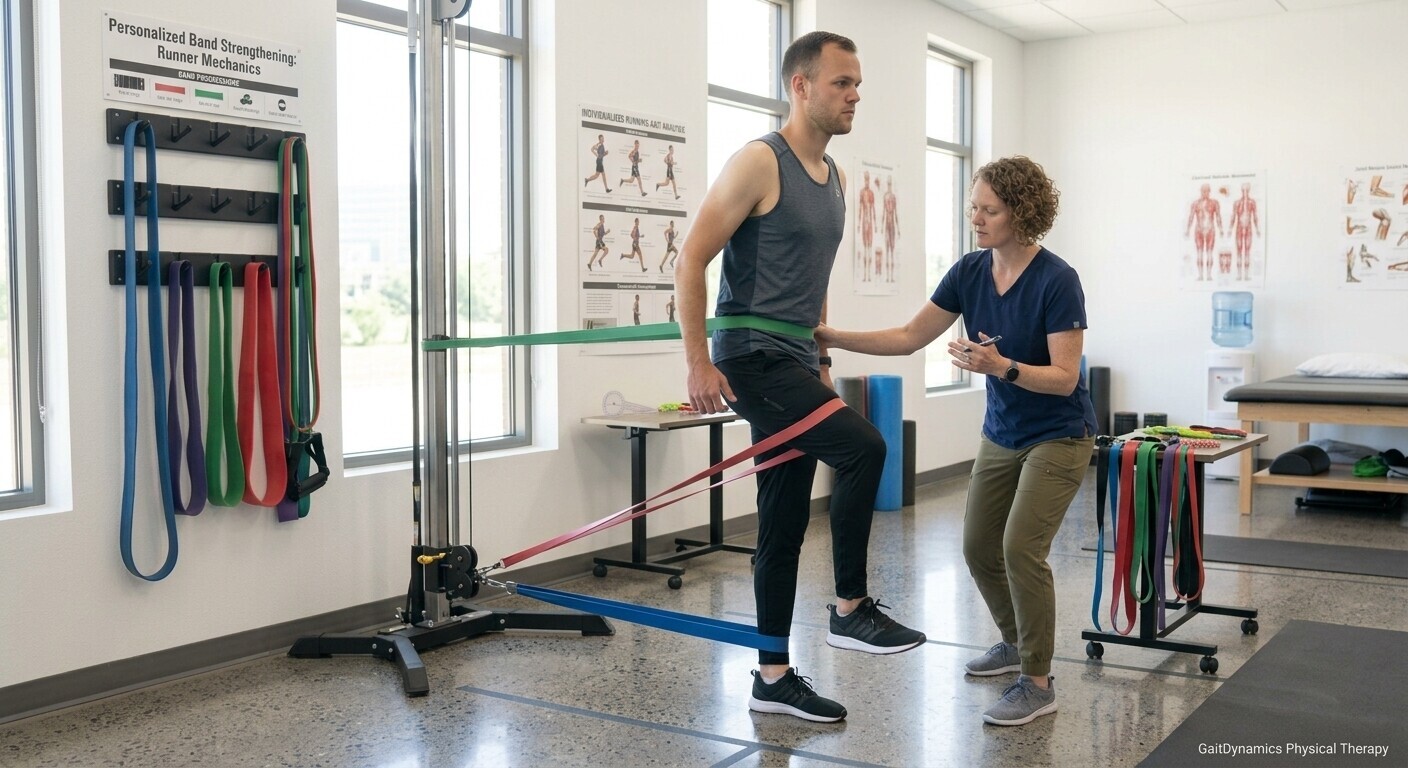
Strengthening may also be appropriate. Depending on the findings, a rehabilitation plan may include exercises targeting the quadriceps and hip muscles, alongside activity adjustments and other individualized strategies.
The aim is to build capacity in a way that relates to the activity you want to return to, rather than simply collecting exercises.
How do you know whether the load is appropriate?
Pay attention to what happens during the activity, afterward, and the following day.
Is pain mild and stable, or does it increase as you continue? Does your stride change? Do symptoms settle reasonably soon, or is the knee significantly more painful later?
These observations can help guide decisions, but there is no single pain score or universal progression rule that is appropriate for every knee condition. Some diagnoses require more specific restrictions or medical guidance.
If a particular level of activity repeatedly causes a substantial flare, the plan may need to be adjusted.
Why complete rest may not be the long-term answer
Rest can be useful during a flare or when a specific injury requires protection. But if your goal is to return to running, you eventually need to rebuild the strength and tolerance required for running.
The timing matters. Starting too aggressively can aggravate symptoms; staying away from the relevant activity indefinitely may leave you unprepared for its demands.
A structured plan balances symptom management with gradual progression. It also allows for reassessment when the knee isn't responding as expected.
Build back toward your actual running goals
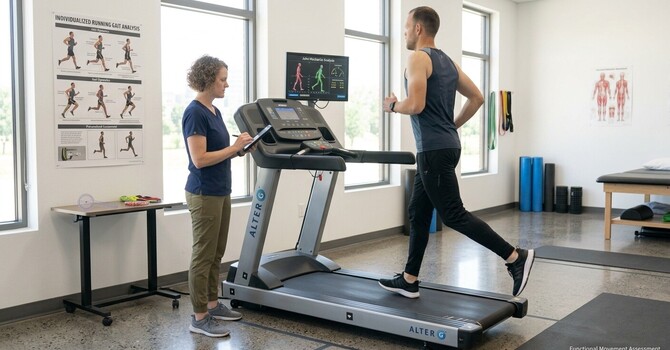
A runner preparing for a short recreational jog has different demands from someone training for a half-marathon. The plan should reflect the distance, pace, terrain, and schedule you're working toward.
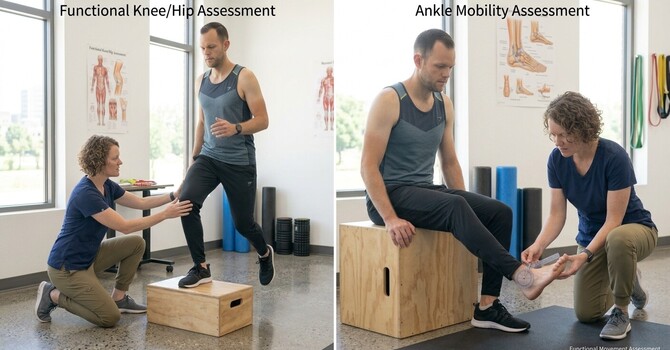
At Optimal Health, an individualized approach considers the symptoms, relevant movement and strength findings, and the demands of your chosen activity. As your tolerance changes, the plan can be reassessed and progressed.
CTA: If you're caught between stopping running and pushing through knee pain, schedule an evaluation to help clarify what activity is appropriate now and how to plan your next steps.