When a runner develops knee pain, it's easy to focus on one question: Is the problem in my knee, hip, or foot?
The most useful answer usually starts with the symptoms and history, not a guess about which joint is responsible.
The knee needs to be assessed directly. At the same time, running involves coordinated movement of the hip, knee, ankle, and foot, so the surrounding areas may also provide relevant information.
Start with the symptoms
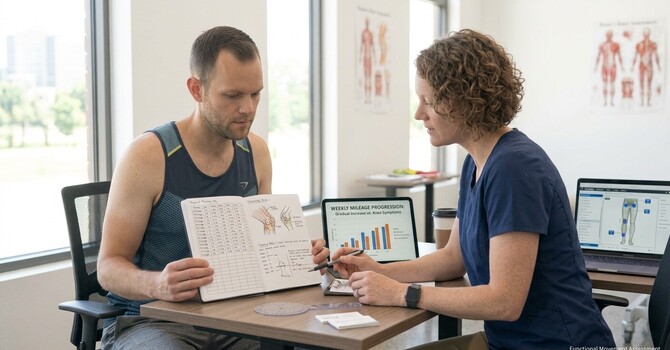
Where do you feel the pain? Does it appear around the kneecap, along the joint line, near a tendon, or somewhere else? Did it develop gradually, or did it follow a specific injury?
Does it occur only during running, or also during stairs, squats, and walking? Is there swelling, locking, or a sense of instability?
These questions help narrow the possibilities and determine whether the presentation fits a common running-related pain pattern or requires further medical evaluation.
What can the hip tell us?
The hip muscles contribute to controlling the leg during running and other single-leg activities. Hip strength and movement may be relevant in some runners with patellofemoral pain.
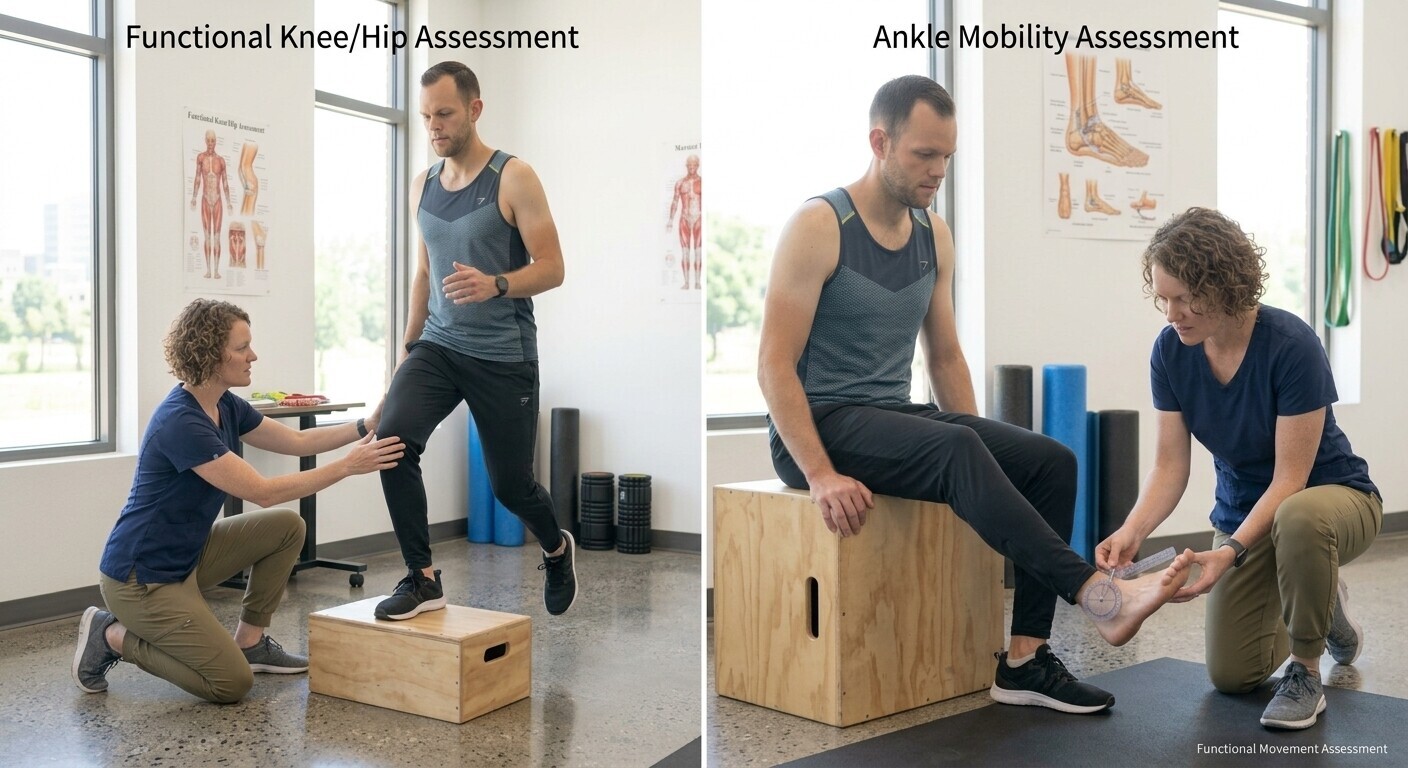
If testing identifies a meaningful strength limitation or difficulty tolerating repeated single-leg loading, hip-focused exercises may be part of the plan. But a visible difference in hip or knee movement doesn't automatically mean the hip caused the pain.
The findings need to fit the symptoms and the overall assessment.
What about the foot and ankle?
The foot adapts to the ground, while the ankle moves as your body progresses over the planted foot. These motions contribute to the demands of running.
Foot comfort, ankle mobility, previous sprains, footwear, and training surface may all be worth discussing when relevant. However, foot shape alone doesn't tell us whether someone needs an orthotic, a different shoe, or a change in running technique.
Those decisions should be based on the person's presentation and response to appropriate testing or a trial of an intervention.
Don't skip the knee itself
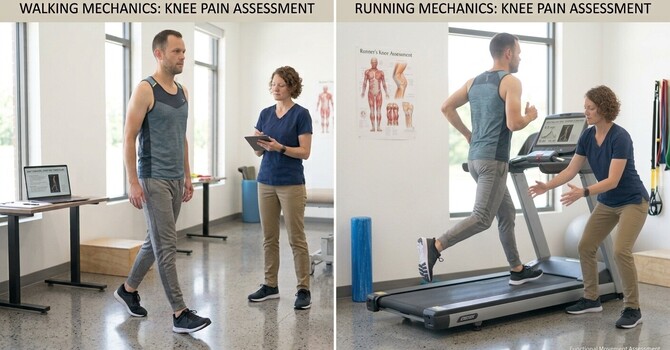
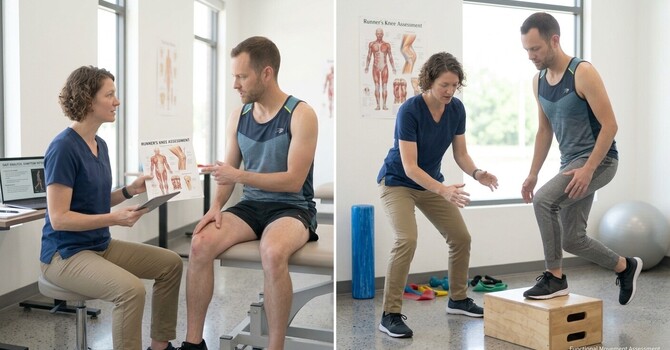
An evaluation may include knee range of motion, swelling, strength, and functional tasks such as a squat or step-down. The clinician may also assess hip strength, ankle mobility, balance, and running mechanics when indicated.
This isn't about finding a flaw in every part of the body. It's about gathering enough information to understand which factors may be contributing and which ones are less relevant.
If symptoms suggest a significant injury or another condition that needs medical assessment, that takes priority over routine movement retraining.
Find the explanation that fits your case
Two runners can have pain in the same part of the knee but need different plans. One may need training-load changes and progressive strengthening. Another may need further assessment for an injury before returning to running.
A thoughtful evaluation helps distinguish those situations instead of applying the same exercises or footwear advice to everyone.
CTA: If knee pain is interrupting your training, an evaluation can help determine what needs attention first and how your plan can reflect your symptoms, current capacity, and running goals.