Should you make your feet more flexible or stronger?
The answer depends on what your feet need to do.
Mobility and stability are sometimes discussed as if they are competing goals. In reality, the foot needs both the ability to move and the ability to manage load. The important question is which capacity, if any, is limiting your function.
What does foot mobility mean?
Mobility refers to the movement available at the joints and the ability to use that movement during a task.
Your foot and ankle need to adapt as you walk over different surfaces, lower into a squat, or move forward during running. The amount of motion required varies with the activity and the individual.
Limited motion can matter when it prevents you from performing a desired task comfortably. But having more range of motion isn't automatically better. Flexibility that doesn't improve function or symptoms may not be useful.
What does foot stability mean?
Stability is the ability to control movement and manage the demands placed on the foot and ankle.
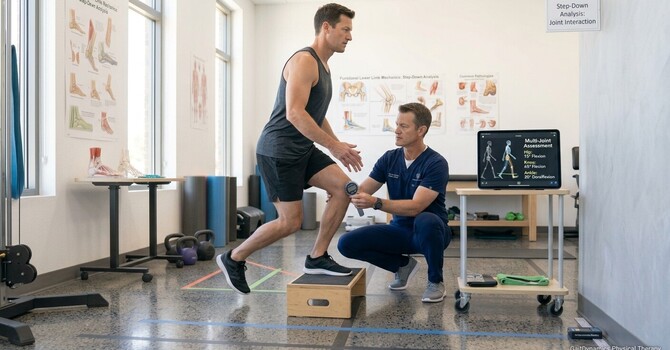
Muscles, tendons, ligaments, joint structure, balance, and coordination all contribute. During a single-leg task, your foot and ankle help you maintain support while the rest of the body moves.
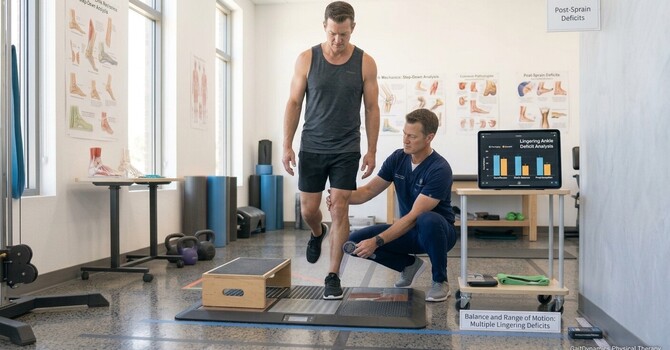
If you experience repeated ankle sprains or your ankle frequently feels as though it may give way, strength and balance may be important parts of the assessment.
That doesn't mean the foot should be held rigidly. Stability is not the same as eliminating movement. The foot needs to adapt while remaining capable of supporting the task.
How can you tell which one you need?
Start with the activity that's difficult.
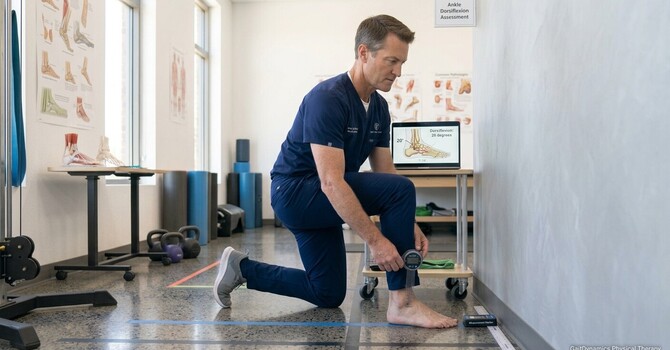
If your ankle feels restricted during a squat, a clinician may assess dorsiflexion and determine whether the available motion is relevant. If your main problem is that the ankle feels unreliable on uneven ground, balance and strength may deserve more attention.
If your arch or the bottom of your foot hurts during longer walks, the evaluation should also consider the location and pattern of symptoms rather than assume that mobility or stability is the only issue.
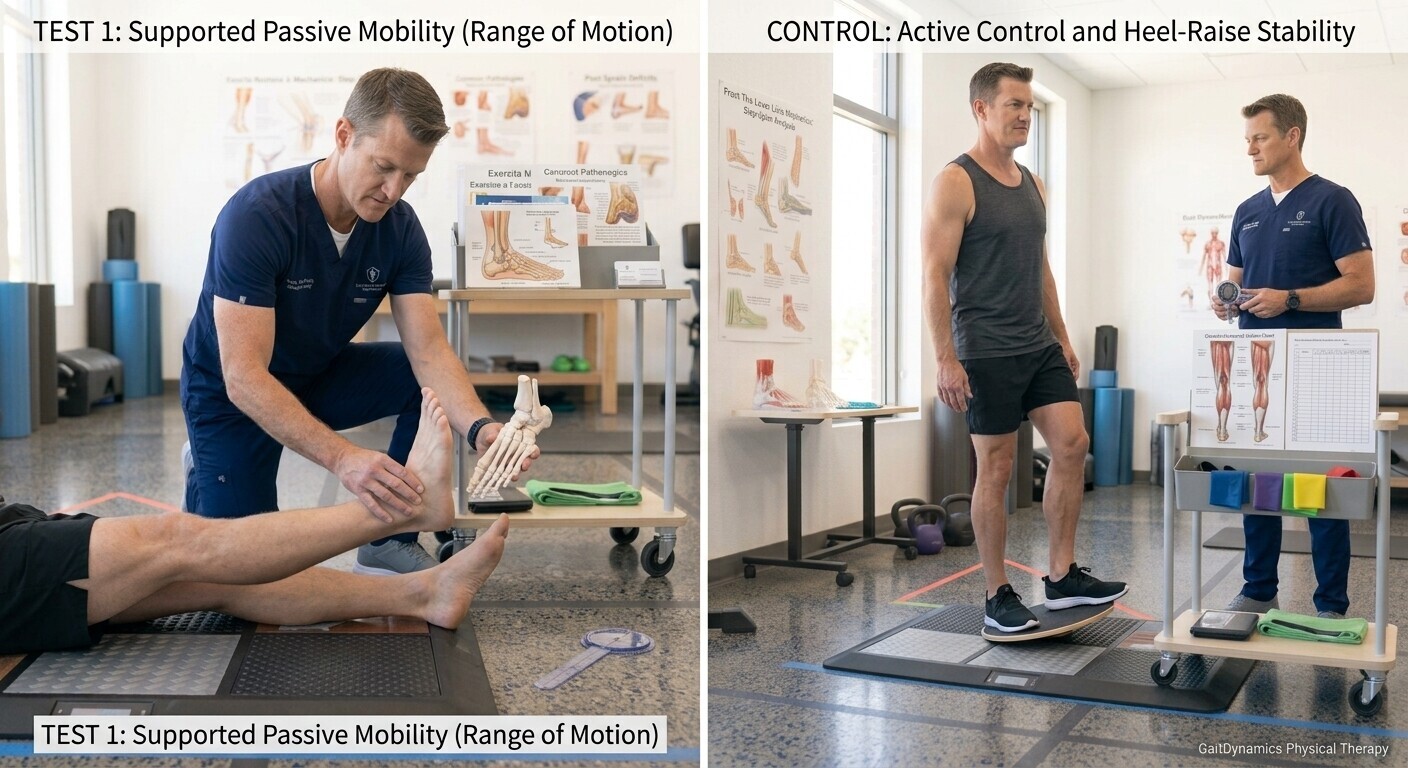
The clinician may assess range of motion, calf strength, heel raises, balance, and functional movement. The findings should be interpreted together, not used as isolated proof that one muscle or joint is responsible.
Your plan may need both
Depending on the assessment, a plan may combine mobility work, strengthening, balance training, and gradual exposure to the activities that matter to you.
For example, a person returning to hiking after an ankle sprain may need to rebuild balance and strength while also addressing a relevant mobility restriction. Someone with adequate mobility may gain more from progressive strengthening than from additional stretching.
The plan should change as your function improves. The aim is to develop the capacities your activities require, not to spend endless time trying to perfect a foot position.
Focus on what your feet need to do
Your needs may be different if you stand all day at work, lift weights, run, hike, or play a court sport. A useful evaluation connects the physical findings to those real-world demands.
At Optimal Health, a functional approach helps determine whether mobility, strength, balance, or a combination of factors deserves attention.
CTA: If your foot or ankle feels stiff, weak, or unstable during everyday activity or exercise, schedule an evaluation to better understand which limitations may be relevant to your goals.