Why Does Your Low Back Hurt After 18 Holes? What Golfers Should Know
You feel fine on the first tee.
By the 15th hole, your lower back feels tight. By the time you reach the clubhouse, bending over to take off your shoes is suddenly harder than it should be.
If that sounds familiar, you’re not alone. Low back pain is one of the most common musculoskeletal problems reported by golfers, and the repeated demands of the golf swing can place substantial stress on the lumbar spine.
But there’s an important distinction: hurting after 18 holes doesn’t automatically mean your swing is “wrong,” your back is damaged, or one particular muscle is to blame.
Often, the bigger issue is how much repeated load your body can comfortably handle and how well your hips, trunk, and other parts of the body share that workload.
Why can golf make your low back hurt?
A golf swing is a fast, coordinated movement involving the hips, pelvis, trunk, shoulders, and arms. Your lower back has to help transfer force between those regions while controlling rotation and maintaining your position over the ball.
That happens once.
Then again.
And again.
Over the course of 18 holes, you may perform dozens of full swings along with practice swings, putting, bending over to pick up a ball, walking, carrying or pulling equipment, and repeatedly getting into and out of your setup position.
The golf swing itself places significant mechanical demands on the lumbar spine. Research has also identified potential relationships between low back pain and factors involving trunk muscle activity, pelvic and trunk rotation, and hip strength or mobility. However, a recent systematic review found that the evidence connecting specific swing biomechanics to low back pain remains limited and conflicting.
In other words, there probably isn't one universal “bad swing” responsible for every golfer's back pain.
Your hips and mid-back may matter more than you think
Your lower back doesn't work in isolation.
To rotate efficiently during a golf swing, your body has to coordinate movement across several regions. If one area isn't contributing as well as it normally does, another area may have to handle more of the movement or load.
For example, limited hip or thoracic-spine movement may change how a golfer rotates through the swing. That doesn't mean stiff hips automatically cause back pain. Bodies are more complicated than that.
But it does give a clinician an important question to investigate:
Is the painful area actually the area doing too much work?
That's one reason a movement-based assessment can be more useful than simply treating the spot that hurts. Optimal Health's clinical materials emphasize evaluating the full movement pattern rather than focusing exclusively on the painful area.
Why does it sometimes feel worse on the back nine?
Fatigue may be part of the picture.
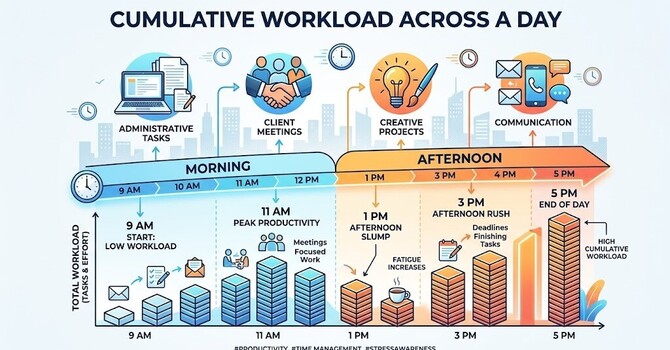
The first few swings of a round and the 50th or 60th swing don't necessarily happen under the same conditions. As the round progresses, you're accumulating walking, repeated swings, prolonged periods in a semi-flexed setup position, and other physical demands.
If your capacity doesn't match the demands of the round, symptoms may gradually become more noticeable.
Think of it like this:
The first nine holes may reveal the movement. The second nine may reveal your capacity.
That doesn't necessarily mean your back muscles are “weak.” It may mean your current combination of mobility, strength, coordination, conditioning, recovery, and golf volume isn't matching what you're asking your body to do.
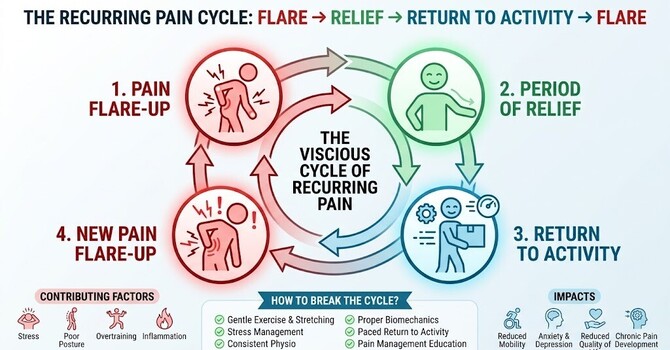
This distinction matters because simply stretching your back or taking a few days off may not address the reason the problem keeps returning.
What about your golf swing?
Your swing is worth considering, but be careful with simple explanations.
It's tempting to hear that a particular swing flaw is the “number one cause” of low back pain. Current research doesn't justify that level of certainty. A 2024 systematic review found potential biomechanical associations with low back pain but concluded that the evidence was limited, conflicting, and affected by methodological weaknesses.
That means golfers shouldn't automatically assume they need to rebuild their entire swing.
Instead, look at the bigger picture:
-
Does your back hurt only after playing, or also during everyday activities?
-
Does walking 18 holes bother you more than riding?
-
Does the pain appear during the backswing, downswing, or after the round?
-
Do your hips rotate comfortably?
-
Can your upper back rotate without forcing the motion through your lower back?
-
Has your golf volume recently increased?
-
Are you returning to golf after time away?
-
Does the problem improve with rest but return every time you play?
Those details can help identify what your body is responding to.
What can you do before your next round?
You don't need a complicated pre-round routine.
The goal is to prepare your body for the movements you're about to ask it to perform rather than walking directly from the parking lot to the first tee and immediately trying to hit a maximum-effort drive.
A useful warm-up can include:
1. Get your hips moving.
Use controlled hip rotations, walking movements, or other dynamic mobility drills that feel comfortable.
2. Mobilize your upper back.
Your thoracic spine contributes to rotation, so gentle rotational movements can help prepare the trunk for the demands of the swing.
3. Progress your swings.
Start with easier swings and gradually increase your range and speed rather than making your first swing of the day a full-power driver.
4. Build golf-specific capacity.
If 18 holes consistently leave you hurting, don't only prepare by stretching. Strength and conditioning can help you tolerate the physical demands of golf.
5. Pay attention to patterns.
Notice when the pain begins and what movements make it better or worse. That information can be valuable during an evaluation.
When low back pain after golf deserves a closer look
Occasional muscle soreness after an unusually long or demanding day isn't necessarily concerning.
Persistent or recurring pain is different.
If your back hurts after nearly every round, gradually gets worse as you play, changes how you swing, limits your ability to walk or practice, or starts affecting everyday activities, it may be worth having it evaluated.
You should also seek prompt medical attention for concerning symptoms such as new significant leg weakness, loss of bowel or bladder control, numbness in the groin or saddle area, fever with severe back pain, or significant pain following major trauma.
The goal isn't simply to figure out which structure hurts.
It's to understand why your body is struggling with the demands of golf and whether there are modifiable factors involving movement, strength, coordination, workload, or recovery.
A better approach to golf-related back pain
At Optimal Health Chiropractic & Physical Therapy, the goal is not to automatically blame your golf swing or simply treat the area that hurts.
The clinic's approach emphasizes movement assessment, hands-on care when appropriate, rehabilitation, and progression toward the activities patients want to return to. Its materials specifically describe assessing the full movement pattern and combining chiropractic and rehabilitation approaches when appropriate.
For a golfer, that can mean looking at the entire chain: how the hips move, how the trunk rotates, how you control your movement, what happens as fatigue builds, and how your current physical capacity matches the demands of 18 holes.
Because the goal isn't to get you comfortable enough to finish one round.
It's to help you keep playing the game you enjoy.
CTA
If your low back consistently hurts after 18 holes, an evaluation can help determine whether the problem is related to movement, strength, workload, or another contributing factor. At Optimal Health, the assessment can be used to build a conservative care and rehabilitation plan around your symptoms and your goal of getting back on the course comfortably.