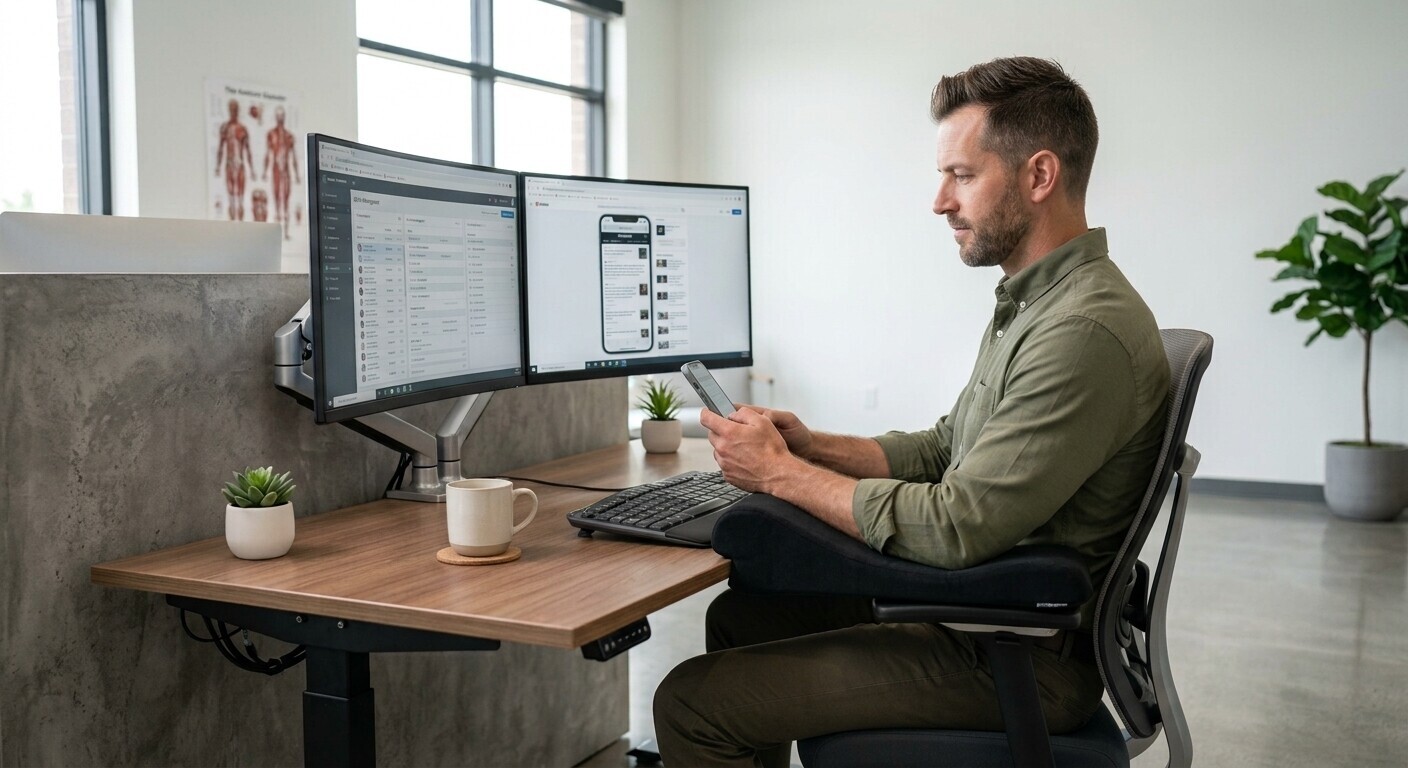
You check a few messages, scroll through social media, answer emails and look up to discover that your neck feels stiff.
If looking down at your phone brings on discomfort, you may have heard that your head is too far forward or that you need to stop using your phone with your head tilted down.
The position of your neck can influence how a task feels, but the explanation is not as simple as one bad angle.
Why can phone use make your neck uncomfortable?
Looking down changes the position of your head and neck. Holding that position while reading, typing or scrolling can place sustained demands on the muscles and other structures in the area.
Duration matters. A brief glance at your phone is different from spending a long period reading with few breaks.
Your symptoms may also be influenced by your overall activity level, previous neck discomfort, stress, fatigue, sleep and how well you tolerate the demands of the day.
That is why two people can use their phones in similar ways and have very different experiences.
Is “text neck” a diagnosis?
The term text neck is often used informally to describe neck discomfort associated with phone or device use. It doesn't identify one specific injury, and the label alone cannot establish why someone is hurting.
A forward head position or a period of looking down doesn't automatically mean damage has occurred.
The more useful questions are whether the position reliably brings on symptoms, how long you can tolerate it, whether your movement is limited and whether the discomfort affects other activities.
What can you change?
You don't need to hold your phone at eye level every second or rigidly pull your shoulders back.
Try a few practical adjustments:
-
Bring the phone a little higher when that feels comfortable.
-
Support your arms if holding the device makes your shoulders tense.
-
Change positions and take breaks during long periods of reading.
-
Use voice input or other options when extended typing aggravates symptoms.
-
Avoid repeatedly forcing your neck into a stretch to “undo” phone use.
The aim is to reduce prolonged strain and increase movement variety, not to make every phone interaction a posture exercise.
What if your neck still hurts?
If looking down consistently reproduces pain, a clinical assessment can help determine whether neck mobility, strength, endurance, shoulder function or another factor may be contributing.
A clinician may examine how your symptoms respond to different neck positions and whether you have signs that suggest nerve involvement or another condition needing further evaluation.
Your plan should match the findings. Some people may benefit from exercise and gradual increases in activity tolerance; others may need a broader assessment before starting a program.
If you develop new or progressive weakness, significant numbness, difficulty with balance or coordination, or severe symptoms following trauma, seek prompt medical evaluation. Sudden severe neck pain with neurological symptoms requires emergency assessment.
Make device use fit your life
Phones are part of work, family life, navigation and entertainment. You shouldn't have to avoid them entirely just because your neck sometimes feels uncomfortable.
If neck pain is limiting your ability to work, read or use your devices, Optimal Health can help assess how your neck responds to movement and daily demands. From there, you can make a plan based on your actual symptoms instead of worrying about one supposedly perfect posture.