You didn't fall. You didn't twist your knee. You can't remember doing anything unusual. Yet now your knee hurts when you walk, get up from a chair, or go up the stairs.
It's a frustrating situation because pain often feels as though something must have happened to cause it. But knee pain doesn't always begin with one clear injury.
Knee pain can build gradually
Your knee handles repeated demands throughout the day. Walking, climbing stairs, squatting, standing up, exercising, and working on your feet all place demands on the joint and surrounding muscles.
Sometimes symptoms develop after a change in those demands. You might have started walking more, returned to the gym, spent a weekend doing yard work, or taken on extra shifts at work. Even if no single activity seemed excessive, the total workload may have increased beyond what your knee was ready to tolerate.
Other times, your activity hasn't changed much at all. Strength, recovery, previous injuries, age-related changes, and other health factors may influence how your knee responds to everyday movement.
The key is that pain without a specific injury is still worth understanding. It doesn't automatically mean something is seriously damaged, but it shouldn't be dismissed either.
Where it hurts is one piece of the puzzle
Pain around the kneecap may behave differently from pain along the inside or outside of the knee, or pain that seems to come from deeper in the joint. Swelling, stiffness, catching, instability, and the activities that reproduce symptoms also provide useful information.
For example, pain around the front of the knee during stairs or squats may fit a patellofemoral pain pattern. Pain with swelling, locking, or a sense that the knee gives way may call for a different evaluation.
These patterns can guide clinical reasoning, but no single symptom tells the whole story. Several knee conditions can overlap, and some symptoms may originate outside the knee itself.
What should you do?
Start by noticing what has changed. Does the pain appear during a particular activity, after a certain amount of walking, or the morning after exercise? Does it settle with rest, or is it becoming more frequent?
Temporarily adjusting activities that clearly aggravate the pain may help, but avoiding all movement indefinitely is rarely a complete long-term plan. The appropriate next step depends on what is causing the symptoms and how much function you've lost.
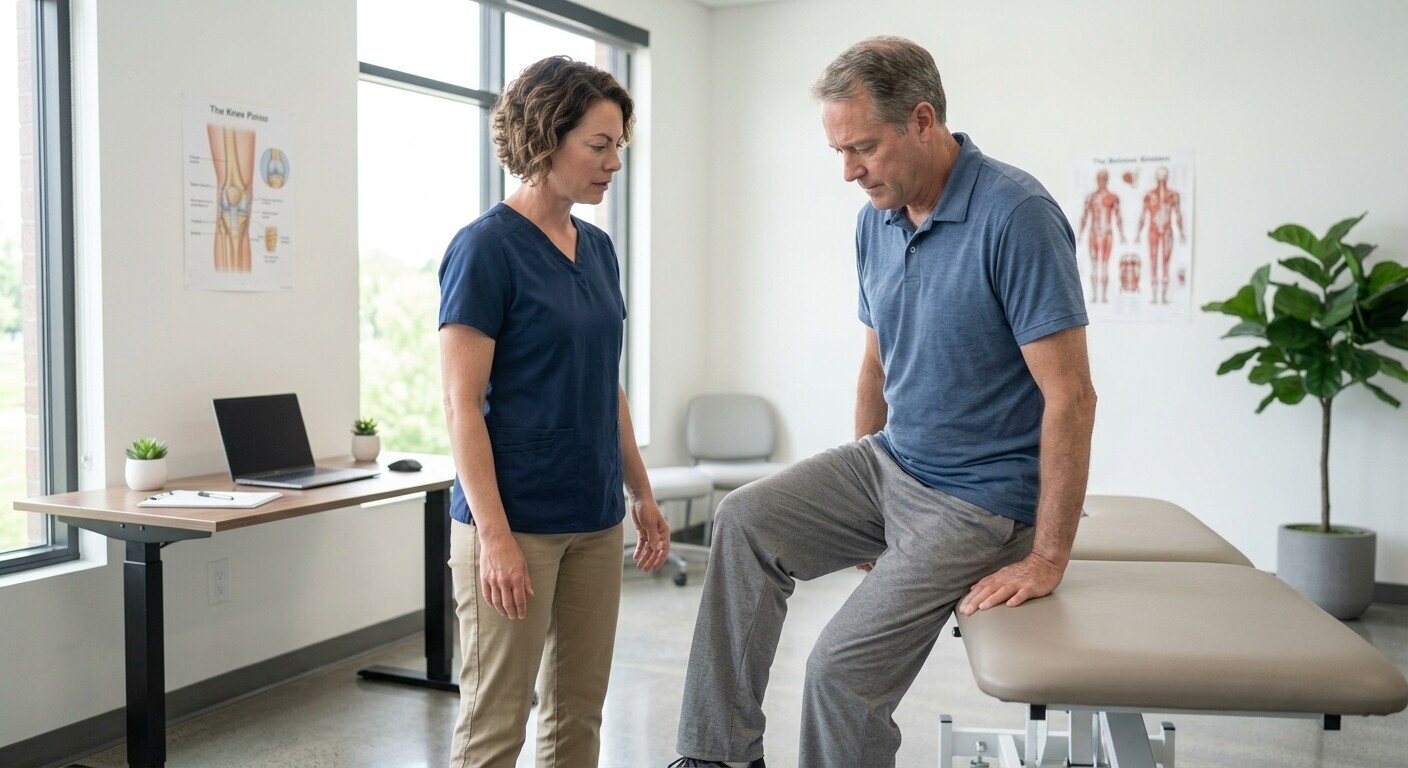
A clinician may assess knee motion, strength, swelling, walking, squatting, and other movements that reflect your daily demands. The examination also helps determine whether further medical evaluation is needed.
Seek prompt medical assessment if the knee becomes hot and markedly swollen, especially with fever; you cannot bear weight; there is a major injury or deformity; or the joint locks or repeatedly gives way. A swollen, painful calf or sudden calf symptoms also need urgent medical attention.
The goal is to get back to your normal life
You shouldn't have to guess whether to keep walking, stop exercising, or push through discomfort. A thoughtful evaluation can help clarify what movements your knee currently tolerates and what may need to change.
At Optimal Health, an evaluation can be useful when knee pain is interfering with work, exercise, stairs, or the activities you want to keep doing. The goal is to understand your symptoms, identify relevant contributing factors, and develop a plan that fits your needs.
CTA: If knee pain has appeared without an obvious injury and isn't settling, schedule an evaluation to better understand what may be contributing to it and how to approach your next steps.