You may be able to walk around the house without much trouble, yet feel knee pain as soon as you reach a flight of stairs. Going down might be worse than going up. Or perhaps the first few steps feel fine, but your knee starts complaining after several trips.
Why would stairs cause pain when ordinary walking doesn't?
The answer often involves how much demand a task places on your knee and the muscles that help control your body as you move.
Stairs ask more of your legs
When you climb stairs, your leg muscles help lift your body against gravity. When you descend, those muscles must control your body as it lowers to the next step.
The quadriceps, the muscles at the front of your thigh, play an important role in controlling knee movement. The hips, ankles, and feet also contribute to how you balance and move from one step to another.
Going downstairs can be particularly uncomfortable for people with pain around the kneecap because the knee must manage load while bent. Patellofemoral pain is one possible explanation, but it isn't the only one.
Pain around the joint line, swelling, stiffness, or symptoms following an injury may suggest a different issue. That's why stair pain is a useful clue, not a diagnosis by itself.
Why does it hurt more on some days?
Your knee's response can change with activity and recovery. A long day on your feet, a recent increase in exercise, poor sleep, or a flare in an existing condition may affect how much loading feels comfortable.
The way you approach the stairs matters, too. Step height, speed, carrying bags, and how much support you have available can all change the task.
That doesn't mean there is one perfect way to climb stairs or that your knees are necessarily moving incorrectly. It means the activity provides an opportunity to see what your body currently tolerates.
What can you try?
If stairs are painful, consider temporarily reducing unnecessary trips or using a handrail for support. Avoid repeatedly testing the pain to see whether it has disappeared. If a particular activity causes a significant flare, adjust it while you determine the next step.
Don't automatically stop all exercise. Depending on the cause and severity, a clinician may recommend maintaining comfortable activity and gradually rebuilding strength and tolerance.
If symptoms persist, worsen, or interfere with everyday activities, an evaluation can help determine which movements reproduce the pain and whether the problem appears related to the kneecap, another knee structure, or a different source.
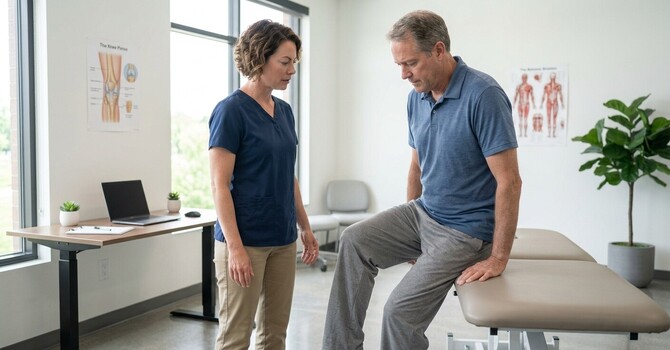
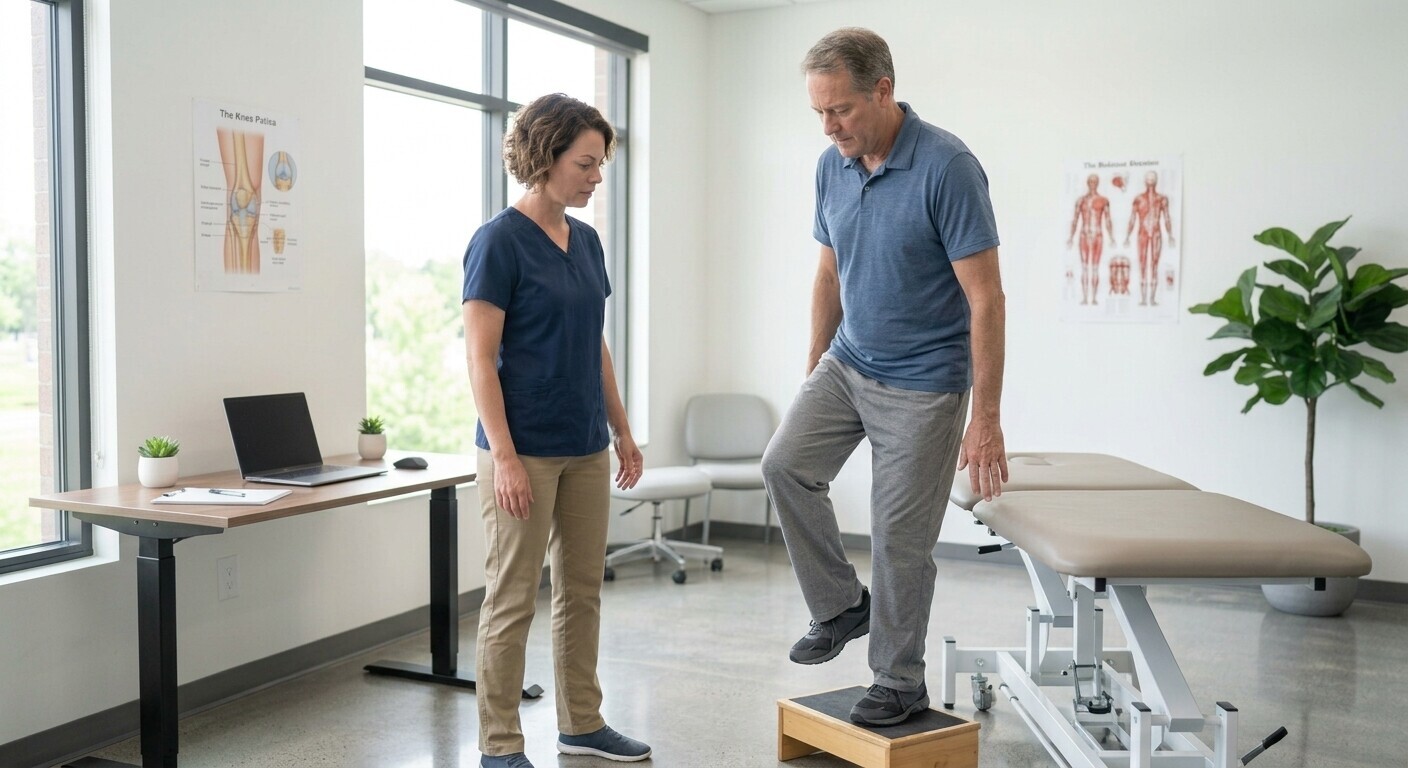
An assessment may include walking, step-ups, controlled step-downs, knee strength, hip strength, and ankle mobility. The point isn't to judge whether your movement looks perfect. It's to understand what happens during the task that bothers you.
New severe pain, significant swelling, inability to bear weight, a hot red knee with fever, or a knee that locks or gives way warrants prompt medical assessment.
Make stairs part of the plan, not just a problem to avoid
If your goal is to get through a workday, carry groceries upstairs, travel, or stay active at home, your care should eventually address those demands.
At Optimal Health, a functional approach considers how your knee behaves during the activities that matter to you. The findings can help guide an individualized plan for managing symptoms and gradually improving strength and function.
CTA: If stairs have become a daily obstacle, consider scheduling an evaluation to identify what may be contributing to your pain and what steps could help you move more comfortably.