Plantar Heel Pain: Why Your First Steps in the Morning Hurt
You get out of bed, take your first step, and feel it immediately.
A sharp pain under your heel.
After a few minutes of walking, it starts to loosen up. By the middle of the day, maybe you barely notice it.
Then you wake up the next morning and it happens all over again.
That pattern is common with plantar heel pain, often called plantar fasciitis.
It can be frustrating because the pain may seem to come out of nowhere. You may not remember injuring your foot. You might wonder why something as simple as walking across the bedroom has suddenly become painful.
The good news is that plantar heel pain is often manageable with conservative care. But getting better isn't always about simply stretching your foot or buying a different pair of shoes.
Understanding what may be contributing to the problem is a better place to start.
Why does my heel hurt when I take my first steps in the morning?
One of the classic symptoms of plantar heel pain is pain with the first steps after getting out of bed or after a period of rest.
The plantar fascia is a strong band of connective tissue running along the bottom of your foot. It helps support the foot during standing and walking and contributes to how your foot handles load.
When the tissues around the heel become sensitive, those first few steps after rest can be particularly uncomfortable.
You may feel pain:
-
Directly underneath the heel
-
Along the inside or bottom of the heel
-
With the first steps in the morning
-
After sitting for a long time
-
When walking barefoot on hard surfaces
-
During or after prolonged standing or walking
-
After increasing your exercise or running volume
The pattern can vary from person to person.
And while plantar fasciitis is a common diagnosis, not every case of heel pain is plantar fasciitis.
That distinction matters.
What causes plantar heel pain?
There usually isn't one single event that causes plantar heel pain.
Instead, it can develop when the demands placed on the foot repeatedly exceed what the tissues are currently prepared to handle.
Think about what your feet do every day.
They support you while you're standing. They absorb and transfer forces while you walk. They handle much greater loads when you run, jump, play sports, or spend hours on your feet.
A sudden change in that workload can matter.
For example, your heel pain might begin after:
-
Starting a new running program
-
Increasing your mileage
-
Returning to exercise after time away
-
Spending more time standing at work
-
Playing more sports
-
Changing your footwear
-
Increasing walking volume
-
Gaining body weight
-
Beginning a new training routine
Sometimes there isn't an obvious change at all.
That doesn't mean you did something wrong.
It simply means your clinician may need to look at how your foot and lower extremity are handling load.
Is plantar fasciitis caused by tight calf muscles?
Calf flexibility can be relevant, but it's not as simple as saying, “Your calf is tight, so that's why your heel hurts.”
The foot, ankle, knee, and hip all contribute to how forces are handled during movement.
An assessment may consider ankle mobility, calf strength and flexibility, foot mechanics, lower-extremity strength, activity levels, footwear, and the amount of load your body is currently handling.
That's one reason two people with similar heel pain may need different treatment plans.
One person may need to gradually rebuild foot and calf strength.
Another may need changes to their training load.
Someone else may benefit from addressing ankle mobility or movement mechanics.
And some people may need a combination of approaches.
Why does it hurt less after I walk for a while?
This is another common feature.
You may take those first few painful steps in the morning and then notice that your heel feels better as you move around.
That temporary improvement doesn't necessarily mean the problem has disappeared.
It's possible for symptoms to fluctuate throughout the day based on activity, rest, and how much load the tissues are handling.
This is also why plantar heel pain can be confusing.
You might think:
“If it feels better after I walk, why does it hurt again tomorrow?”
Because symptom relief and tissue capacity aren't necessarily the same thing.
You may need to gradually improve your ability to tolerate the activities that are provoking the problem rather than simply waiting for the pain to disappear.
Should you stretch plantar fasciitis?
Stretching can be useful for some people, but it shouldn't necessarily be the entire treatment plan.
Research has found that stretching can improve short-term pain in people with plantar fasciitis, although different interventions have different levels of evidence and results vary.
A more complete rehabilitation plan may include stretching alongside strengthening and gradual loading.
That's especially relevant if your heel pain has been around for a while.
The goal isn't simply to make the calf or plantar fascia feel temporarily looser.
It's to help your foot tolerate the demands you place on it.
What exercises help plantar heel pain?
The best exercise program depends on the individual, but strengthening is commonly incorporated into conservative care.
That might include exercises for:
-
The calf muscles
-
The intrinsic muscles of the foot
-
The ankle
-
The lower leg
-
The broader lower-extremity kinetic chain
The important part is progression.
If your foot currently hurts after walking 20 minutes, jumping straight into high-volume running isn't necessarily the answer.
Instead, you can gradually build the amount of load your foot can tolerate.
That's the same basic principle used in other areas of rehabilitation:
Give the tissue an appropriate challenge, allow it to adapt, and gradually increase the demand.
What about shoes and orthotics?
Footwear can be part of the conversation, particularly if your symptoms change significantly when you switch shoes or spend more time barefoot.
But there's no single “best shoe” for everyone with plantar heel pain.
Similarly, orthotics can be useful for some people, but they're not a universal cure.
The goal is to determine whether changing how the foot is supported or loaded helps you participate in your normal activities while you address the underlying capacity and movement issues.
A clinician may consider your footwear, activity level, foot structure, symptoms, and response to different interventions rather than prescribing the same solution to everyone.
Can hands-on treatment help?
Hands-on treatment can be one component of conservative care.
At Optimal Health, plantar fasciitis is among the conditions for which the clinic may use Active Release Technique (ART®), Graston Technique®, focused shockwave therapy, dynamic-assisted stretching, and strengthening exercises.
The important point is that these are tools, not a checklist that every patient needs.
For example, soft-tissue techniques may be used when they help address relevant movement or tissue sensitivity. Exercises can then help build capacity and function.
That combination is different from simply treating the painful spot and sending you home.
What about shockwave therapy?
Shockwave therapy has become an increasingly discussed option for persistent plantar heel pain.
The evidence is encouraging, but it needs to be put into context.
Recent systematic reviews have found that extracorporeal shockwave therapy can improve pain and function in some people with plantar fasciitis, particularly over the medium and longer term. However, results vary depending on the comparison treatment, protocol, and outcome being measured.
For example, a 2024 meta-analysis comparing shockwave therapy with corticosteroid injections found better three-month outcomes for shockwave therapy for pain, plantar fascia thickness, and foot function.
That doesn't make shockwave therapy a magic fix.
It means it may be a reasonable option to discuss when symptoms are persistent and the clinician determines that it fits the individual's presentation.
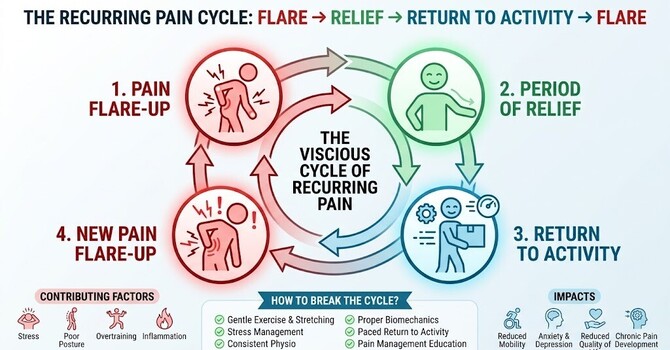
What if the heel pain keeps coming back?
This is where a broader assessment can be helpful.
If your heel pain improves every time you rest but returns as soon as you resume your normal activities, the question isn't simply:
“How do we get rid of the pain?”
It's also:
“Why isn't your foot tolerating the activity yet?”
That might involve looking at ankle mobility, calf and foot strength, running or walking volume, training progression, footwear, movement patterns, and how quickly you're increasing activity.
Optimal Health's clinical approach emphasizes evaluating the broader movement pattern rather than focusing only on where the patient feels pain. The practice describes integrated chiropractic and rehabilitation care, with movement assessment, soft-tissue treatment, strengthening, and progression toward the patient's desired activities.
For someone who wants to run again, that may mean progressively rebuilding running tolerance.
For someone who spends all day on their feet at work, it may mean improving the capacity needed for prolonged standing and walking.
For an athlete, the plan may need to account for training volume and sport-specific demands.
The treatment should fit the person, not just the diagnosis.
When should you get heel pain evaluated?
You don't necessarily need professional care for every episode of mild foot soreness.
But an evaluation is worth considering if:
-
Heel pain persists for several weeks
-
Symptoms keep returning
-
Pain is limiting walking, exercise, or work
-
You can't increase activity without symptoms returning
-
You have significant swelling
-
The pain followed an injury
-
You have numbness or unusual sensations
-
Your pain is severe or getting progressively worse
Other conditions can cause heel pain, including stress injuries, nerve-related problems, Achilles-related disorders, and other foot conditions.
That's another reason not to assume that every painful heel is plantar fasciitis.
You don't have to live with painful first steps
Plantar heel pain can be stubborn, particularly when you try to manage it by simply resting until it feels better and then immediately returning to your normal activity.
A better approach is often to understand what is contributing to the symptoms and gradually improve your ability to handle the demands you're placing on your feet.
That might include exercise.
It might include mobility work.
It might include hands-on treatment.
It might include changes to activity or footwear.
And for persistent symptoms, shockwave therapy may be one option worth discussing.
The right combination depends on what your evaluation shows.
How Optimal Health approaches plantar heel pain
At Optimal Health Chiropractic & Physical Therapy, plantar heel pain is approached as more than a painful spot on the bottom of the foot.
The goal is to understand how the foot and lower extremity are moving, what loads you're asking the tissues to handle, and what needs to improve for you to get back to the activities you care about.
If your heel hurts every morning, limits your workouts, or keeps returning whenever you increase your activity, an evaluation can help determine what's contributing to the problem and whether conservative rehabilitation is appropriate.
You shouldn't have to plan your day around your first painful steps.