The first few holes feel great.
Your swing feels smooth.
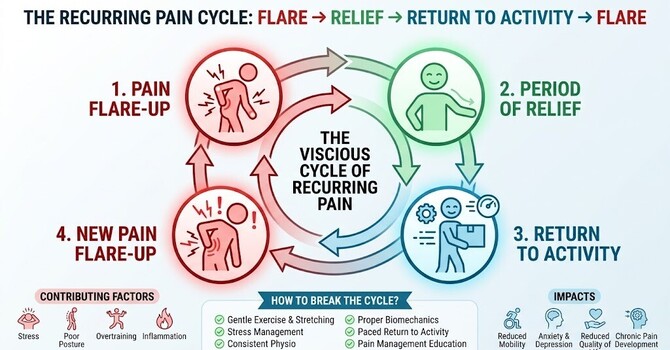
Then somewhere around the back nine, your low back starts tightening up.
You stretch between shots.
You take a few practice swings.
Maybe you change your setup.
But by the 18th hole, you're ready to be done.
Why does your back seem fine at the beginning of a round but increasingly uncomfortable as the day goes on?
One possibility is simple: your body is being asked to do more work than it's currently prepared to tolerate.
Golf isn't just a few swings
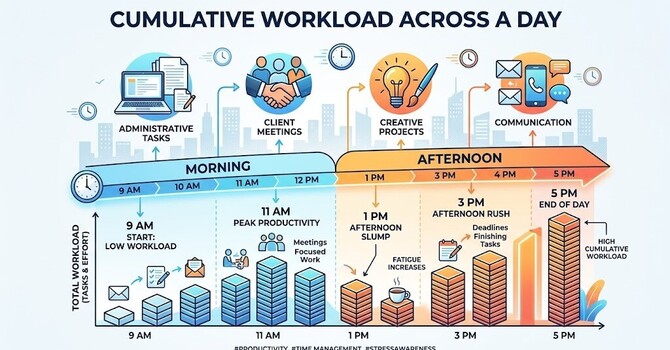
A round of golf can involve several hours of walking, standing, bending, rotating and swinging.
Then there's the repetitive nature of the golf swing itself.
One swing may not be a problem.
Doing something hundreds of times while walking several miles is a different demand.
That's where endurance and capacity become important.
Fatigue changes the equation
As you become fatigued, your movement strategy can change.
Your swing may become less consistent.
You may rotate differently.
Your trunk may work harder to produce or control movement.
Your overall tolerance may simply start to decline.
That doesn't mean your form suddenly becomes “bad.”
It means you're getting closer to the limits of your current capacity.
Is your swing causing your back pain?
Not necessarily.
Golf is often blamed when someone develops back pain because the symptoms show up during the swing.
But the swing may simply be exposing a limitation that already existed.
Maybe you haven't played in several months.
Maybe your conditioning has changed.
Maybe you've increased your practice volume.
Maybe your hip or thoracic mobility is limiting the movement available to you.
Maybe your trunk endurance isn't keeping up with the demands of the round.
Or maybe there's an entirely different contributor.
What about hip rotation?
Your hips and thoracic spine contribute to the rotation required during the golf swing.
If you're limited in one area, your body still has to find a way to complete the movement.
That doesn't automatically mean another joint is being “damaged.”
But if a movement restriction is meaningful to your symptoms or performance, it's worth addressing.
The answer isn't always more stretching
If your back tightens up on the back nine, you might spend the next week stretching your hamstrings and low back.
That may feel good.
But if the actual issue is that your body isn't conditioned for four hours of golf, stretching alone isn't going to build that capacity.
You may need to gradually increase walking volume.
You may need to work on strength and endurance.
You may need to improve specific mobility.
You may need to modify practice volume.
Or you may need to look at several of these factors together.
Build your golf body before you need it
If you only prepare for golf by taking a few practice swings on the first tee, you're asking your body to go from everyday activity to several hours of physical demand.
A better approach is to gradually expose yourself to the demands of the sport.
Walking.
Rotating.
Hinging.
Strength training.
Balance.
Repeated swings.
Recovery.
The goal isn't to create a perfect golf swing in the gym.
It's to build a body capable of tolerating the demands of your game.
When should you get evaluated?
If your back consistently tightens or becomes painful during a round, especially if symptoms are getting worse or affecting your swing, an evaluation can help identify what may be contributing.
A golf-focused movement assessment may look at your hips, thoracic spine, lumbar movement, strength, balance, trunk control and the way you tolerate rotation.
The goal isn't to blame your golf swing.
It's to understand what your body needs to keep you on the course.
Because the real goal isn't just getting through 18 holes.
It's enjoying all 18.