Have you ever tried to squat and felt as though your heels wanted to lift off the floor? Or noticed that one side feels stiffer when you walk downstairs?
The ankle may be part of the picture.
Your knee, ankle, and foot work together during everyday movement. If the ankle has limited motion, you may change how you perform a squat, step, or other task. Whether that change matters for your knee pain depends on the individual and the activity.
What is ankle mobility?
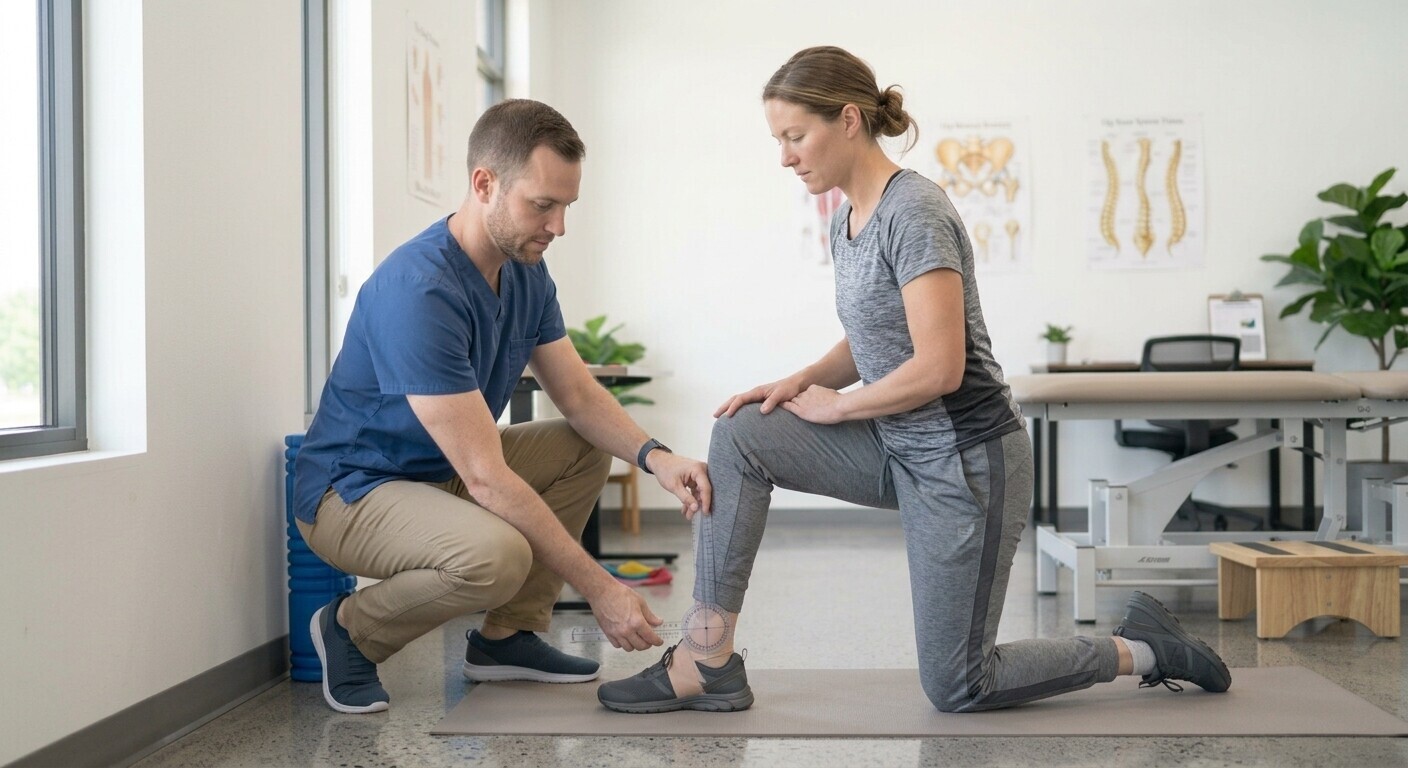
One important ankle movement is dorsiflexion. That's the motion that allows your shin to move forward over your foot while your heel stays on the ground.
You use it when lowering into a squat, walking down stairs, and moving forward over your planted foot during walking and other activities.
Ankle motion can be affected by several factors, including joint stiffness, calf muscle flexibility, prior ankle sprains, and individual anatomy. A history of injury may be especially relevant if one ankle consistently feels more restricted than the other.
But limited motion doesn't automatically mean something is wrong. People naturally differ in their mobility, and not every difference causes symptoms or requires treatment.
How could it affect the knee?
During a squat or step-down, ankle movement is one part of how your body manages the task. If the ankle cannot move comfortably through the range required, you may adjust your depth, balance, foot position, or movement strategy.
Those adjustments can change the demands elsewhere in the leg. In some people, ankle mobility is relevant to the way they perform a task that also provokes knee pain.
That doesn't prove that restricted ankle motion caused the pain. Knee symptoms can have several contributors, and ankle mobility may be unrelated to the primary problem.
The useful question is whether ankle motion is limited, whether the limitation affects the activity, and whether changing it improves the person's movement or symptoms.
Should you stretch your calves?
Not automatically.
If an assessment suggests that calf flexibility or ankle mobility is relevant, targeted mobility work may be appropriate. If the limitation is related to another factor, stretching may not address it. And if ankle mobility is already adequate, additional stretching may offer little benefit.
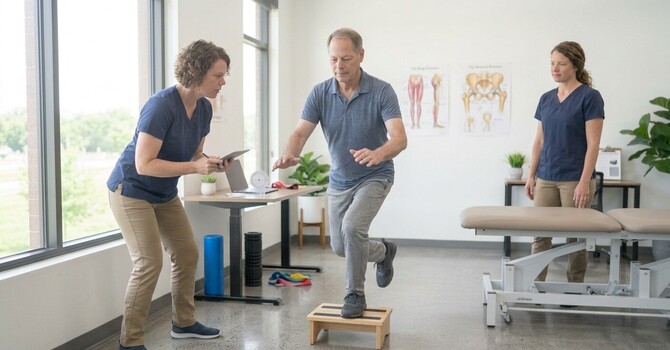
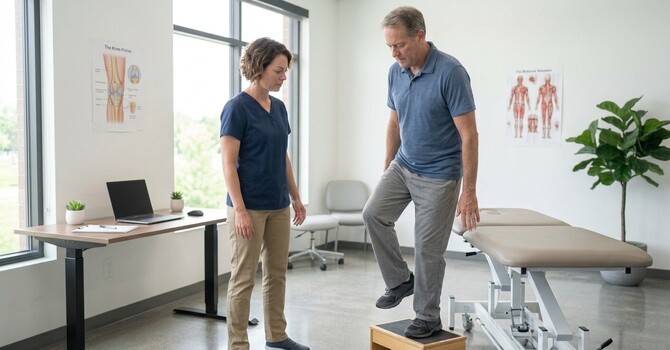
A clinician might compare ankle motion between sides, observe a squat or step-down, and consider how the knee responds when the task is modified. The assessment should also examine the knee itself rather than assuming the ankle explains everything.
When appropriate, mobility work can be combined with strengthening and functional exercise. The goal is to improve the movements you need, not simply to achieve a particular flexibility measurement.
Think about the activity, not just the joint
If you want to squat comfortably, walk on uneven ground, return to exercise, or get down a flight of stairs, the plan should relate to those goals.
A useful evaluation considers whether ankle motion is a meaningful limitation for you and whether addressing it changes the task. If it doesn't, attention may need to shift elsewhere.
At Optimal Health, the aim is to assess the movement demands involved, identify relevant findings, and adjust the plan as your symptoms and function change.
CTA: If knee pain is limiting squats, stairs, or walking, an evaluation can help determine whether ankle mobility is a factor worth addressing or whether another explanation deserves more attention.