Your heel feels fine when you wake up, but by the end of your work shift, every step is uncomfortable. Or perhaps you start the day with some pain, and standing for several hours makes it progressively worse.
This can be especially frustrating if your job doesn't give you many opportunities to sit down.
Long periods on your feet can contribute to symptoms, but the important question is what is causing the heel pain and how your daily demands affect it.
Standing is a real physical demand
Standing requires your feet and lower legs to support your body over time. Walking, turning, carrying objects, and moving across hard surfaces add different demands throughout the day.
If you're experiencing plantar heel pain, the total amount of time spent standing and walking may exceed what your foot currently tolerates comfortably. Recent changes in workload, exercise, or recovery can also matter.
However, not every painful heel is plantar fasciitis. Pain under the heel, pain toward the back of the foot, nerve symptoms, and pain following an injury can point toward different possibilities.
What should you notice?
Consider when the pain begins, where you feel it, and whether it changes with movement or rest.
Does it build gradually during the shift? Is it worse after sitting and standing again? Does it improve on days when you have fewer hours on your feet? Does it remain painful even after you stop working?
Footwear and the demands of your work environment may be relevant, but no single shoe type or floor surface explains every case.
How can you manage the demands?
If possible, vary your position, take brief sitting breaks, and avoid adding unnecessary high-impact exercise when your heel is already significantly aggravated. Comfortable footwear may help, but it shouldn't be expected to solve every cause of heel pain.
If plantar fasciitis is confirmed or strongly suspected, a plan may include plantar fascia-specific stretching, calf stretching, progressive strengthening, and adjustments to the activities that provoke symptoms.
The long-term goal is not simply to spend less time standing. For many people, work is not optional. Rehabilitation may need to improve your capacity to tolerate the demands of your actual workday.
Seek prompt medical assessment if you cannot bear weight, develop significant swelling, have severe pain after an injury, or notice other concerning changes.
Make the plan fit your workday
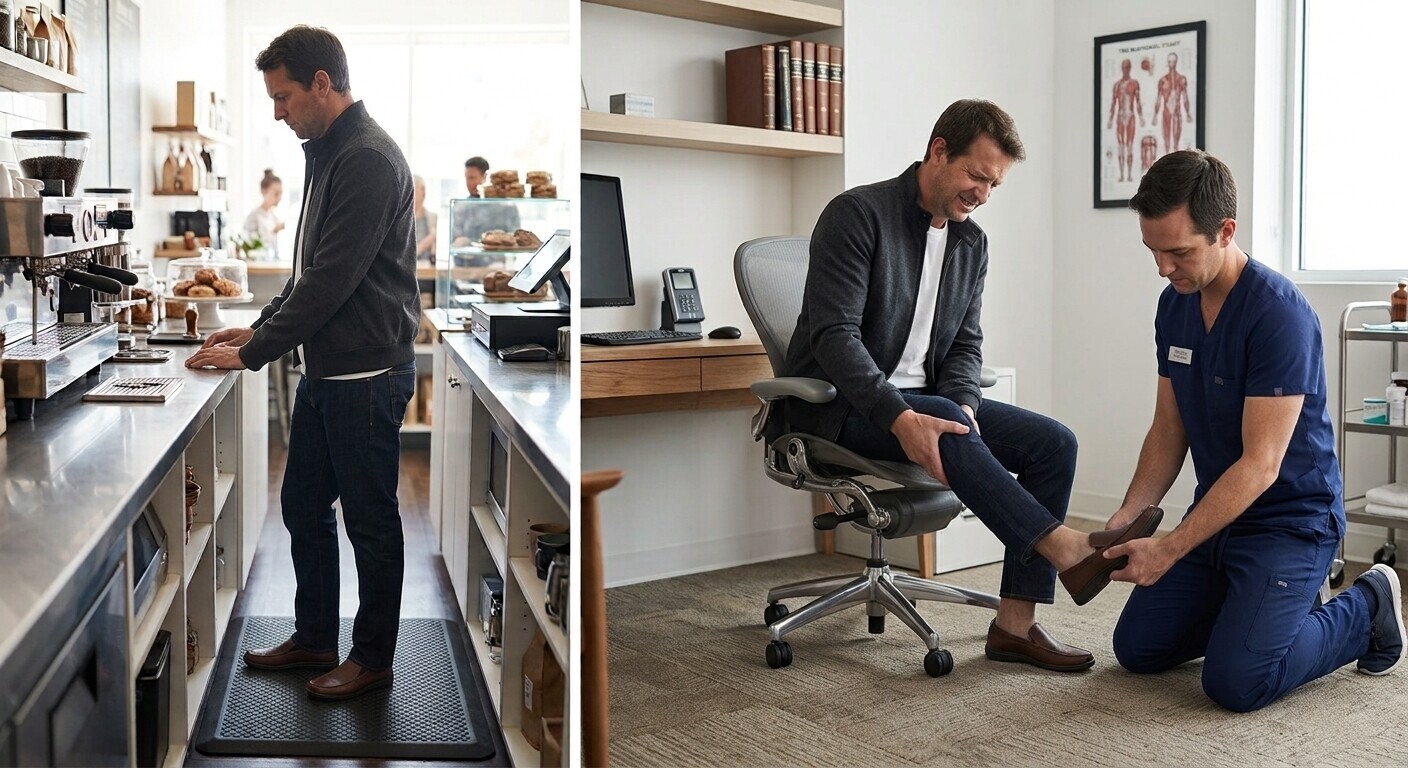
A person who stands behind a counter has different needs from someone who walks across a warehouse or works on their feet in healthcare. An evaluation should consider those demands rather than provide generic advice to “rest more.”
At Optimal Health, the aim is to understand how your heel responds to your work and daily activity, then identify reasonable ways to manage symptoms and build tolerance.
CTA: If heel pain is affecting your ability to finish a shift or enjoy your time off, schedule an evaluation to discuss your symptoms and the demands your feet need to handle.