You finish your workout feeling strong.
A few hours later, your low back starts aching.
Now you're wondering:
“Did I squat wrong?”
“Was my back too rounded?”
“Did I hurt a disc?”
“Should I stop lifting?”
Not necessarily.
Back discomfort after squats or deadlifts can have several possible contributors, and one painful workout doesn't tell us exactly what happened.
Lifting is a demand on your body
Squats and deadlifts require your body to produce and control force.
Your hips, knees, spine and trunk all contribute.
Your muscles need to generate force.
Your nervous system has to coordinate the movement.
And your tissues have to tolerate the load.
That's true whether you're lifting a barbell, a box at work or your child off the floor.
Pain doesn't automatically mean damage
It's easy to assume that pain after lifting means you've damaged something.
But pain is not a perfect measurement of tissue damage.
You can experience soreness or pain after an unfamiliar workload without having a significant injury.
At the same time, persistent or severe symptoms shouldn't simply be ignored.
The key is looking at the whole presentation.
Was the weight different?
Think about what changed before the pain appeared.
Did you increase the weight?
Add sets?
Change exercises?
Return to lifting after a long break?
Sleep poorly?
Do more physical work that day?
Try a new technique?
Sometimes the problem isn't the exercise itself.
It's the sudden jump in demand.
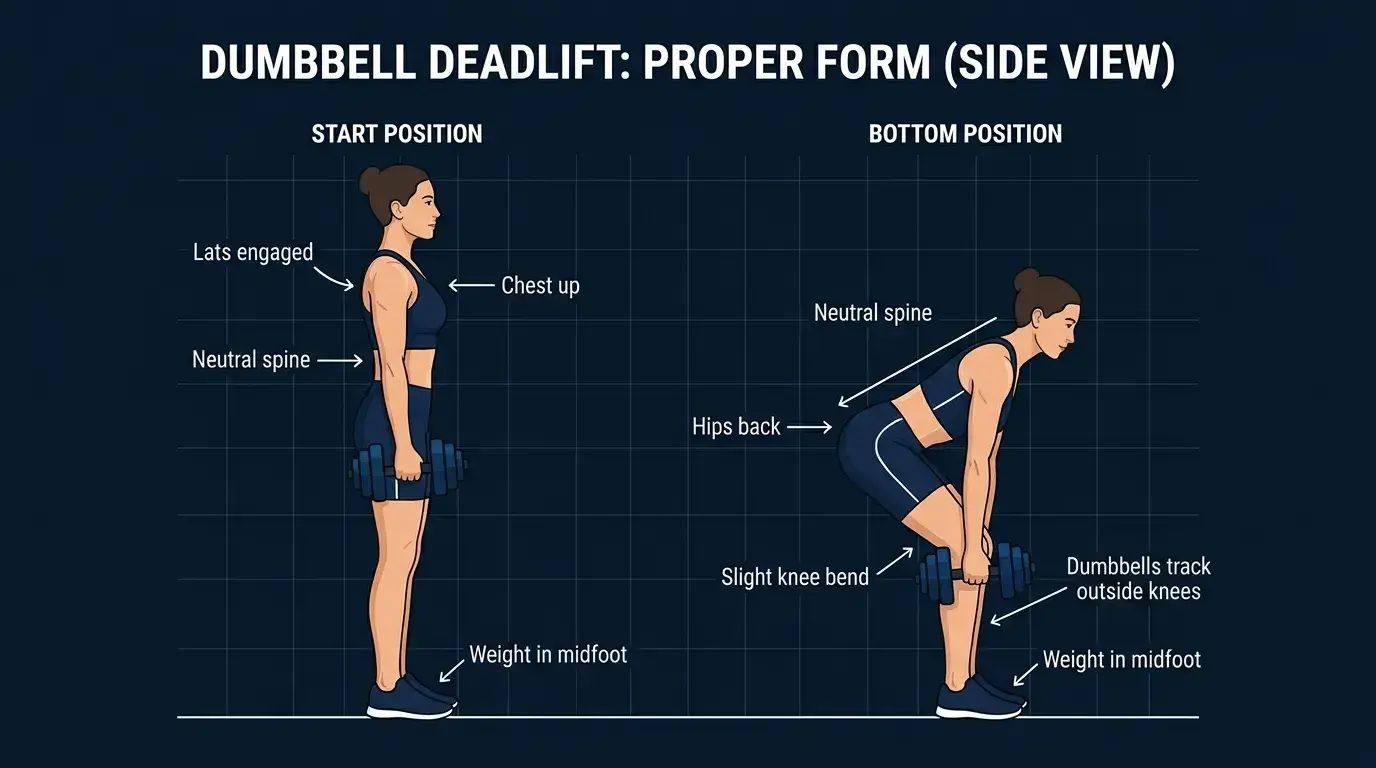
What about technique?
Technique matters, but there isn't one universally perfect squat or deadlift.
Your body proportions, experience, mobility, strength and the load you're using all influence how you move.
The goal isn't to eliminate every small variation.
It's to develop a movement strategy that allows you to perform the task effectively and tolerate the demands you're placing on yourself.
Don't automatically blame your back
If your back hurts during a deadlift, it doesn't necessarily mean your back is weak.
And it doesn't automatically mean you need more core exercises.
Maybe your current load is too high.
Maybe you're fatigued.
Maybe you're returning to training too quickly.
Maybe the movement needs to be modified temporarily.
Maybe your hip mobility or strength is relevant.
Maybe the exercise isn't the right choice for your current stage of recovery.
Those are questions an evaluation can help answer.
What should you do after a painful workout?
If the pain is mild and behaves like ordinary post-exercise soreness, modifying your activity and monitoring the symptoms may be reasonable.
If you have significant pain, pain that continues to worsen, pain traveling into the leg, numbness, tingling or weakness, it's worth getting evaluated rather than repeatedly testing the same painful movement.
And if you develop serious neurological symptoms, seek appropriate medical attention.
Returning to lifting shouldn't mean avoiding lifting forever
If squats or deadlifts contributed to a flare, the long-term answer isn't necessarily to permanently remove them.
Rehabilitation often involves modifying the movement or load first and then progressively rebuilding capacity.
You might start with a lighter variation.
Then increase range.
Then increase resistance.
Then return to the movement pattern you actually care about.
That's progressive loading.
Your training should eventually look like your training
If you're a lifter, rehabilitation shouldn't end with a collection of exercises that have nothing to do with lifting.
The exercises are tools.
The goal is to bridge the gap between where you are now and the demands you want to handle.
If you're dealing with recurring back pain after squats or deadlifts, an individualized evaluation can help determine whether the issue is related to technique, load, mobility, strength, endurance or some combination of factors.
You don't necessarily need to stop lifting.
You may need a better plan for how to build back up.