You can walk the dog, run errands, and get through your day without much trouble. Then you start running, and your knee begins to hurt.
It's natural to wonder how something that feels fine while walking can become painful just because you move faster.
One important difference is that running changes the demands placed on your body.
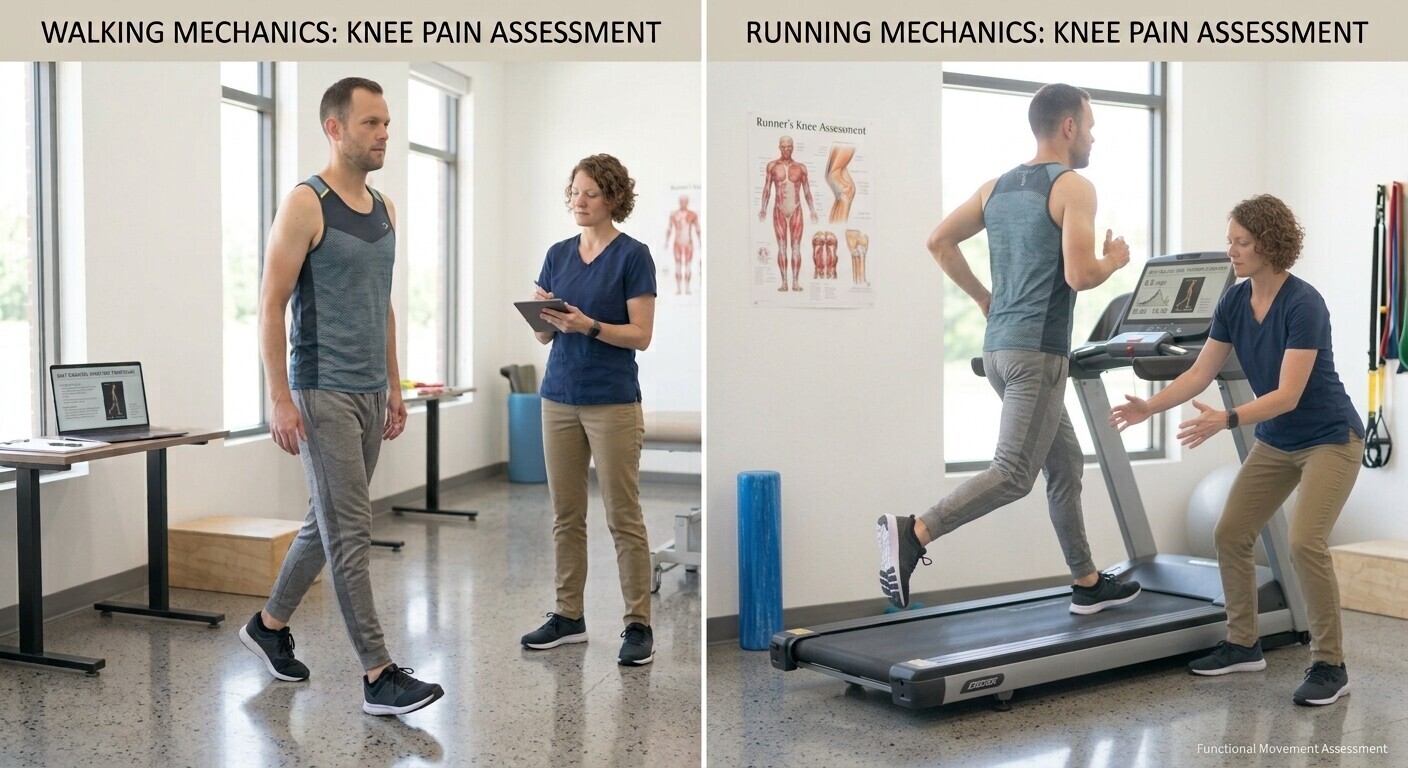
Walking and running aren't the same workload
During walking, at least one foot remains on the ground throughout the normal gait cycle. Running includes a flight phase when neither foot is in contact with the ground, and each stride requires your body to manage a different pattern of loading.
Running also involves repeated cycles of landing and pushing off. Speed, hills, stride characteristics, duration, and fatigue can all affect the demands of a run.
Your knee may tolerate the demands of walking but become symptomatic when running exceeds its current tolerance. This can happen even if you haven't sustained a single obvious injury.
What might be causing the pain?
Pain around or behind the kneecap may fit a patellofemoral pain pattern, particularly if it also appears during stairs or squats. Other problems, including tendon-related pain or injuries within the knee, may also cause symptoms during running.
The timing provides useful information. Pain that builds as a run continues may suggest a relationship with repeated loading, but that pattern alone cannot confirm the diagnosis.
Swelling, locking, instability, pain after a twisting injury, or difficulty bearing weight requires closer assessment. Don't assume every painful run is simply a matter of doing too much.
Should you stop running?
That depends on the severity of your symptoms and the likely cause.
If pain is increasing, changing your stride, or lingering well after the run, continuing the same workout may not be a good idea. Temporarily reducing distance, speed, hills, or frequency can lower the demands while you determine what to do next.
You may be able to maintain some activity that doesn't aggravate your symptoms. Complete rest isn't automatically necessary for every runner, but pushing through worsening pain isn't a reliable way to rebuild capacity either.
Find the level your knee can tolerate
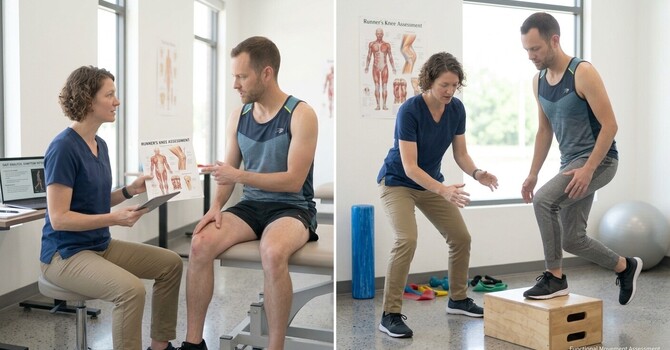
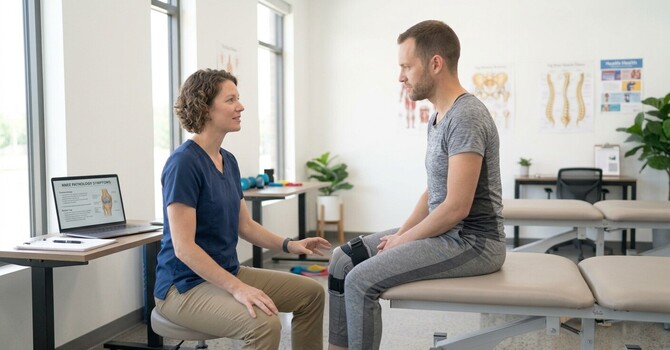
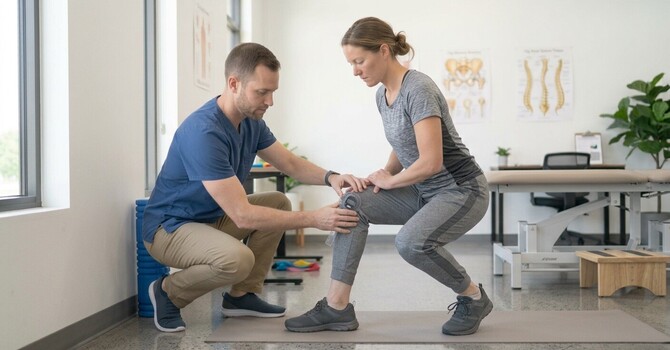
A useful assessment looks at more than the painful spot. It may include your recent training, knee and hip strength, mobility, functional movements, and running mechanics when relevant.
The goal is to understand which demands provoke symptoms and whether a specific limitation needs attention. If a gait change is considered, it should be selected for a reason rather than imposed as a universal rule.
From there, your plan can be matched to your current tolerance and your goal, whether that's returning to short neighborhood runs or preparing for a longer event.
CTA: If walking feels fine but running consistently brings on knee pain, an evaluation can help clarify what may be contributing and how to approach activity while you work toward running again.