You begin the morning feeling fine. After hours of computer work, meetings, driving or concentrating, a headache begins to build.
By the end of the day, your neck feels stiff, your shoulders are tense and focusing on anything else becomes difficult.
It's tempting to blame your desk or assume that tight muscles are causing the headache. Those factors may matter, but they're only part of the picture.
Why can symptoms build throughout the day?
Long workdays can combine several demands: prolonged concentration, limited movement breaks, visual strain, skipped meals, dehydration, stress and fatigue.
Some people also notice headaches after sustained neck or shoulder positions. Others experience a headache pattern that is less directly related to movement or posture.
These factors can interact. A demanding day may coincide with a headache without being its sole cause.
Does your workstation cause the headache?
Your workstation and work habits may influence comfort. If you spend hours looking at a screen without changing position, your neck and shoulders may become uncomfortable.
Try adjusting your screen and chair for comfort, varying positions during the day, and taking brief breaks to move or rest your eyes. If you tend to skip meals or drink very little water when busy, addressing those habits may also be worthwhile.
These changes can make a workday more manageable, but they are not a substitute for assessing recurrent or severe headaches.
Could the neck be contributing?
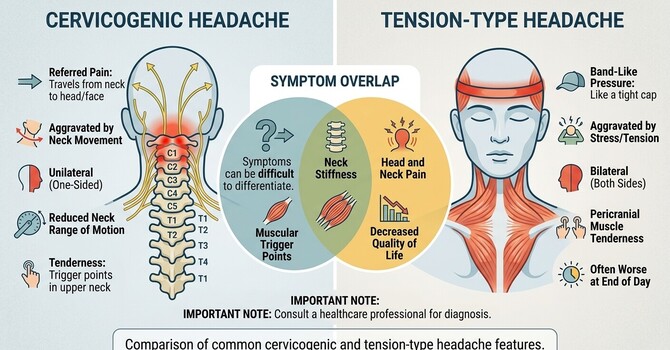
Sometimes. If a headache consistently occurs alongside neck pain, reduced neck movement or symptoms reproduced by certain neck movements, a musculoskeletal assessment may provide useful information.
However, the same workday pattern can occur with migraine or tension-type headache. Light sensitivity, sound sensitivity, nausea and other associated symptoms may point toward a headache disorder that needs medical assessment.
The timing of a headache alone cannot establish its cause.
What can you track?
For a week or two, if it is safe to do so, record when headaches begin, how long they last, how severe they are and what else is happening.
Include work demands, sleep, meals, hydration, neck symptoms, visual symptoms and any medication used. A headache diary can help you and your healthcare professional recognize patterns that might otherwise be difficult to see.
If headaches are recurring or affecting your ability to work, arrange a medical evaluation rather than relying only on ergonomic changes.
When is a headache urgent?
Seek emergency care for a sudden, unusually severe headache or one accompanied by new weakness, confusion, difficulty speaking, loss of vision or other neurological warning signs. Fever with a stiff neck, a headache following significant trauma or a rapidly worsening pattern also needs prompt assessment.
Make the plan fit the whole workday
If your headaches occur with neck discomfort, an evaluation at Optimal Health may help identify relevant movement limitations or musculoskeletal factors. Depending on the findings, a plan may include movement breaks, exercise, neck and upper-back rehabilitation, or other appropriate care.
If the pattern suggests migraine or another medical headache disorder, medical evaluation is essential. The aim is not to blame one muscle or one workstation setting, but to understand the factors that may be contributing and identify a practical next step.