You wake up with a stiff neck, then notice an ache running toward your shoulder. Later, you feel tingling in your fingers or a strange sensation down your arm.
It’s natural to assume the problem must be in the area that hurts. But symptoms in the arm or hand can sometimes be related to structures in the neck, including the nerves that travel from the spinal cord toward the upper extremity.
The location of your symptoms is an important clue. It isn't the whole diagnosis.
How can the neck affect the arm?
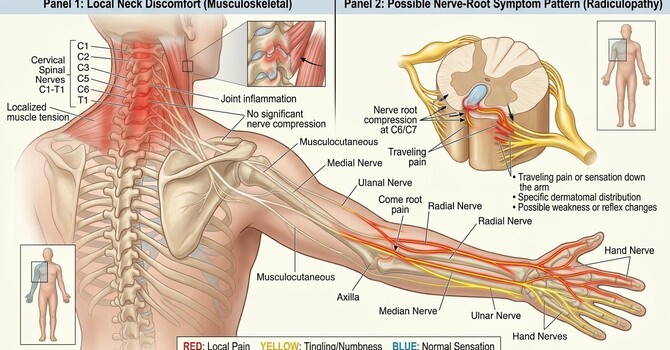
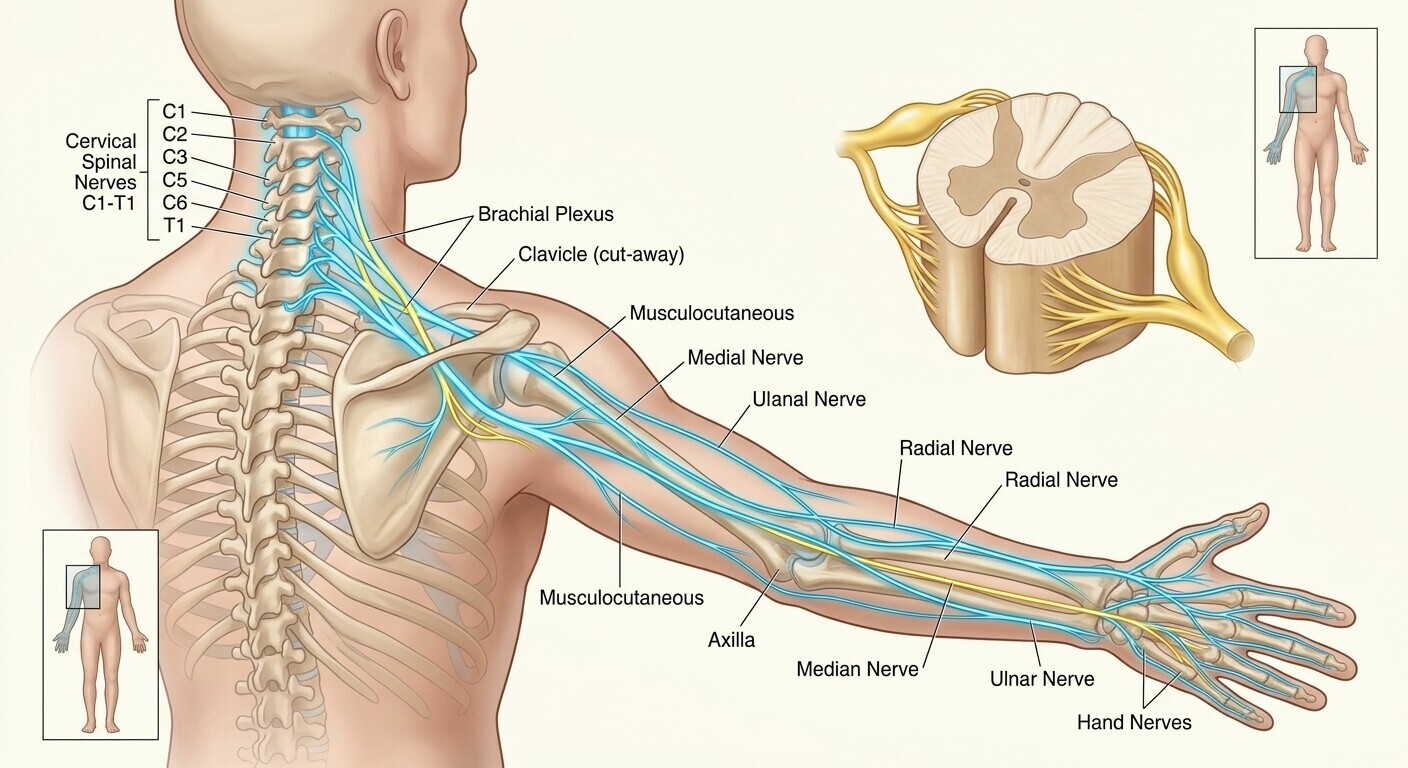
Nerves that supply the shoulder, arm and hand originate from the spinal cord and travel through the neck before continuing into the upper extremity.
These nerves carry information in both directions. They help control muscle activity and transmit sensations such as touch, temperature and pain.
If a nerve root near the neck becomes irritated or compressed, symptoms may extend beyond the neck itself. This can happen with a condition called cervical radiculopathy.
Depending on the nerve involved, symptoms may include neck or shoulder pain, pain traveling down the arm, tingling, numbness or changes in muscle strength. Not everyone experiences all these symptoms, and some people have arm symptoms with little neck pain.
Does pain traveling down the arm always mean a pinched nerve?
No.
Pain can be referred from muscles, joints and other structures without a nerve root being compressed. Shoulder conditions and nerves irritated farther down the arm can also produce overlapping symptoms.
For example, pain near the outside of the shoulder may be related to the shoulder itself, the neck or a combination of factors. Tingling in the fingers may suggest nerve involvement, but the exact location and pattern matter.
That is why the words radiating pain, nerve irritation and radiculopathy shouldn't automatically be treated as interchangeable.
What clues help distinguish the possibilities?
A clinician will ask where the symptoms travel, what they feel like and what makes them change.
Does turning your neck affect the arm pain? Does raising your arm change the symptoms? Are particular fingers numb? Have you noticed reduced grip strength, difficulty with buttons or trouble lifting objects?
The examination may include neck and shoulder movement, strength testing, sensation, reflexes and selected tests that place different demands on the nervous system.
No single symptom or test provides every answer. The findings need to fit together.
What happens if a nerve is involved?
The next step depends on the presentation and severity.
Some people with stable neck-related nerve symptoms can be managed conservatively, using an individualized plan that may include appropriate movement, exercise, activity adjustments and other care. Others require medical investigation, especially when symptoms are severe, progressive or suggest a significant neurological problem.
Do not ignore new or worsening weakness, difficulty walking, loss of coordination or problems with bowel or bladder control. These symptoms require prompt medical assessment. Sudden neurological symptoms such as facial drooping, difficulty speaking or sudden one-sided weakness require emergency care.
Don't treat the hand without considering the neck
If pain or tingling travels from your neck toward your arm, an evaluation at Optimal Health can help determine which areas need to be examined and whether conservative musculoskeletal care is appropriate.
The goal is to understand the pattern, protect neurological function and build a plan around the activities you want to regain, whether that's working comfortably, lifting, exercising or using your hands without constant distraction.