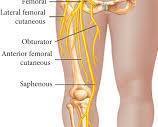
One of the strangest things about back pain is that the place that hurts isn't always where the problem starts.
Your back can hurt and your leg can hurt.
Your back might barely hurt at all while your leg is the main problem.
So how can something happening around your lower back produce symptoms farther down your leg?
The nervous system helps explain why.
Your nerves connect your spine to your legs
Nerve roots exit the lower part of your spine and eventually contribute to the nerves that supply your legs.
The sciatic nerve is one of the major nerves formed from these lower spinal nerve roots.
That means irritation involving a nerve root near the spine can produce symptoms farther along the nerve's pathway.
You don't necessarily feel the symptom at the exact location where the nerve is being affected.
This is sometimes called referred or radiating pain, although those terms can describe different clinical patterns.
Think about the pathway, not just the painful spot
Imagine a garden hose running across your yard.
If something interferes with the hose near the faucet, the effect may be noticed farther down the hose.
The nervous system is obviously much more complex than a garden hose, but the example helps illustrate one important concept:
The location of a symptom doesn't always identify its source.
This is why a clinician shouldn't simply examine the exact place that hurts.
If you're having leg symptoms, the low back and neurological system may need to be part of the evaluation.
What can nerve-related symptoms feel like?
People describe nerve-related symptoms in different ways.
You may experience:
- Pain
- Burning
- Tingling
- Numbness
- Electric or shooting sensations
- Weakness
Symptoms may travel into the buttock, thigh, calf or foot.
The exact distribution can provide useful information, but it still needs to be interpreted along with the rest of the examination.
Movement can change the symptoms
One of the most useful things a clinician can observe is how symptoms respond to movement.
Does sitting make the symptoms worse?
Does standing change them?
Does walking help?
Does bending forward or backward change the symptoms?
Does a repeated movement cause the symptoms to move closer to your back or farther down your leg?
Those changes can help a clinician develop a working hypothesis about what's happening.
Your nervous system isn't something to “stretch aggressively”
If symptoms are nerve-related, the answer isn't automatically to stretch harder.
In some patients, specific neural mobilization techniques may be appropriate.
Research on neural mobilization for low back and radicular pain suggests it can be a useful tool for some patients, although the evidence isn't a reason to treat every person with radiating pain the same way. A systematic review found potential short-term improvements in pain, function and disability, while also noting the need for additional high-quality research.
That fits an important clinical principle:
A technique is useful when it fits the patient.
It shouldn't become the treatment simply because the patient has a particular label.
The goal is to get you moving again
If your leg symptoms are keeping you from walking, exercising, working, golfing, running or sleeping comfortably, the goal of care should eventually connect to those activities.
That may mean reducing irritation first.
It may mean improving movement.
It may mean gradually rebuilding strength and tolerance.
And it may mean learning how to manage your symptoms independently.
The treatment plan should change as your presentation changes.
When symptoms need medical attention
New or progressive weakness, significant sensory loss, bowel or bladder changes, saddle-area numbness or other concerning neurological symptoms should be evaluated promptly.
For less urgent symptoms, an evaluation can still be worthwhile if pain or leg symptoms are interfering with your normal life.
You don't have to figure out the entire nerve pathway yourself.
That's what the clinical evaluation is for.