When your neck hurts, it's natural to expect someone to examine the painful area.
That is part of the process, but a thorough evaluation needs to answer a bigger question: What could be contributing to your symptoms, and what do we need to understand before deciding what to do next?
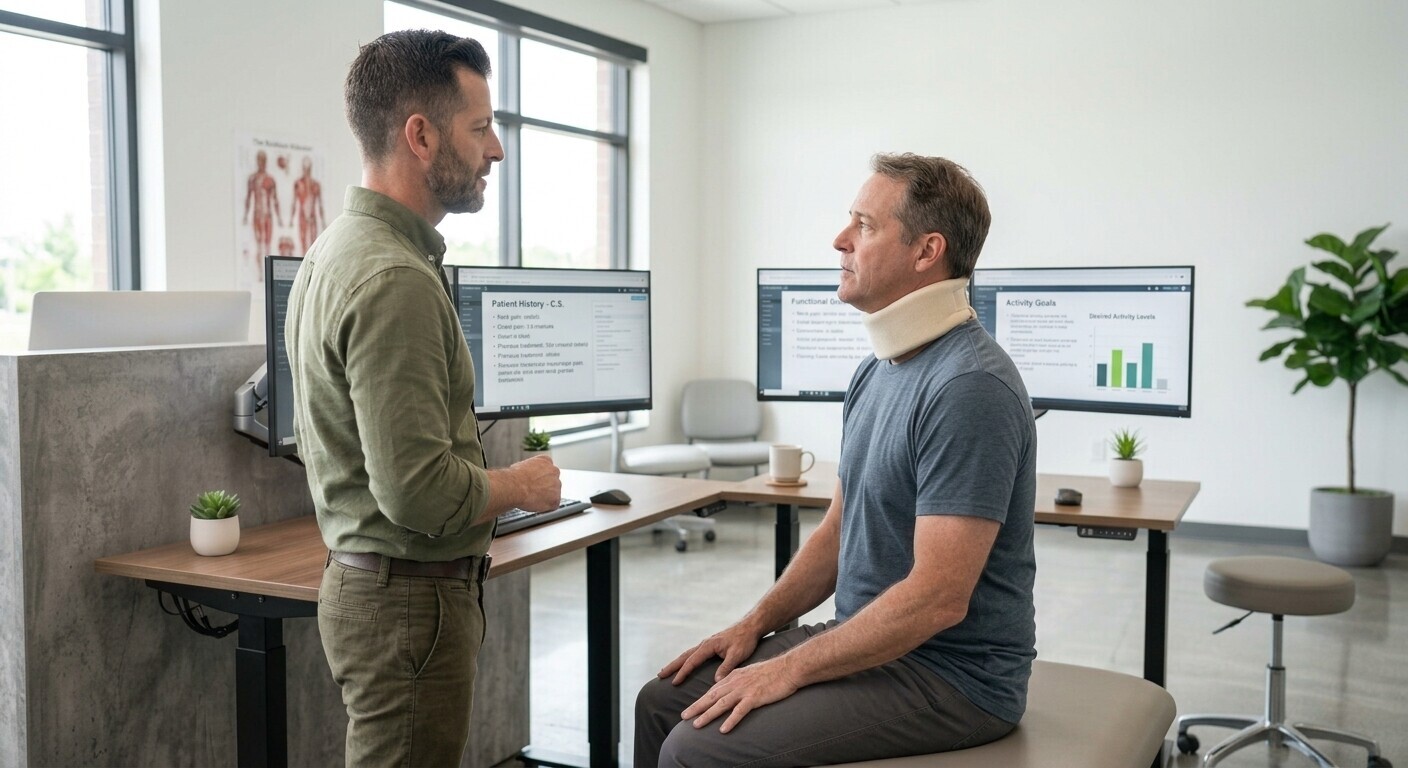
At Optimal Health, the assessment should be guided by your history, your functional limitations and the findings that emerge during the examination.
First, we want to understand your experience
Before testing movement, we need to know what has been happening.
When did the pain begin? Was there an injury or did it develop gradually? Does it stay in your neck, spread toward the shoulder or travel into your arm? What makes it better or worse? How is it affecting sleep, work, driving, exercise or daily activities?
We also consider your medical history and any other symptoms that could change the approach.
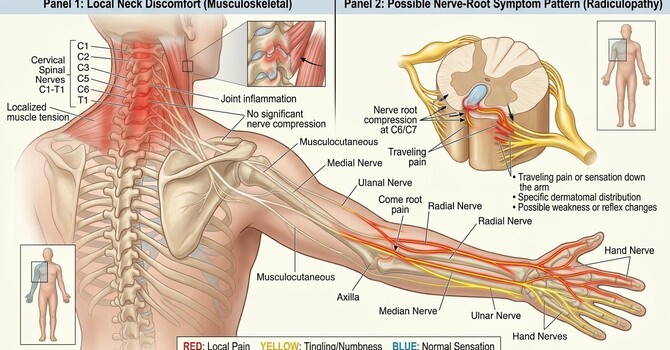
This part matters because neck pain isn't always a simple muscle or joint problem. Certain patterns of symptoms may warrant medical evaluation before conservative treatment proceeds.
Next, we examine movement and function
Depending on your history, the examination may include:
-
Neck rotation, bending and other comfortable movements.
-
Shoulder and upper-back mobility when relevant.
-
Strength and endurance related to your limitations.
-
How symptoms change during specific movements or tasks.
-
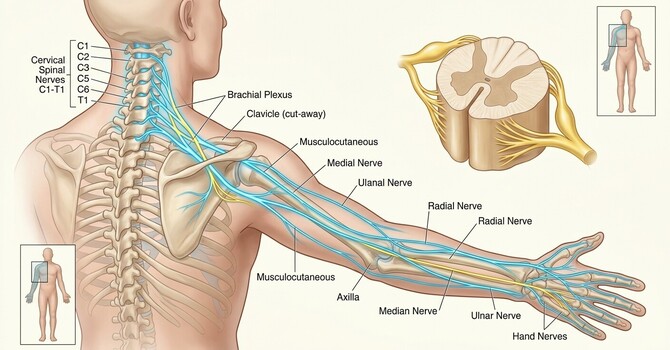
Neurological testing when symptoms suggest possible nerve involvement.
Not every patient needs every test. The examination should be purposeful, based on the questions raised by your history.
For example, someone who has trouble turning their head while driving may need a different assessment emphasis from someone who reports pain with overhead lifting or symptoms that travel down the arm.
We also screen for problems that need medical attention
Most neck pain does not automatically indicate a serious condition, but a responsible evaluation considers warning signs.
Significant trauma, fever with concerning symptoms, a history that raises concern for serious disease, new or progressive weakness, difficulty walking or loss of coordination may require further medical assessment.
Sudden severe neck pain accompanied by stroke-like symptoms is an emergency.
Screening isn't about alarming patients. It's about recognizing when the safest next step is medical investigation rather than routine musculoskeletal care.
How do the findings shape the plan?
The examination helps us develop and test possible explanations for your symptoms. A finding becomes more useful when it relates to your complaint and helps guide a decision.
If a movement restriction is relevant, mobility work may be considered. If strength or endurance limits an important activity, progressive exercise may be appropriate. Depending on the presentation, hands-on care may also be an option within a broader plan.
No single technique is right for every person. Treatment should reflect the findings, your preferences, your current abilities and the goals you want to reach.
Reassessment matters
An evaluation is not just a one-time search for the cause. As care progresses, we should check whether the plan is helping.
Are you turning your head more comfortably? Can you work longer without symptoms building? Is driving easier? Are you returning to exercise?
If the response isn't what we expected, the plan may need to change. That is part of clinical reasoning, not a failure of the process.
Start with your goals
The most useful neck evaluation connects the clinical findings to your life. It should help explain what may be contributing to the problem, what needs further attention and what steps make sense next.
If neck pain is limiting your routine or keeps returning despite your efforts, Optimal Health can evaluate your symptoms and movement to help determine an appropriate path forward. You don't need to know which muscle is responsible before asking for help.