Your neck feels stiff, the area between your shoulder blades feels tired, and a headache begins near the back of your head.
Could your upper back be involved?
It may be relevant, particularly when symptoms change with neck or upper-back movement. But upper-back stiffness doesn't automatically cause headaches, and not every headache needs treatment of the upper back.
How do the neck and upper back work together?
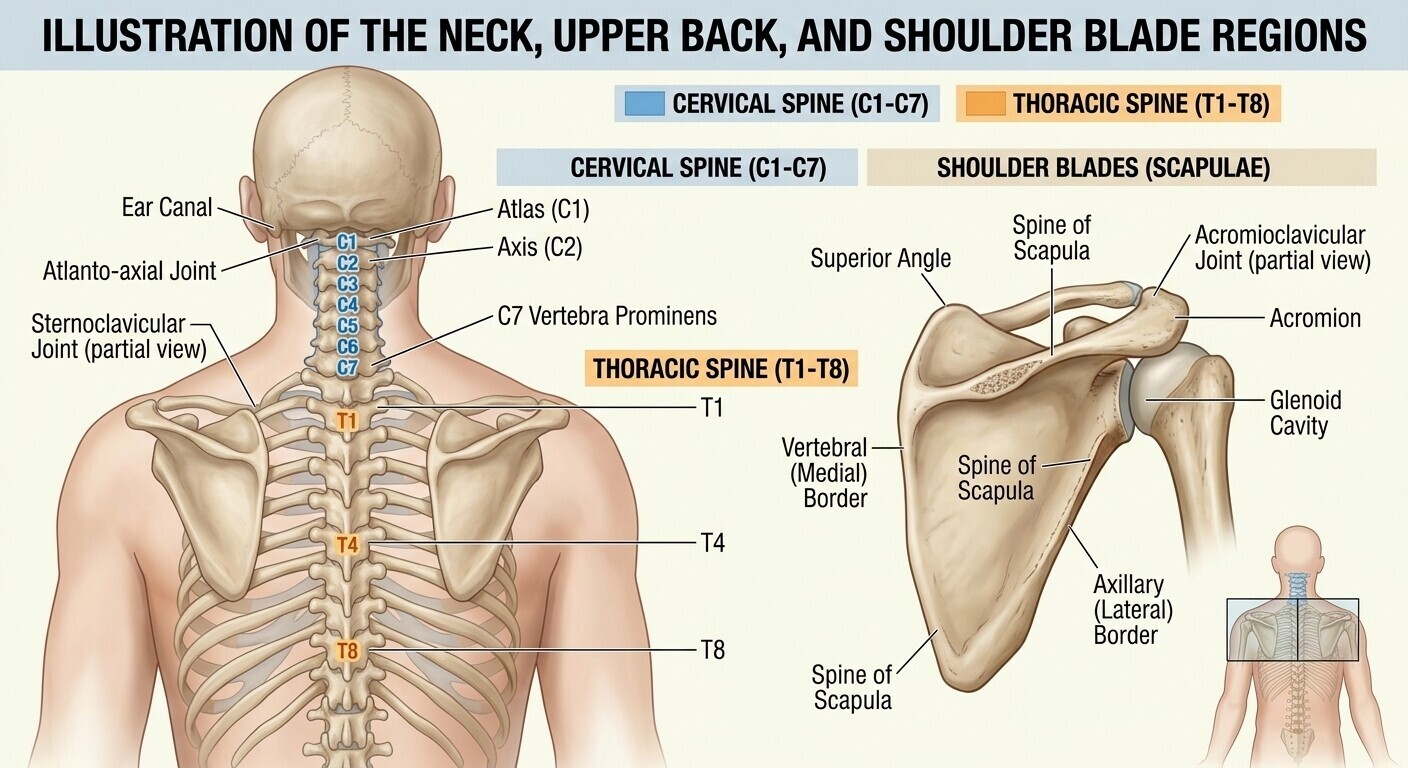
Your cervical spine supports the head and allows you to turn, bend and tilt your neck. The thoracic spine forms the upper and middle back and works with the rib cage and shoulder blades during reaching, rotation and other movements.
When you turn to look behind you or reach overhead, multiple regions contribute. If one area is stiff, uncomfortable or less tolerant of a task, your movement strategy may change.
That observation can help guide an assessment, but it doesn't prove that the restricted region is responsible for a headache.
Can upper-back movement affect headache symptoms?
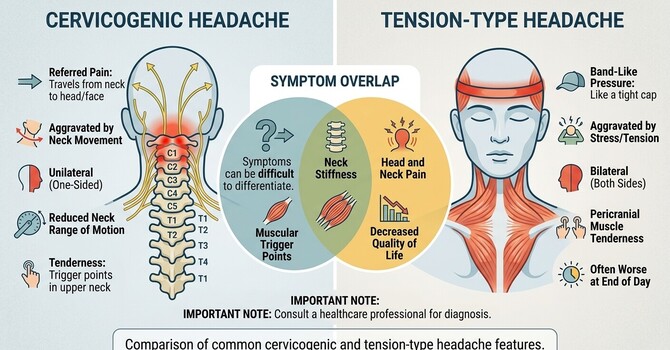
For some people, the neck and surrounding musculoskeletal system contribute to a cervicogenic headache. In those cases, an examination may reveal relevant movement restrictions or symptoms that change with cervical movement.
The upper back may also be relevant to a person's overall comfort during prolonged sitting, driving or overhead activity.
However, tension-type headaches and migraine can occur with neck or upper-back discomfort too. Those symptoms don't automatically make the headache cervicogenic.
What should an assessment examine?
A clinician may ask about the headache pattern, associated symptoms, frequency and duration. If appropriate, the physical examination may include neck rotation, upper-back movement, shoulder function and how familiar symptoms respond to selected movements.
The findings should be interpreted alongside your history. The aim is to identify whether musculoskeletal factors are relevant, not to assume that every stiff area needs to be mobilized.
If your headache pattern suggests a primary headache disorder or another medical cause, that needs to be considered as well.
Would stretching or treatment of the upper back help?
It depends on what the assessment finds.
If upper-back mobility is a meaningful limitation, selected mobility exercises may be useful. If strength or endurance is relevant to your daily tasks, progressive exercise may be more appropriate. Some people with confirmed cervicogenic headaches may benefit from a combination of exercise and manual therapy, although the evidence for specific treatment combinations varies in certainty. <Cite refs={["turn334711search1","turn334711search8"]} />
The goal isn't to make every joint move as much as possible. It's to address relevant limitations and reassess whether they matter to symptoms and function.
Know when a headache needs more than a movement assessment
A sudden severe headache, new neurological symptoms, fever with marked neck stiffness, or a headache after significant trauma requires urgent medical attention. A new or progressively worsening headache should also be medically evaluated.
Look at the whole movement picture
If headaches occur alongside neck stiffness or upper-back discomfort, an evaluation at Optimal Health may help clarify whether movement or musculoskeletal function is contributing.
The neck and upper back are worth examining when relevant, but they should not be blamed automatically. The best next step depends on the headache pattern, the clinical findings and your overall health.