Your neck feels tight, so you stretch it.
Your shoulders feel tense, so you roll them and massage the area.
Sometimes those strategies help. But the feeling of tightness doesn't necessarily tell you what's happening inside the muscle.
One important distinction is the difference between a muscle that feels tight and one that is overactive during a particular task.
What does “tight” mean?
Patients use the word tight to describe many sensations: stiffness, pulling, tension, restricted movement or discomfort.
Those sensations are real, but they don't identify one specific cause.
You may have a measurable restriction in range of motion. You may feel stiff after holding one position for a long time. You may be fatigued, sore after exercise or guarding a movement that feels uncomfortable.
These possibilities can feel similar, even though the best response may differ.
What does “overactive” mean?
In a clinical context, overactivity generally refers to a muscle contributing more than expected to a movement or task, or showing a pattern of activation that may not be well suited to that task.
It isn't the same thing as feeling tense.
For example, a person may raise their shoulders while lifting their arms overhead. A clinician might examine whether that strategy is helping them complete the movement, whether it is associated with symptoms and how the shoulder blade and upper back are moving.
Simply feeling the upper trapezius muscle doesn't prove it is overactive or that it needs to be released.
Why Janda's framework comes into the discussion
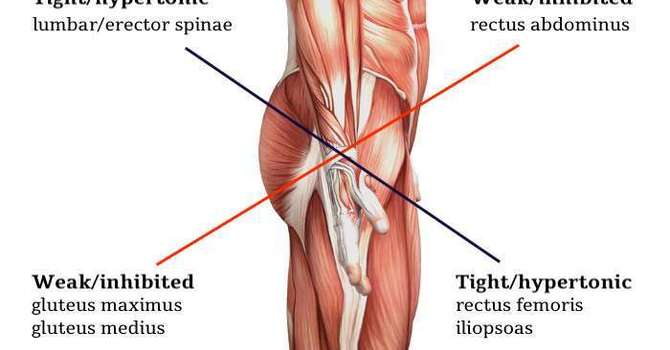
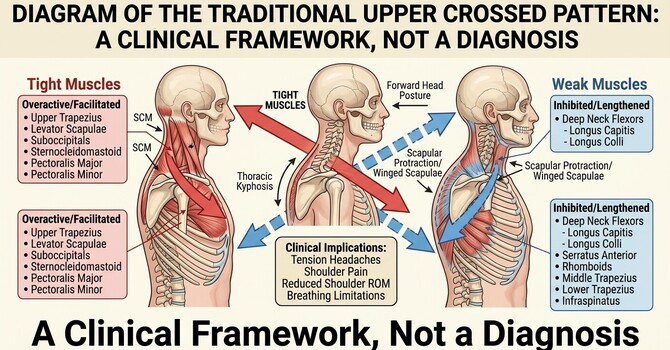
Janda's approach drew attention to recurring patterns of muscle function, including muscles that may show increased activity and others that may demonstrate reduced activation or performance.
This can help clinicians form questions about how a person coordinates movement. It should not be used as a shortcut to label every tight muscle as overactive or every painful muscle as the source of a problem.
The findings need to make sense in the context of the person's symptoms and abilities.
Should you stretch a tight muscle?
Sometimes.
If an assessment identifies a meaningful mobility restriction, stretching or other mobility work may be useful. If the sensation is more closely related to fatigue, activity load or movement strategy, stretching alone may not address the relevant limitation.
You may also benefit from strength or endurance training, movement practice, changes to your daily routine or a combination of approaches.
The choice depends on what the assessment reveals.
How do we tell the difference?
We look at more than how a muscle feels when you press on it.
We may examine range of motion, strength, endurance, coordination and how symptoms change during a relevant activity. We also consider when the sensation occurs, how long it lasts and whether it affects work, exercise or daily tasks.
The goal is to understand what the muscle is doing in context, not to chase every sensation of tightness.
Treat the finding that matters
If your neck feels tight after computer work, the plan may involve more than stretching your neck. If your shoulder tightens during overhead exercise, we may need to examine the full movement and your tolerance for repeated loading.
At Optimal Health, an evaluation can help distinguish a useful clinical finding from a sensation that doesn't need to become a diagnosis. That makes it easier to choose care that supports your actual goals rather than repeatedly treating the spot that feels tight.