%20add%20)
You’ve tried everything for that stubborn low back pain. You stretch your hamstrings, you get massages, you even bought a new ergonomic chair for your desk. Yet, a deep, nagging ache persists in your lower back, maybe accompanied by a pinching feeling in the front of your hip or a general sense of stiffness that you just can’t shake. What if the real culprit isn't your back at all, but a deep, powerful muscle you’ve barely heard of?
Meet the psoas. This hidden muscle is a major player in your body’s core stability and movement, and when it gets tight, it can be the secret source of chronic back and hip pain. Understanding this crucial muscle is the first step toward finding lasting relief. A tight psoas can pull on your spine, tilt your pelvis, and create a cascade of dysfunction that leads to discomfort.
But here's the good news: with the right approach, you can learn how to perform a psoas release safely and effectively. This guide will walk you through what the psoas is, why it gets tight, and how you can begin to release hip flexor tension for better movement and less pain.
What is the Psoas Muscle?
The psoas major, often simply called the "psoas muscle," is one of the most important muscles in your body. It is the only muscle that directly connects your spine to your legs. Originating from the vertebrae of your lower back (lumbar spine), it travels down through your pelvis, joins with another muscle called the iliacus (together known as the iliopsoas), and attaches to the top of your femur (thigh bone).
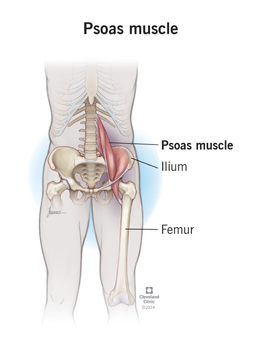
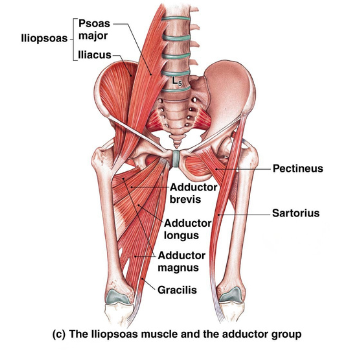
Because of its unique location and function, the psoas is involved in nearly every movement you make. It helps you walk, run, climb stairs, and even just stand upright. It’s a primary hip flexor, meaning it lifts your knee toward your chest. It also plays a vital role in stabilizing your lumbar spine and pelvis, acting as a guy wire for your core. When this muscle is healthy, it allows for fluid, pain-free movement.
Why Does the Psoas Get So Tight?
In our modern world, a tight psoas is incredibly common. This muscle can become chronically shortened and tense for several reasons, often working in combination.
- Prolonged Sitting: When you sit for hours, your hips are held in a flexed position. This keeps the psoas in a shortened state. Over time, the muscle adapts to this position, becoming chronically tight and losing its ability to lengthen properly.
- Chronic Stress: The psoas is deeply connected to your body’s fight-or-flight response. When you experience stress, your body instinctively tenses, preparing to run or curl into a protective ball. The psoas is central to both actions, and constant stress keeps it in a state of high alert and tension.
- Poor Posture: Slouching, standing with an exaggerated curve in your lower back, or letting your pelvis tilt forward can all put excessive strain on the psoas muscle, leading to tightness as it tries to compensate and stabilize your spine.
- Overuse in Exercise: Athletes, especially runners, cyclists, and dancers, are prone to a tight psoas due to the repetitive hip flexion involved in their activities. Without proper stretching and recovery, the muscle can become overworked and strained.
- Weak Core and Glute Muscles: If the surrounding muscles like your glutes and deep abdominals are weak, the psoas often overcompensates, taking on more work than it should and becoming fatigued and tight.
Unrecognized Symptoms of a Tight Psoas
While low back pain and hip flexor tension are the most classic signs, a tight psoas can cause a surprising range of issues that you might not connect to a muscle problem.
- Deep Belly or Groin Pain: Because the psoas lies deep within the abdomen, its tension can sometimes be mistaken for an internal issue.
- Pelvic Floor Tension: The psoas shares fascial connections with the muscles of the pelvic floor. A tight psoas can contribute to pelvic floor dysfunction, pain, and even urinary issues.
- Shallow Breathing: The psoas attaches to the diaphragm, your primary breathing muscle. Tension here can restrict diaphragmatic movement, leading to shorter, more chest-oriented breathing patterns.
- Nerve Irritation: Nerves from the lumbar plexus pass through or near the psoas. A tight muscle can compress these nerves, causing radiating pain, numbness, or tingling down the front of your thigh.
- Digestive Issues: The psoas is located near several digestive organs. While not a direct cause, its chronic tension can contribute to a feeling of unease or disruption in the gut.
Safe & Gentle Strategies for Psoas Release
The goal of a psoas release is not to aggressively mash the muscle into submission. It’s about gently encouraging it to let go of chronic tension. Here are a few safe strategies you can try at home. The key is to move slowly and breathe deeply, which signals to your nervous system that it is safe to relax.
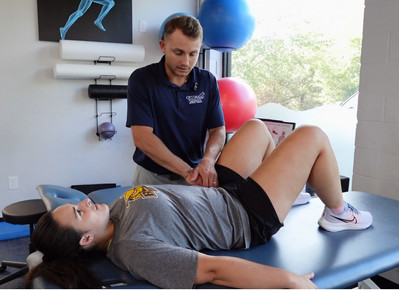
1. Constructive Rest Position
This is the safest starting point for any psoas release work. It places the muscle in a neutral, relaxed position.
- Lie on your back with your knees bent and your feet flat on the floor, about hip-width apart.
- Keep your spine in a neutral position—don’t flatten your low back or arch it excessively.
- Place your hands on your lower belly and simply breathe. Focus on deep, diaphragmatic breaths, feeling your belly rise and fall.
- Stay here for 5-10 minutes. This position alone allows the psoas to soften without being stretched.
2. Gentle Kneeling Lunge (Psoas Stretch)
This classic psoas stretch targets the front of the hip.
- Kneel on a soft surface. Step one foot forward so your front knee is bent at 90 degrees and directly over your ankle.
- Place your hands on your front thigh for support.
- Crucially, engage your core and gently tuck your tailbone under (a slight posterior pelvic tilt). This is the most important part of the stretch. You should immediately feel a mild stretch in the front of the hip of the back leg.
- Hold this position without lunging deeper. Pushing your hips forward often just arches the back and disengages the psoas.
- Hold for 30-45 seconds while breathing deeply. Repeat on the other side.
3. Supine Psoas Release with a Soft Ball
This requires a soft, pliable ball (like a small, slightly deflated playground ball or a specialized psoas release ball). Avoid hard lacrosse balls or foam rollers for this.
- Lie on your stomach.
- Locate the spot just inside your bony hip point.
- Place the soft ball in this area and gently lower your body weight onto it.
- Support yourself with your forearms. Breathe deeply. The goal is not intense pain, but a gentle, sustained pressure.
- If you find a tender spot, pause and breathe into it for 30-60 seconds until you feel a release. Do not press harder.
A Strong Warning: Avoid Aggressive Self-Treatment
You may have seen videos or tools designed for deep psoas release, encouraging you to dig aggressively into your abdomen. Please be extremely cautious. The psoas is surrounded by sensitive structures, including major blood vessels, nerves, and organs like your intestines and kidneys.
Deep, forceful self-palpation without a detailed understanding of anatomy can cause more harm than good. It can bruise the muscle, irritate nerves, or even damage nearby organs. A psoas release should never feel sharp, stabbing, or intensely painful. If it does, you are being too aggressive.
When to Seek Professional Help
While gentle home care can be beneficial, some situations absolutely require a professional evaluation from a chiropractor, physical therapist, or other qualified movement expert. Seek help if you experience:
- Sharp, shooting, or electric-like pain.
- Pain that doesn’t improve with gentle stretching.
- Significant pelvic pain or pelvic floor issues.
- Postpartum recovery, as the psoas is heavily impacted by pregnancy and childbirth.
- Numbness or weakness in your leg.
A professional can accurately diagnose the root cause of your pain—whether it's a tight psoas, a disc issue, or joint dysfunction—and use targeted manual therapy techniques to safely release the muscle while integrating corrective exercises to fix the underlying problem.
Start Your Journey to a Pain-Free Life
If you’re tired of living with chronic hip flexor tension and low back pain, it’s time to find a solution that truly works. Understanding the role of your psoas muscle is a massive step forward—but lasting relief is possible with the right professional support.
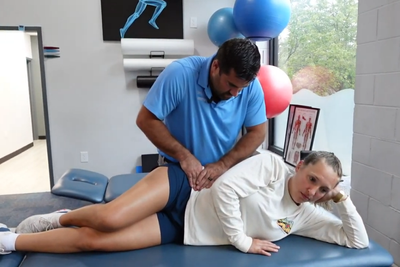
At Optimal Health Chiropractic & Physical Therapy, our team of movement experts in South Jersey specializes in diagnosing and treating psoas-related issues. We offer a comprehensive, evidence-based approach that goes far beyond basic stretches. Our doctors will:
- Perform a thorough assessment to determine if your symptoms are related to a tight psoas or another underlying issue.
- Develop a personalized care plan that may include gentle manual therapy, targeted psoas release techniques, myofascial release, and corrective exercises tailored to your needs.
- Integrate advanced therapies, such as Dynamic Neuromuscular Stabilization (DNS), to retrain movement patterns and relieve the stress on your low back, hips, and pelvic floor.
- Guide you in safe, effective stretching and mobility routines to prevent future tension and promote long-term resilience.
We believe in addressing the root cause of your pain—not just the symptoms—so you can get back to moving, feeling, and living your best.
Are you ready to see if targeted care could be the key to unlocking your pain? Visit Optimal Health Chiropractic & Physical Therapy in South Jersey for a consultation, or schedule an appointment at either our Egg Harbor Township or Washington Township location. Let’s work together to release what’s holding you back and help you move with confidence again.