You have a stressful week, sleep poorly for a few nights and begin experiencing more headaches. Your neck feels tight, so you assume that muscle tension must be the whole explanation.
Muscle tension may be relevant, but headaches are not always caused by a mechanical problem in the neck.
Sleep, stress, daily demands and the biology of headache disorders can all influence the experience.
How can stress influence headaches?
Stress can affect sleep, concentration, muscle activity and daily habits. During a demanding period, you may move less, skip meals or spend longer at a computer without breaks.
Stress can also influence how the nervous system responds to pain. That doesn't mean the pain is imaginary or that it is “all in your head.” It means physical symptoms can be shaped by several interacting systems.
A headache during a stressful week may involve more than one contributing factor.
What role does sleep play?
Poor sleep and headaches often occur together. Sleep disruption may make some people more susceptible to headaches, while pain can also interfere with sleep.
The relationship isn't identical for everyone. Still, a consistent sleep routine and adequate opportunity for rest are reasonable parts of a broader headache-management plan.
If you have persistent insomnia, loud snoring with daytime sleepiness, or other ongoing sleep concerns, discuss them with a healthcare professional.
Is muscle tension still important?
It can be.
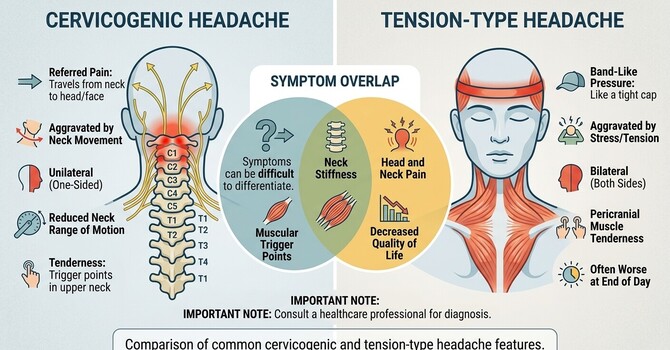
Some people experience neck and shoulder tenderness alongside tension-type headaches. In cervicogenic headache, cervical structures may contribute to the pain. But tight muscles are not proof that the headache originates in the neck, and relaxing them may not address every contributor.
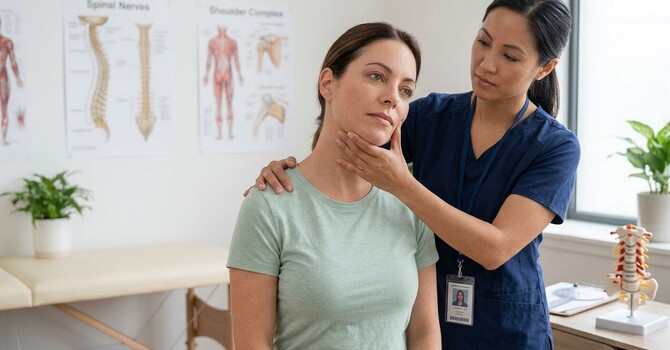
An assessment should consider the headache pattern, associated symptoms, neck function and whether there are reasons to seek medical evaluation.
What practical steps may help?
Depending on your circumstances, consider keeping a regular sleep schedule, taking movement breaks during demanding workdays, eating regularly and making time for manageable physical activity.
Relaxation strategies may also be useful for some people. These are supportive habits, not guaranteed treatments or substitutes for medical care when headaches are frequent, severe or changing.
A headache diary can help identify whether sleep changes, stress, work demands or other factors appear alongside your symptoms.
When should you seek medical advice?
Seek emergency care for a sudden severe headache, new neurological symptoms or other acute warning signs. A new headache with fever and marked neck stiffness, a headache following significant trauma or a progressively worsening headache also needs prompt assessment.
If headaches are frequent, interfere with work or daily life, or lead you to use pain medication regularly, discuss them with a healthcare professional.
Treat the person, not just the tension
At Optimal Health, we consider neck and upper-back function when the history suggests a musculoskeletal contribution. Care may include exercise, movement strategies and selected hands-on approaches when appropriate.
But a complete plan also recognizes when sleep, stress, headache-specific medical care or other factors deserve attention. If neck discomfort accompanies your headaches, an evaluation can help clarify whether movement-related findings may be relevant and whether additional medical assessment is appropriate.