Sciatica: What Causes It and Can Conservative Care Help?
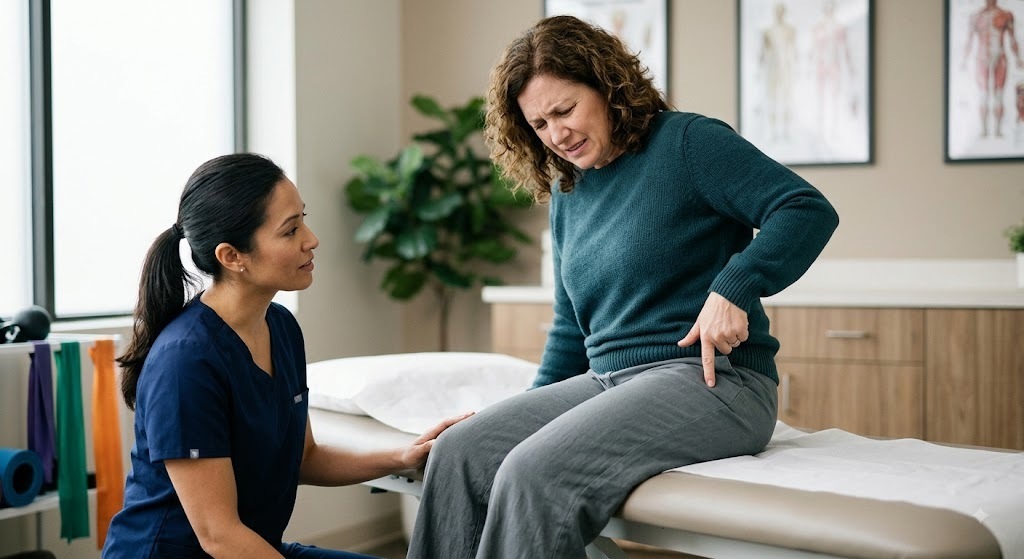
Pain that starts in your low back and travels into your buttock, thigh, or leg can be unsettling.
You might feel a sharp or burning pain. Maybe your leg tingles or feels numb. Sitting in the car becomes uncomfortable. Getting out of bed takes longer than it used to. You may even start wondering whether you have a “pinched nerve” and whether you're headed for surgery.
That condition is often called sciatica.
The good news is that sciatica does not automatically mean you need surgery or that you have permanently damaged your back. For many people, conservative care is an appropriate place to start, with treatment guided by the symptoms, examination findings, and how the condition responds over time. Guidelines recommend staying active and using exercise-based care, while manual therapy may be considered as part of a broader treatment program.
So what exactly is happening when you have sciatica?
What is sciatica?
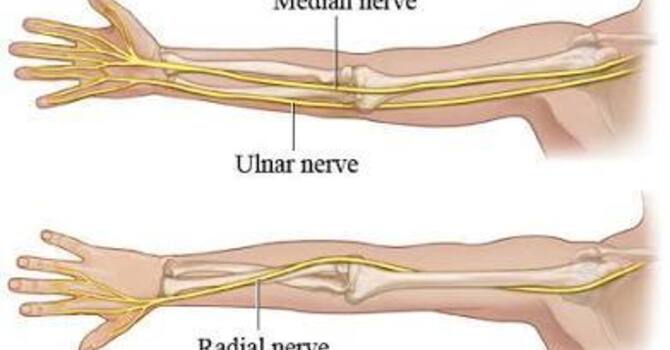
Sciatica describes symptoms that involve the sciatic nerve or the nerve roots that contribute to it.
The sciatic nerve is formed from nerve roots in the lower spine and travels through the buttock and down the leg. When one of those nerve roots becomes irritated or compressed, you may experience symptoms along the path of the nerve.
Common symptoms can include:
-
Pain traveling from the low back or buttock into the leg
-
Burning, electric, or shooting pain
-
Tingling or “pins and needles”
-
Numbness
-
Weakness in part of the leg or foot
Not everyone experiences all of these symptoms.
And importantly, not every case of leg pain is sciatica. Hip problems, local muscle or tendon problems, peripheral nerve disorders, and other conditions can create similar symptoms.
That's one reason an evaluation matters.
What causes sciatica?
There isn't one single cause.
A common cause is a disc problem in the lower spine. A disc can bulge or herniate and irritate a nearby nerve root. Other possible contributors include age-related changes in the spine and narrowing around the nerves, sometimes called spinal stenosis.
But here's where the conversation about sciatica often gets too simplistic.
An MRI might show a disc bulge or other spinal changes, but that finding doesn't automatically explain someone's pain. Similar changes can be present in people who don't have symptoms. That's one reason guidelines don't recommend routine imaging for uncomplicated low back pain or sciatica when there are no signs of a serious underlying condition.
A good clinical assessment looks at the whole picture:
What are your symptoms? Where do they travel? What movements change them? Is there weakness or sensory loss? How are you functioning? And what does the physical examination show?
Those details help determine what should happen next.
Does sciatica always mean a pinched nerve?
Not necessarily in the way people often imagine it.
People frequently use “pinched nerve” as a catch-all explanation for any pain traveling down the leg. Sciatica can involve nerve-root irritation, but the relationship between symptoms and the underlying tissues isn't always as simple as something physically squeezing a nerve.
That distinction matters because it changes how you think about treatment.
The goal isn't necessarily to “put a disc back in place.”
The goal is to reduce symptoms, restore useful movement and function, improve your ability to tolerate normal activities, and address factors that may be contributing to the problem.
Can sciatica get better without surgery?
Often, yes.
Conservative care is commonly the initial approach when there are no indications for urgent surgical evaluation. NICE guidelines recommend education and self-management, continued normal activities as tolerated, and exercise for people with low back pain with or without sciatica.
Research also suggests that exercise can provide a small short-term advantage over advice alone for leg pain, although longer-term differences between exercise and advice to stay active are less clear.
More recent research looking at combined conservative interventions found some benefit for low back pain and short-term disability compared with single interventions in people with sciatica involving a neuropathic pain mechanism. However, the evidence was limited, and combined care did not clearly outperform single interventions for leg pain.
In other words, there isn't one magic sciatica treatment.
A good conservative plan is usually individualized and progressive.
What does conservative care for sciatica involve?
Conservative care can include several components depending on what your evaluation shows.
Movement and exercise
Staying completely inactive usually isn't the goal.
Your clinician may help you identify movements and activities you can tolerate while gradually rebuilding your ability to perform the things you need and want to do.
That might include mobility work, trunk and hip strengthening, progressive loading, aerobic activity, or specific exercises selected based on your symptoms.
The right exercise isn't necessarily the one that works for someone else with “sciatica.”
Manual therapy
Manual therapy can include spinal manipulation, mobilization, or soft-tissue techniques.
Current guidelines support considering manual therapy for low back pain with or without sciatica as part of a treatment package that includes exercise, rather than treating manual therapy as a stand-alone solution.
That distinction is important.
Hands-on treatment may help someone move more comfortably or participate in rehabilitation, but the bigger goal is to help the person become more capable and less limited.
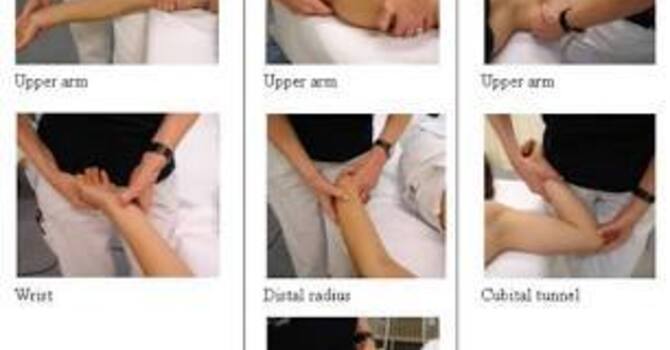
Neural mobility
When nerve-related symptoms are part of the presentation, a clinician may also assess how the nervous system responds to movement.
Neurodynamic or nerve-mobilization techniques may be appropriate for some patients, but they aren't automatically appropriate for everyone with leg pain.
Again, the examination should drive the treatment.
Education and activity modification
Sometimes the most useful intervention is understanding what you can safely continue doing.
That may mean temporarily changing how you sit, lift, train, drive, sleep, or exercise while symptoms settle.
The goal isn't necessarily to avoid every movement that produces discomfort forever.
It's to find a reasonable starting point and progressively expand what your body can tolerate.
What about chiropractic care for sciatica?
Chiropractic care can be part of conservative management for appropriately selected patients.
The important question isn't simply, “Can an adjustment fix sciatica?”
A better question is:
What does this person need to move better and function better while their symptoms settle?
Optimal Health's clinical model combines chiropractic care with rehabilitation rather than treating the adjustment as the entire plan. Its materials describe shared assessment and treatment goals between chiropractic and physical therapy, along with movement-focused care, soft-tissue techniques, and rehabilitation.
The clinic also identifies sciatica among the conditions it treats with approaches including Active Release Technique, the McKenzie Method, chiropractic adjustments, and other conservative interventions.
That doesn't mean every person with sciatica needs every one of those techniques.
Treatment should match the individual.
Do you need an MRI for sciatica?
Not necessarily.
This is one of the most common misconceptions about back and leg pain.
If your symptoms are uncomplicated and there are no concerning findings, routine imaging often isn't necessary at the beginning of care. NICE specifically recommends against routinely offering imaging in non-specialist settings for low back pain with or without sciatica.
Imaging becomes more relevant when the result is likely to change management, when symptoms aren't improving as expected, or when there are findings that raise concern for a more serious problem.
An MRI can show anatomy.
It doesn't automatically tell you why you're hurting.
When should sciatica be evaluated urgently?
Most cases don't require emergency care, but certain symptoms shouldn't be ignored.
Seek urgent medical evaluation if you develop symptoms such as:
-
New loss of bladder or bowel control
-
Difficulty urinating
-
Numbness around the groin, inner thighs, or “saddle” area
-
Significant or progressively worsening weakness in the legs
-
Severe neurological changes
-
Back or leg symptoms following significant trauma
-
Fever or other signs of serious infection
-
A history of cancer combined with concerning new symptoms
These can be signs of conditions that require more urgent investigation, including cauda equina syndrome, fracture, infection, or other serious pathology.
If your symptoms aren't an emergency but are persistent, worsening, or interfering with work, exercise, sleep, or everyday activities, an evaluation can still be worthwhile.
What should you do if your sciatica keeps coming back?
This is where simply chasing pain relief can become frustrating.
Maybe you rest for a few days and feel better.
Then you return to the gym, go for a long drive, spend a weekend doing yard work, or play golf—and the symptoms return.
That pattern doesn't necessarily mean your spine is getting progressively worse.
It may mean that your current capacity hasn't caught up with the demands you're placing on it.
That's why a movement-based evaluation can look beyond the painful area.
At Optimal Health, the clinical philosophy emphasizes assessing the broader movement pattern, identifying contributing factors, using hands-on treatment when appropriate, and progressing rehabilitation toward the activities that matter to the patient.
For someone with sciatica, that may mean looking at lumbar movement, hip mobility, trunk and lower-extremity strength, nerve-related symptoms, activity tolerance, and the specific movements that reproduce or relieve symptoms.
The plan can then change as you improve.
You don't have to assume surgery is your next step
Hearing the word “sciatica” can make people think they're headed straight toward injections, surgery, or a lifetime of back problems.
That's not the only path.
For many people, conservative care is a reasonable starting point. Staying active within your tolerance, progressively exercising, understanding your symptoms, and using appropriately selected hands-on care can all be part of that process.
And if your symptoms don't improve as expected, that information matters too. A good care plan includes reassessment and knowing when additional testing, specialist evaluation, or a different treatment approach is appropriate.
The goal isn't simply to make the pain disappear temporarily.
It's to help you move, work, exercise, and live with more confidence again.
How Optimal Health approaches sciatica
At Optimal Health Chiropractic & Physical Therapy, sciatica care is approached through an integrated chiropractic and rehabilitation model. The focus is on understanding the person's symptoms and movement, using appropriate hands-on treatment when indicated, and building the capacity needed for long-term function.
If you're dealing with persistent leg pain, numbness, tingling, or symptoms that keep interfering with the activities you enjoy, an evaluation can help determine whether conservative care is appropriate and what factors may be contributing to the problem.
You don't need to assume that surgery is inevitable.
The first step is understanding what's actually going on.