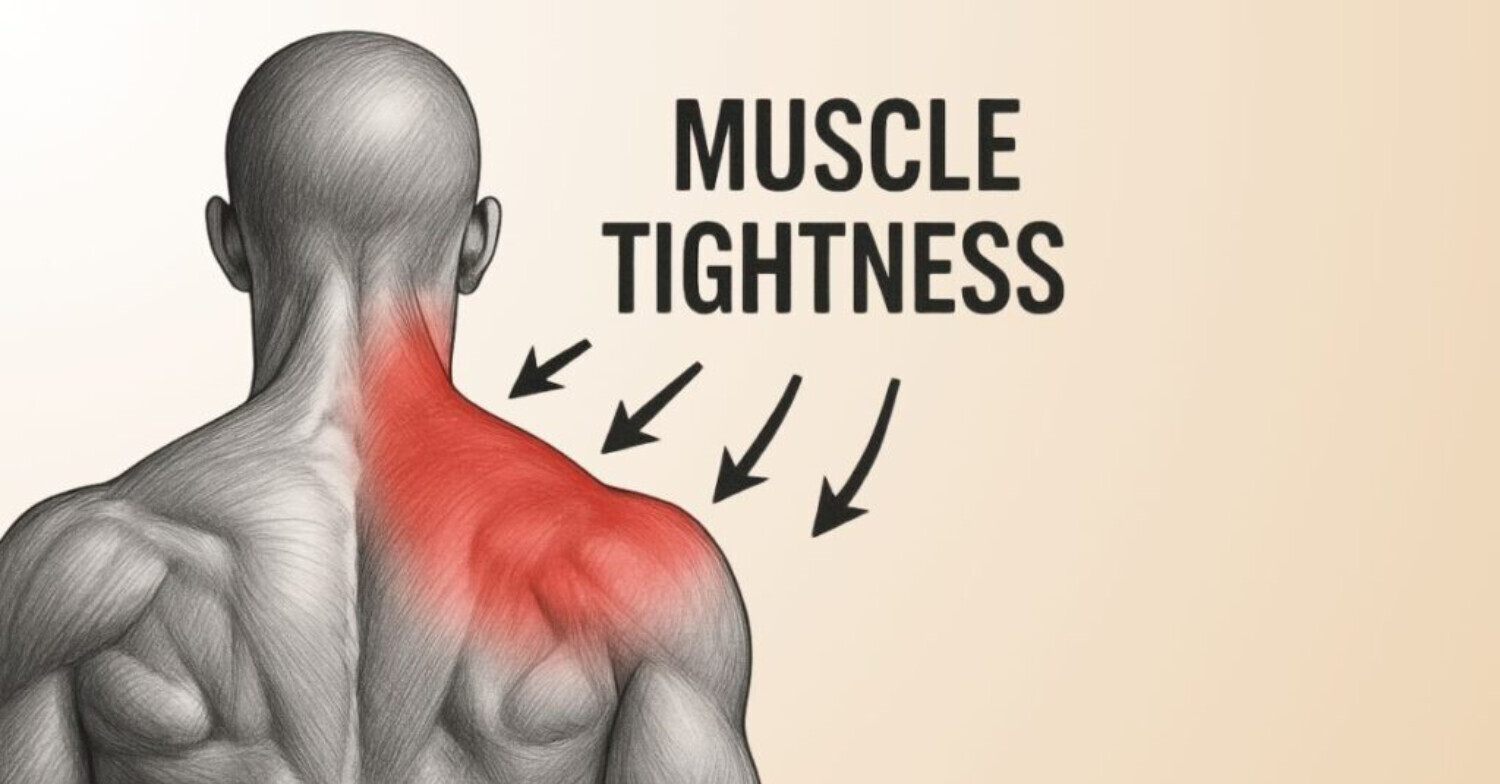
Many people deal with stubborn muscle tightness. You stretch, use a foam roller, or apply a heat pack, but the tension keeps returning. It can feel like your muscles are locked in a shortened position, making daily movements or exercise uncomfortable.
When stretching alone does not relieve the stiffness, it helps to look at muscle tension differently. Tight muscles do not always need aggressive stretching. Sometimes, they need a neurological reset. This is where the PIR Technique, or Post-Isometric Relaxation, can support your recovery.
At Optimal Health, we help patients across South Jersey find relief from recurring tightness and restricted movement. If you visit our clinics in Egg Harbor Township or Turnersville, you may hear us talk about this gentle approach to muscle care. Here is a closer look at what PIR Technique is and how it may help you move more freely.
Why Muscles Stay Tight Even After Stretching
To understand how PIR works, it helps to understand why muscles get tight in the first place. A tight muscle is not always a short muscle. Often, a muscle stays tight because the nervous system tells it to hold tension.
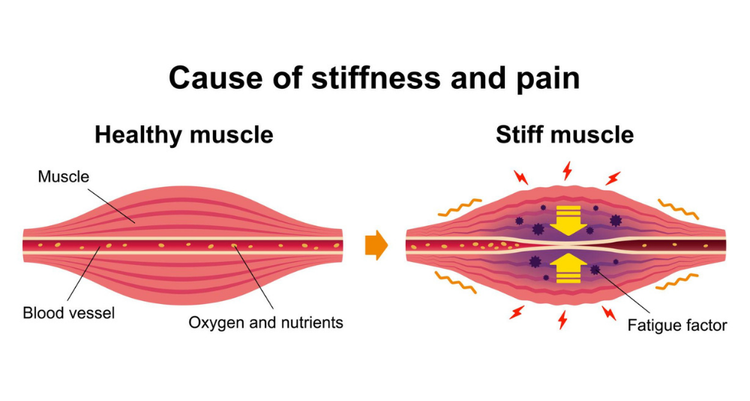
Muscles may stay tight because they are:
- Guarding: If a nearby joint is irritated or unstable, the body may tighten surrounding muscles to protect the area.
- Overworked: Poor posture or poor movement patterns can force certain muscles to work harder than they should, leading to constant tension.
- Reacting to joint stiffness: When a joint lacks normal mobility, the attached muscles often become tense.
- Responding to stress: Physical or mental stress can cause the nervous system to keep muscles in a low-level state of contraction.
When a muscle is guarding or overworked, aggressive stretching can sometimes backfire. If you pull too hard on a muscle that is trying to protect a joint, the nervous system may respond by tightening the muscle even more. This is known as a stretch reflex.
What PIR Technique Is
PIR Technique stands for Post-Isometric Relaxation. It is a highly effective, gentle form of manual therapy used to lengthen tight muscles, reduce muscle guarding, and improve range of motion.
Unlike traditional passive stretching, where you simply pull on a muscle and hold it, PIR involves active participation. The technique uses the muscle's own neurological mechanisms to coax it into relaxing. It is widely used by physical therapists, chiropractors, and sports medicine professionals to safely reduce muscle tension without triggering a defensive stretch reflex.
How Post-Isometric Relaxation Works
The science behind Post-Isometric Relaxation is both simple and fascinating. The technique takes advantage of a natural reflex in the body. When a muscle contracts and then stops contracting, there is a brief window where the muscle completely relaxes.
During this relaxation phase, the muscle temporarily turns off its resistance to being stretched. A practitioner can use this window to gently guide the muscle into a new, longer position. Over several repetitions, this process helps reset the muscle's resting tone.
How Gentle Muscle Contraction Reduces Tension
The process relies on a very light, controlled muscle contraction followed by a complete relaxation.
First, your provider will guide the tight muscle into a position where it feels a very mild stretch. Then, they will ask you to contract that specific muscle gently against their hand. You do not push hard. You only use about ten to twenty percent of your strength. You hold this gentle contraction for several seconds while you breathe in.
Next, you release the contraction and exhale slowly. As you breathe out and the muscle relaxes, your provider gently moves the muscle into a slightly deeper stretch. This new position is held for a few seconds. By repeating this cycle, the technique helps calm the nervous system and allows the muscle tissue to lengthen safely.
What Patients May Feel During Treatment
If you are used to deep tissue massage or intense stretching, PIR Technique will feel very different. The treatment is exceptionally gentle.
You will not feel aggressive pulling or deep, painful pressure. Instead, you may feel a sense of mild resistance followed by a distinct sensation of release or letting go. Because the technique requires your active participation through light pushing and breathing, patients often feel engaged in the process. Many people find the rhythmic breathing and gentle stretching to be very relaxing, and they often notice an immediate improvement in how freely the area moves.
Areas Where PIR May Be Used
Because it is so gentle, Post-Isometric Relaxation can be used on nearly any muscle in the body. It is often used for:
- Neck tightness: Many desk workers hold tension in their upper back and neck. PIR can help relax muscles like the upper trapezius and levator scapulae to ease neck stiffness.
- Shoulder tension: Guarding around the shoulder blade can limit arm movement. PIR may help restore normal mobility to the chest and shoulder muscles.
- Low back tightness: When the lower back feels locked up, gently contracting and relaxing the muscles can provide relief without the need for forceful stretching.
- Hip tightness: The hip flexors often become chronically tight from prolonged sitting. PIR offers a great way to open up the front of the hips.
- Hamstring tightness: Hamstrings are notoriously stubborn. PIR can support better hamstring flexibility by bypassing the stretch reflex.
- Sports-related muscle tension: Athletes often develop tight areas from repetitive training. PIR may help reduce this tension and improve athletic recovery.
How PIR Differs From Regular Stretching
Regular stretching usually involves pushing a muscle into a lengthened position and holding it there. While this can be helpful, it often fights against the body's natural stretch reflex. If you pull too hard, the muscle fights back.
PIR differs because it uses the nervous system to your advantage. By contracting the muscle first, you signal the nervous system to let go of the tension. It is a dialogue with the nervous system rather than a forceful mechanical pull on the muscle tissue. This makes PIR an excellent option for highly sensitive, guarded, or painful areas.
Combining PIR With Other Treatments
While PIR Technique is effective on its own, we often see the best results when we combine it with a broader approach to care. Post-Isometric Relaxation helps calm the tight muscles, which opens the door for other therapies to work even better.
PIR may be combined with:
- Chiropractic care: Once muscle guarding is reduced, chiropractic adjustments can help restore proper joint mechanics more easily.
- Physical therapy: Relieving tightness allows you to perform strengthening exercises with better form and a fuller range of motion.
- Manual therapy: Targeted soft tissue work can help address deeper tissue restrictions.
- ART (Active Release Techniques): PIR can complement ART by calming the nervous system while ART addresses scar tissue and adhesions.
- Graston Technique: Instrument-assisted soft tissue mobilization can be paired with PIR to improve tissue glide and reduce fascial tension.
- Mobility work: Once PIR helps lengthen a muscle, ongoing mobility routines help you maintain that new range of motion.
- Corrective exercises: We use specific exercises to strengthen the opposing muscles, ensuring the tightness does not quickly return.
How Optimal Health Uses PIR Technique
At Optimal Health, our goal is to help you move comfortably and live actively. We understand that chasing symptoms is rarely enough. If you come to our clinic with a stiff neck, a locked-up lower back, or tight hamstrings, we take the time to evaluate why the tension is there.
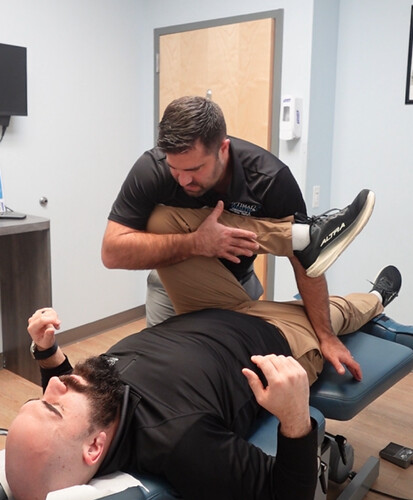
We use PIR Technique as part of a comprehensive treatment plan tailored to your specific needs. By combining gentle Post-Isometric Relaxation with targeted joint care, soft tissue therapies, and guided corrective movement, we help address both the cause and the symptoms of your discomfort.
Our team takes pride in offering conservative, patient-centered care. Whether you visit us in Egg Harbor Township or at our Turnersville location (121 Johnson Road, Unit 1, Turnersville, NJ 08012), we focus on empowering you with treatments that make sense for your body. We do not just stretch the tight spots; we help your body relearn how to move without unnecessary guarding and restriction.
If you are dealing with recurring muscle tightness, chronic stiffness, or limited mobility, you do not have to just live with it. A different approach may be exactly what your body needs to finally let go of the tension. We invite you to schedule an evaluation at Optimal Health to see whether PIR Technique and our integrated approach to care may be appropriate for you. Let us help you get back to moving well and feeling your best.