Pickleball Injuries: The Most Common Injuries and How to Prevent Them
Pickleball looks easy.
The court is smaller than a tennis court. The paddle is light. The rallies can start at a comfortable pace.
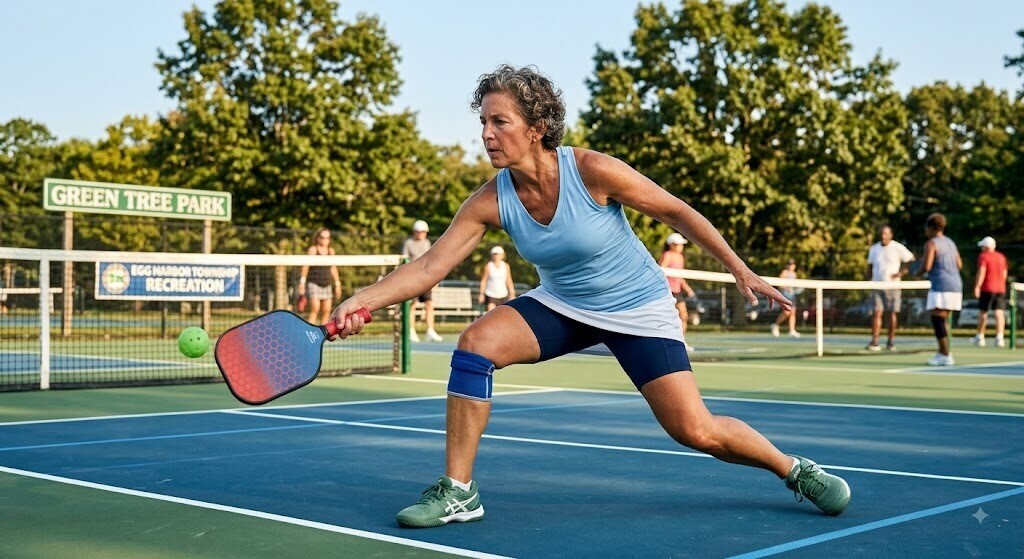
Then you play for two hours and realize you've lunged for more balls than you can count, reached overhead, changed direction repeatedly, and made hundreds of swings.
The next morning, your shoulder hurts.
Or your elbow.
Maybe your knee or Achilles is sore. Maybe you rolled your ankle chasing a ball that was just out of reach.
As pickleball has grown, so has the number of players dealing with injuries. Research has identified sprains, strains, fractures, and tendon injuries among common pickleball-related problems, with falls and rapid directional movements playing an important role in lower-extremity injuries.
That doesn't mean pickleball is dangerous.
It means your body has to be prepared for the demands of the sport.
Why does pickleball cause injuries?
Usually, it's not one bad shot.
Pickleball combines several physical demands:
-
Repeated swings
-
Quick starts and stops
-
Lateral movement
-
Lunging
-
Reaching
-
Rotating through the trunk
-
Rapid changes of direction
-
Repeated loading of the legs and feet
If you've been playing consistently for years, your body may be well adapted to those demands.
But if you recently started playing, increased your number of games, joined a league, or returned after time away, the workload can change quickly.
That's where problems can develop.
A nationwide study of 1,758 pickleball players found that more frequent weekly play was associated with greater odds of injury. The study also found that many players continued to play despite pain.
The lesson isn't “don't play often.”
It's that your training and recovery need to keep pace with what you're asking your body to do.
The most common pickleball injuries
Pickleball injuries don't happen in one particular body part.
Different studies report somewhat different injury patterns depending on the players studied and how injuries are defined. But several areas consistently show up.
1. Shoulder pain
Your shoulder works repeatedly during serves, overhead shots, drives, and other strokes.
Rotator cuff-related pain can develop when the shoulder is repeatedly loaded without enough capacity to handle the workload.
You may notice pain:
-
Reaching overhead
-
Serving
-
Hitting an overhead
-
Reaching behind you
-
Lifting your arm
-
Sleeping on the affected side
Shoulder pain doesn't automatically mean you have a rotator cuff tear.
There are many reasons a shoulder can become painful, and an evaluation can help determine what movements and loads are actually contributing.
Optimal Health's materials identify rotator cuff and shoulder pain among common pickleball injuries treated at the practice.
2. Tennis elbow and golfer's elbow
You don't have to play tennis to develop tennis elbow.
The repeated gripping, wrist movement, and paddle swings involved in pickleball can stress the tissues around the elbow.
Tennis elbow generally refers to pain involving the outside of the elbow, while golfer's elbow involves the inside.
You might notice pain when:
-
Gripping your paddle
-
Opening a jar
-
Carrying something
-
Shaking hands
-
Playing several games in a row
The important point is that elbow pain isn't necessarily about one bad swing.
It can be influenced by the amount of load, your current strength and capacity, technique, recovery, and other factors.
Optimal Health specifically lists both tennis and golfer's elbow among pickleball-related injuries it treats.
3. Knee pain
Pickleball requires repeated squatting, lunging, stopping, and changing direction.
That can put substantial demands on the knee.
Some players develop gradual knee pain. Others experience a more sudden injury while lunging, changing direction, or trying to reach a ball.
A 2025 nationwide study found the knee was the most commonly reported region for ongoing pain or injury among its pickleball participants.
But “knee pain from pickleball” isn't a diagnosis.
Patellofemoral pain, tendon problems, ligament injuries, meniscal problems, and other conditions can present differently.
The location of the pain, how it started, and what movements reproduce it all matter.
4. Ankle sprains and foot injuries
Pickleball can involve rapid lateral movement and sudden changes of direction.
One moment you're standing at the kitchen line.
The next you're moving quickly toward a ball.
If your foot lands awkwardly or you lose your balance, the ankle can be exposed to a sudden load.
Recent research on lower-extremity pickleball injuries identified falls, forward running or lunging, and foot/ankle inversion among the leading injury mechanisms.
That makes balance, lower-extremity strength, and movement control worth considering as part of injury prevention.
5. Achilles and heel pain
The calves and Achilles tendon have to repeatedly absorb and produce force during starts, stops, and changes of direction.
For a player who has recently increased their pickleball volume, that can be a meaningful change in workload.
Achilles tendon injuries, including serious tears, have been reported in pickleball injury research.
Heel pain can also become an issue, particularly when players suddenly spend more time on their feet.
Pain in this area shouldn't automatically be labeled plantar fasciitis or Achilles tendinopathy without an appropriate evaluation.
Why do injuries happen after you've been playing for a while?
This is something recreational athletes often find confusing.
You may have played pickleball for months without a problem.
Then suddenly your shoulder or knee starts hurting.
That doesn't necessarily mean something catastrophic happened.
Your body responds to load.
Maybe you went from playing once a week to four times a week.
Maybe you joined a tournament.
Maybe you started playing longer matches.
Maybe you added pickleball on top of running, golf, strength training, or another sport.
Your total workload matters.
The nationwide pickleball study found higher weekly playing frequency was associated with greater odds of injury.
That doesn't mean playing more is inherently bad.
It means increasing your activity faster than your body can adapt may create problems.
Can you prevent pickleball injuries?
You can't eliminate every risk.
A player can warm up perfectly and still roll an ankle.
But there are sensible ways to improve your preparation.
Start with a dynamic warm-up
Don't walk onto the court and make your first movement a full-speed lunge.
Spend several minutes gradually increasing your movement and heart rate.
Your warm-up can include:
-
Easy walking or jogging
-
Side-to-side movement
-
Controlled lunges
-
Gentle squats
-
Arm circles
-
Shoulder movements
-
Gradual practice swings
Recent research on exercise-based injury prevention supports the potential value of neuromuscular warm-ups, dynamic movement, and progressive training, although the evidence varies by sport and population.
The goal isn't to create a complicated 20-minute routine.
It's to prepare your body for what comes next.
Build strength outside the court
Playing pickleball is exercise, but it isn't necessarily a complete strength program.
Strength training can help you develop the capacity needed for repeated court movement.
A well-rounded program might include:
-
Squats or sit-to-stand movements
-
Lunges
-
Calf raises
-
Single-leg exercises
-
Hip strengthening
-
Trunk strengthening
-
Shoulder strengthening
-
Grip and forearm work when appropriate
You don't need to train like a professional athlete.
You do need enough capacity for the level of pickleball you're playing.
Don't ignore recovery
If you play hard every day, your body may not have enough time to adapt.
Recovery includes more than taking a day off.
Sleep, nutrition, hydration, overall training volume, and how you combine different activities all matter.
A 2026 systematic review found evidence supporting progressive load and exercise-based strategies for performance and injury-risk reduction, while noting that recovery evidence is more heterogeneous.
Pay attention to your court movement
Pickleball requires quick reactions.
But not every ball needs to be chased at maximum speed.
If you're repeatedly losing your balance during lateral movement or lunging beyond your current ability, that's useful information.
You may need to work on strength, balance, mobility, or movement control.
And if you're playing doubles, communication with your partner can help reduce chaotic movements where both players suddenly chase the same ball.
Wear appropriate footwear
Pickleball-specific or court-appropriate footwear can provide a stable base for the movements you're making.
Shoes won't prevent every injury, but your footwear is part of the equipment supporting you through repeated lateral movement.
If you're playing in worn-out running shoes or footwear that isn't designed for court movement, it may be worth reconsidering.
Should you play through pickleball pain?
This depends on the pain.
Mild muscle soreness after doing something new isn't the same as persistent joint pain.
But if pain keeps getting worse as you play, changes how you move, causes you to compensate, or remains significant after the game, continuing to increase your workload isn't a great strategy.
The nationwide pickleball study found that a substantial number of players reported continuing to play despite pain.
That can create a frustrating cycle:
Play → hurt → rest → feel better → play again → hurt again.
If that's happening repeatedly, it's worth figuring out why.
What if the same injury keeps coming back?
This is where simply treating the painful area may not be enough.
If your shoulder hurts every time you play, the question isn't only:
“How do we make your shoulder feel better?”
It's also:
“Why does your shoulder struggle with the demands of pickleball?”
The same applies to your knee, elbow, ankle, or heel.
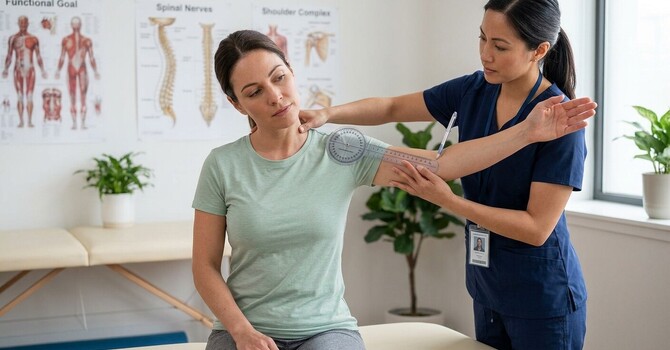
At Optimal Health, the clinical approach emphasizes movement-based assessment rather than focusing only on where it hurts. The practice describes combining chiropractic care and rehabilitation, assessing the broader movement pattern, and progressing patients toward the activities they want to return to.
For a pickleball player, that may mean assessing:
-
Shoulder mobility and strength
-
Elbow and wrist function
-
Hip and lower-extremity strength
-
Ankle mobility and stability
-
Balance
-
Trunk movement
-
Sport-specific movement
-
Training volume and recovery
The goal is to understand the player, not just label the injury.
When should you get a pickleball injury evaluated?
Some soreness after a hard game may settle with appropriate recovery.
An evaluation is more appropriate when you have:
-
Pain that repeatedly returns when you play
-
Significant swelling
-
Loss of strength or range of motion
-
A joint that repeatedly gives way
-
Persistent pain that affects daily activities
-
Pain that is getting progressively worse
-
Numbness or unusual neurological symptoms
-
A significant injury from a fall or collision
-
A sudden “pop” followed by significant pain or loss of function
Falls deserve particular attention because they are an important mechanism of lower-extremity injuries in pickleball, and falls can also result in fractures or upper-extremity injuries.
Don't let an injury take you off the court
One of the best things about pickleball is that it gets people moving.
You shouldn't have to give it up just because your shoulder, elbow, knee, ankle, or heel started hurting.
But staying active doesn't mean ignoring symptoms.
A smarter approach is to understand the demands of the sport, build the physical capacity to handle those demands, and address problems before they become the reason you can't play.
At Optimal Health Chiropractic & Physical Therapy, the focus is on movement, recovery, performance, and getting people back to the activities they enjoy. The practice's sports approach combines movement assessment, hands-on care when appropriate, rehabilitation, and return-to-sport progression.
If pickleball pain keeps coming back or is interfering with your ability to play, an evaluation can help determine what's contributing to the problem and what needs to improve.
The goal isn't just to get you off the injured list. It's to help you stay on the court.