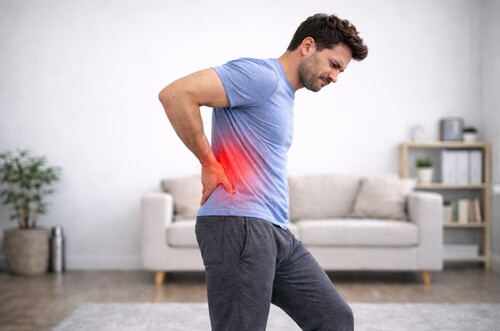
Waking up with a stiff back is one thing, but feeling a sharp, nagging ache on just one side of your lower back can be particularly confusing. Is it a pulled muscle? Did you sleep funny? Is it something more serious?
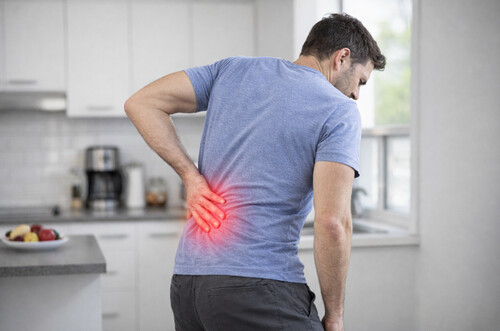
Unilateral low back pain—pain that stays strictly on the left or right side—is incredibly common. It often feels different than the general "band" of soreness that spans across the waist. You might notice it when you stand up after sitting for too long, when you lean over to tie your shoes, or perhaps when you’re carrying groceries.
At Optimal Health, we see this type of discomfort daily at our clinics. The good news is that pain on one side of the back usually has a logical, mechanical explanation. It is rarely a sign of something scary; rather, it’s often your body’s way of telling you that one side is working a little harder than the other.
Why Does Pain Strike Only One Side?
Our bodies are designed to be symmetrical, but our lives rarely are. We drive with one foot, carry bags on one shoulder, sit with our legs crossed one way, and tend to favor one side when standing. Over time, these small habits can create imbalances in how our muscles and joints function.
When pain shows up exclusively on the left or right, it usually points to a specific structure that is irritated or a movement pattern that is off-balance. Here are some of the most common contributors we see in our South Jersey offices.
1. SI Joint Irritation
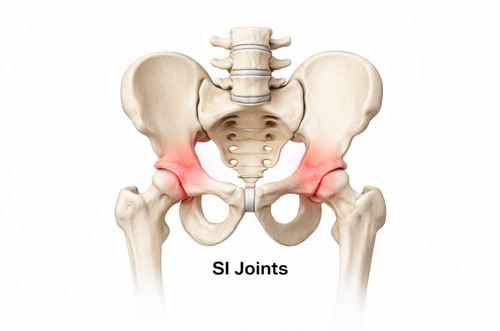
The sacroiliac (SI) joints connect your tailbone (sacrum) to your hip bones (ilium). You have one on the left and one on the right. These joints are designed to be stable, transferring weight from your upper body to your legs.
However, if an SI joint becomes too stiff or, conversely, moves a little too much, it can become inflamed. This often feels like a sharp, pinpoint pain on one side of the lower back, right near the "dimple" above your buttocks. It might also radiate slightly into the glute or back of the thigh.
2. Hip Mobility Limitations
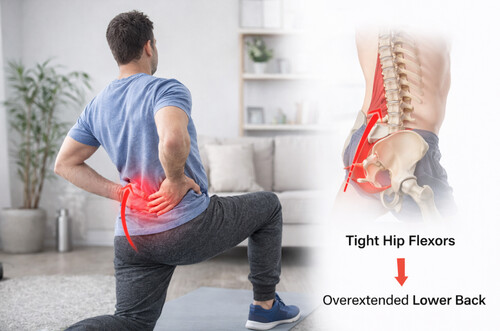
The lower back and the hips are neighbors that constantly talk to each other. If your hip joint on one side is stiff and doesn’t rotate or extend well (common in people who sit all day), your lower back has to pick up the slack.
For example, if your right hip is tight, your lower back on the right side may be forced to twist or bend more than it was designed to during walking or running. This compensation can eventually lead to one-sided soreness and fatigue.
3. Muscle Imbalance (The QL and Glutes)
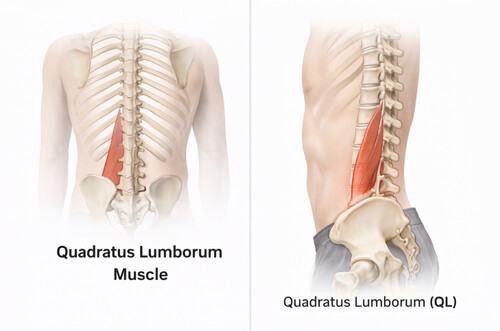
There is a deep muscle in your lower back called the Quadratus Lumborum (QL). It runs from the top of your hip to your lowest rib and spine. When this muscle gets tight or overworked on one side—often due to compensating for a weak glute muscle on the opposite side—it can feel like a deep, dull ache that won’t go away.
Similarly, if your hip flexors are tight on one side, they can pull on your pelvis, tilting it forward and jamming the joints in your lower back on that same side.
4. Posture and Weight-Shifting Habits
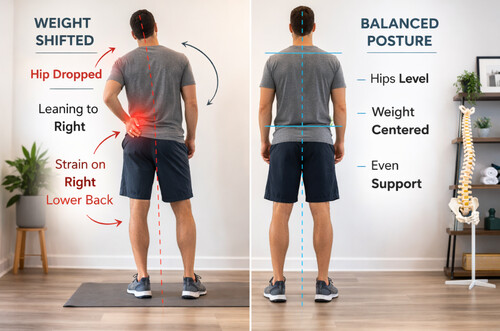
Pay attention to how you stand when you’re waiting in line at the grocery store. Do you shift all your weight onto your right leg and let your left hip drop? This "hanging on the hip" posture is a major contributor to one-sided back pain.
Parents often experience this too. If you always carry your toddler on your left hip, your trunk muscles on the right side have to work overtime to keep you upright. Over weeks and months, this asymmetry creates strain.
5. Core Weakness or Poor Control
Your core isn't just about "abs"; it’s a cylinder of muscles that supports your spine. If these muscles aren't firing correctly, or if one side is weaker than the other, your spine loses its natural protective brace. This lack of stability can cause the small facet joints on one side of the spine to compress, leading to local inflammation and pain.
How to Tell If It’s Muscle vs. Joint-Related
While a professional evaluation is the only way to know for sure, paying attention to how the pain behaves can give you clues.
- It might be muscular if: The pain feels like a dull ache, tightness, or a spasm. It often feels better with heat or gentle movement but worse after holding a static position (like sitting) for a long time. You might feel relief when you stretch the side of your trunk.
- It might be joint-related if: The pain is sharp, stabbing, or "catchy." It tends to hurt specifically with extension (leaning back) or twisting motions. You might feel like your back is "locked" or "stuck" when trying to stand up straight after sitting.
Note: This is for educational purposes only. If you are unsure, it is always best to see a professional.
What Helps: Practical Steps for Relief
When one side of your back is hurting, your instinct might be to lie down and wait for it to pass. However, prolonged bed rest is rarely the answer. In fact, it can often make stiffness worse.
Here are evidence-informed strategies we recommend at Optimal Health to get you moving comfortably again.
1. Movement is Medicine
Gentle, graded movement helps flush out inflammation and keeps muscles from seizing up. Walking is one of the best things you can do for one-sided back pain. It engages the core, mobilizes the hips, and gently rotates the spine without heavy load. Start with short, 10-15 minute walks on flat ground.
2. Gentle Mobility
Focus on mobilizing the areas around the pain, specifically the hips and the mid-back (thoracic spine).
- Cat-Cow Stretch: Moving gently on hands and knees can help lubricate the spinal joints.
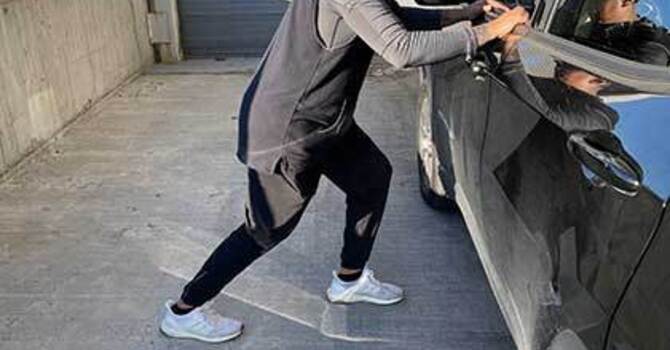
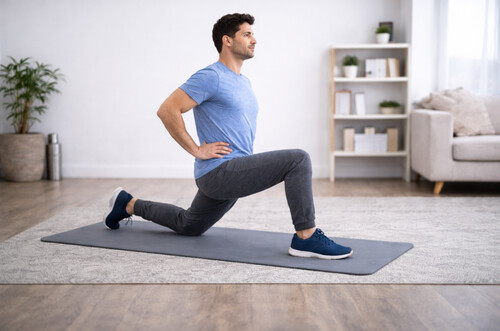
- Hip Flexor Stretches: Opening up the front of the hips can take pressure off the lower back.
- Thread the Needle: This yoga pose helps mobilize the upper back, reducing the rotational demand on your lower back.
3. Strengthen the Support System
Once the acute pain settles, strengthening is key to prevention. Focus on the glutes and the core. Exercises like bridges, bird-dogs, and side planks are excellent for building stability without overloading the spine. A strong glute muscle on the painful side can often take the burden off an overworked back muscle.
4. Watch Your Habits
Be a detective about your daily postures.
- Sitting: Ensure your weight is evenly distributed on both sit bones. Don't sit on one foot or cross your legs for hours.
- Standing: Keep your weight centered. If you have to stand for a long time, try putting one foot up on a small stool to take pressure off the back.
- Carrying: If you carry a heavy bag, switch shoulders frequently or use a backpack.
5. Know When to Seek Evaluation
Most one-sided back pain is mechanical and resolves with time and better movement. However, you should seek professional care if:
- The pain persists for more than a few weeks.
- The pain radiates down your leg past your knee.
- You experience numbness, tingling, or weakness in your leg or foot.
- The pain keeps you from sleeping or performing daily tasks.
Finding Balance in South Jersey
Ignoring one-sided back pain usually leads to more compensation and, eventually, more pain. The goal isn't just to make the pain stop, but to understand why it started so you can prevent it from returning.
Whether you visit us in Egg Harbor Township or at our new facility in Turnersville, our team at Optimal Health is ready to help you figure it out. We look at the whole picture—how your hips move, how your core stabilizes, and how your daily habits impact your spine.
If you’re dealing with persistent pain on one side of your lower back, let us help you find relief. Schedule an evaluation today, and let’s get you back to feeling balanced and moving freely. Call us at 609-415-2821.