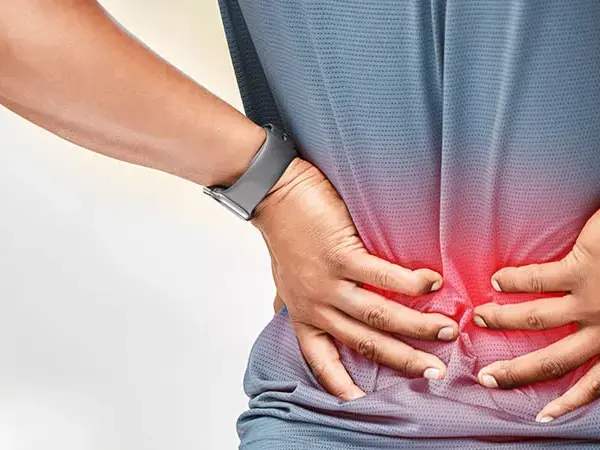
If your low back hurts, it’s natural to focus on exactly where you feel it.
Maybe it’s right above your belt line. Maybe it’s more toward one side. Maybe it spreads into your buttock or leg. You may even be able to point to the exact spot that bothers you most.
That location matters. But it doesn’t always tell the whole story.
Low back pain is not one single condition, and two people can have pain in nearly the same place for very different reasons. That’s one reason a good evaluation starts with more than simply asking, “Where does it hurt?”
What does your pain actually do?
A clinician will want to know how your symptoms behave.
Does sitting make it worse? What about standing, walking, bending, lifting or getting out of a chair?
Does the pain stay in your back, or does it travel into your buttock or leg?
Does it feel like an ache, stiffness, sharp pain, burning, tingling or numbness?
Did it start suddenly, or did it build gradually?
And perhaps most importantly: what can you no longer do comfortably because of it?
Those details help create a much clearer picture.
Why location isn't enough
The structures around the low back, pelvis and hips work together during everyday movement. Your spine also has to respond to the demands you place on it while you walk, lift, exercise, work and play sports.
That means two people with “low back pain” may have very different movement limitations, symptom patterns and contributing factors.
Someone who hurts when sitting may have a different clinical presentation from someone whose symptoms appear primarily with walking.
Someone with pain that stays around the low back may need a different evaluation from someone experiencing pain, numbness or tingling down a leg.
The goal isn't to force every patient into a particular diagnosis. It's to gather enough information to understand the person's individual presentation.
Your symptoms are information
One useful part of a musculoskeletal evaluation is looking at how symptoms respond to movement.
For example, a clinician may compare your symptoms with different positions or repeated movements. The goal isn't to find a magical exercise. It's to see whether certain movements consistently make your symptoms better, worse or change their location.
Your strength, mobility, coordination and movement habits may also be examined.
And your goals matter.
If you're a golfer, we care about your golf swing. If you lift weights, we need to understand your lifting demands. If you spend ten hours a day at a desk, that changes the context. If you're trying to keep up with your kids, that's part of the clinical picture too.
You don't necessarily need a scan to start understanding your back pain
Imaging can be useful in the right situation, but routine imaging isn't recommended for every person with low back pain. Guidelines recommend considering imaging when the result is likely to change management.
In many cases, your history and physical examination provide important information before imaging is ever necessary.
That doesn't mean imaging is never appropriate. It means the decision should be based on the individual situation rather than assuming every episode of back pain needs an MRI.
When back pain needs more than a routine musculoskeletal evaluation
Some symptoms warrant prompt medical attention rather than simply trying exercises at home.
These can include significant trauma, fever or systemic illness, unexplained weight loss, a history of cancer, progressive neurological weakness, or new bowel or bladder changes. Significant numbness around the groin or saddle area is also a warning sign.
If you have concerning or rapidly changing symptoms, seek appropriate medical evaluation.
The bigger picture
The most useful question isn't always, “What structure hurts?”
It may be:
“What is happening, what seems to influence it, and what does this person need to get back to doing?”
That's the mindset behind a movement-based evaluation.
Your back pain may be coming from the back. But understanding the whole pattern can help determine what needs to be addressed and how your care should progress.