If your knee hurts, it makes sense to focus on the knee. But the knee doesn't work alone.
Every time you walk, climb stairs, squat, or land from a jump, your hip muscles help control your leg and manage the demands of the activity. In some cases, hip strength and movement control may be relevant to knee symptoms.
That doesn't mean every knee problem starts at the hip. It means the hip may be worth examining when the symptoms and movement findings point in that direction.
What does the hip contribute?
The muscles around the hip help move and stabilize the thigh. During single-leg tasks, such as stepping down or running, they contribute to controlling the position of the pelvis and leg.
If a person has reduced hip strength, poor tolerance for repeated single-leg loading, or difficulty controlling a particular movement, that may affect how the entire leg handles a task.
For some people with patellofemoral pain, research-supported rehabilitation includes both hip-targeted and knee-targeted strengthening. These exercises can help improve pain and function when selected and progressed appropriately.
However, seeing the knee move inward during a squat doesn't automatically prove that the hip is weak or that this movement caused the pain. Movement patterns vary, and the meaning of a finding depends on the whole assessment.
Does everyone with knee pain need hip exercises?
No. Exercise should match the person's presentation, goals, and response.
A patient whose knee pain is affected by repeated stair climbing may need a different plan from someone with a recent traumatic injury, marked swelling, or symptoms that suggest a condition requiring further medical assessment.
Hip strengthening may be appropriate when testing identifies relevant strength or functional limitations. Knee-focused exercise may also be important. Often, a combination is useful, but the exact exercises and starting level should be individualized.
The objective isn't to strengthen every muscle in the leg just in case. It's to identify which limitations matter for the person in front of you.
How might a clinician assess the hip?
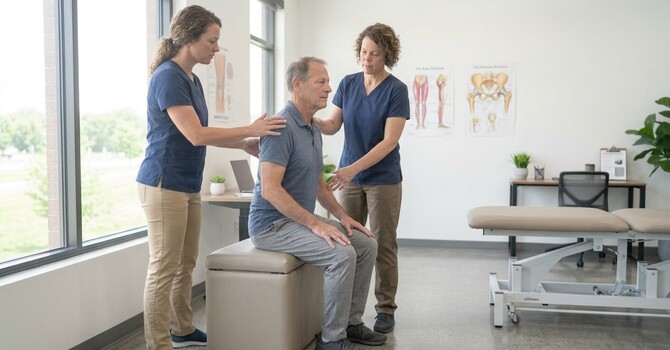
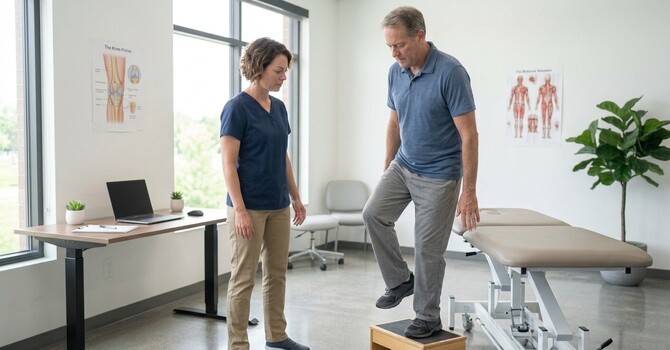
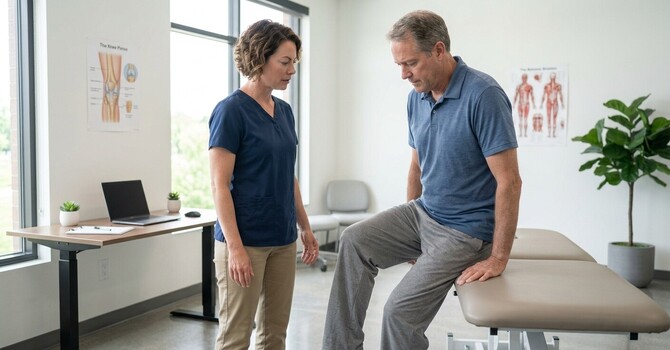
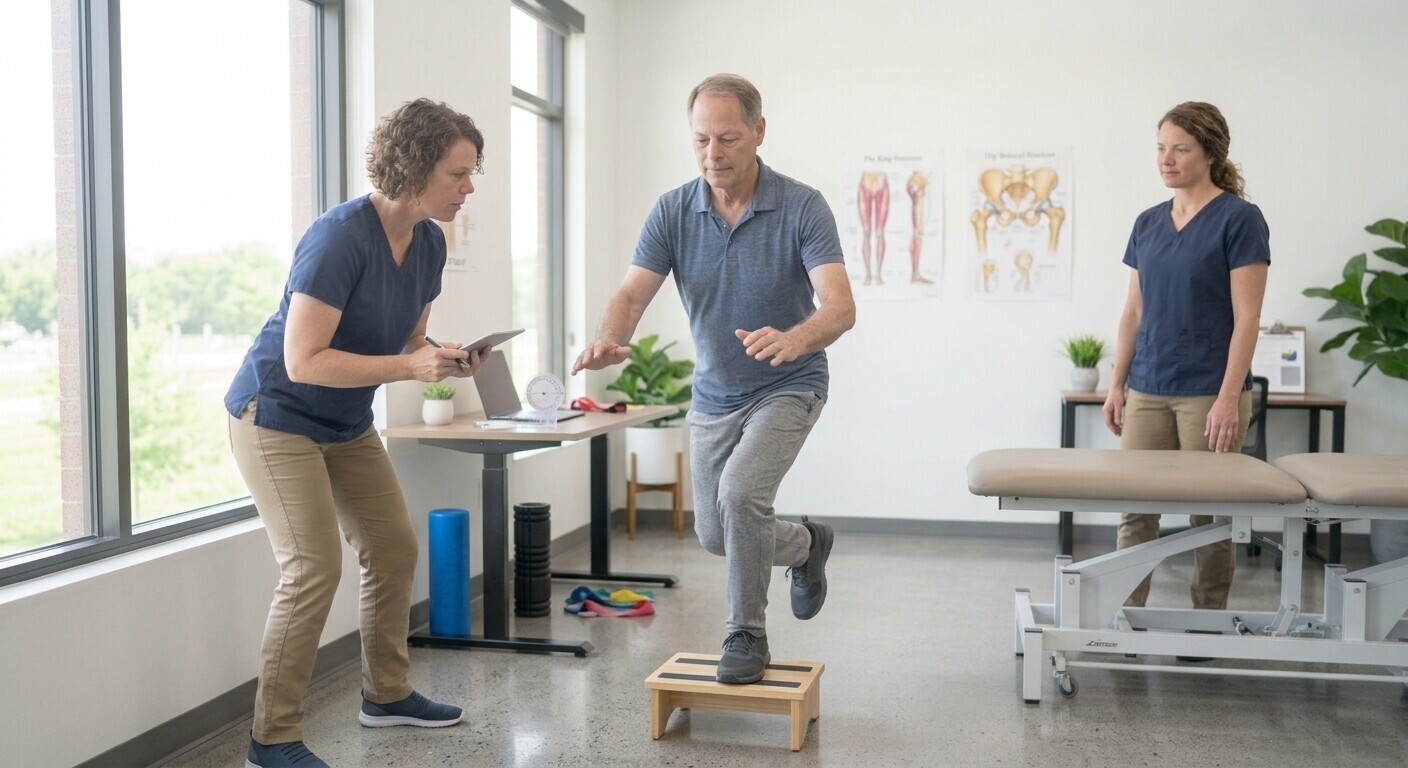
An evaluation may include hip strength and range of motion, single-leg balance, a squat, a step-down, or another task that reflects the patient's symptoms.
The clinician may compare sides, note when discomfort appears, and observe how the patient responds as the task changes. The assessment should also consider the knee itself, the ankle and foot, injury history, swelling, and other relevant signs.
These findings help build a working explanation for the symptoms. They don't guarantee that one movement pattern or muscle explains everything.
Connect the exercise to what you want to do
If you want to walk longer distances, get back to the gym, play recreational sports, or climb stairs without constantly thinking about your knee, the plan should progress toward those activities.
Strengthening is one possible part of that process. Depending on the assessment, treatment may also include activity modification, mobility work, movement practice, or referral for further evaluation.
At Optimal Health, the aim is to understand how the different parts of your movement system contribute to the task that hurts, then use that information to guide care and reassess progress.
CTA: If knee pain keeps returning during stairs, squats, or exercise, schedule an evaluation to find out whether hip strength, knee capacity, or another factor deserves attention.