Squats are part of everyday life. You squat to sit in a low chair, pick something up, work in the garden, play with your kids, and train at the gym.
So when squatting starts to hurt your knee, even simple tasks can become frustrating.
The first question isn't necessarily whether you're squatting incorrectly. It's why that particular movement is uncomfortable for you.
Squatting changes the demand on your knee
As you bend your knees, the muscles around the joint work to control your body. The demands change as you squat deeper, move faster, add weight, or repeat the movement many times.
For some people, pain is concentrated around or behind the kneecap. This can occur with patellofemoral pain, which commonly becomes more noticeable during squatting, stair climbing, or other activities that load the knee while it's bent.
Other problems can also cause squat-related pain. The location of discomfort, swelling, injury history, range of motion, and other symptoms help determine what needs to be considered.
A painful squat alone cannot tell you whether you have a cartilage problem, a tendon issue, arthritis, or another condition.
Is squat depth the problem?
Sometimes changing squat depth can reduce symptoms. A shallower squat may be more comfortable because it changes the demands placed on the knee.
But that doesn't mean deep squats are inherently harmful or that everyone with knee pain should avoid bending their knees. The right range depends on the individual, the condition, and the current level of tolerance.
The same applies to technique. Foot position, trunk position, balance, and how the hips and knees share the task may influence how a squat feels. Still, there isn't one universally correct squat that works for every body and every goal.
If you lift weights, the load and training volume deserve attention. If your pain appears while getting up from a chair, the relevant demands may be quite different.
How can you modify the movement?
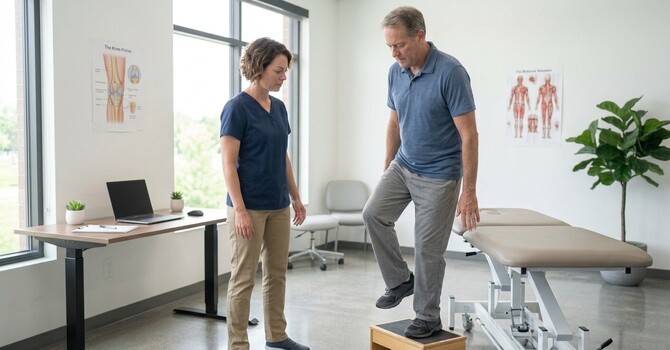
For the short term, you might reduce the depth, use a higher chair or box, remove added weight, or decrease the number of repetitions. Choose a version that lets you stay active without provoking a substantial or lasting flare.
Avoid repeatedly forcing yourself through sharp or escalating pain. If symptoms are severe, began after an injury, or come with substantial swelling, locking, or instability, seek medical assessment.
When the cause and current tolerance are better understood, progressive exercise may help rebuild capacity. Depending on the findings, that may include strengthening the quadriceps and hip muscles, improving relevant mobility, and gradually increasing squat depth or resistance.
The goal isn't to avoid every movement that feels unfamiliar. It's to find an appropriate starting point and build from there.
Your squat should reflect your real goal
Someone who wants to climb stairs may need a different progression from someone preparing to return to heavy barbell squats. A parent getting down to the floor and back up has different demands from a competitive athlete.
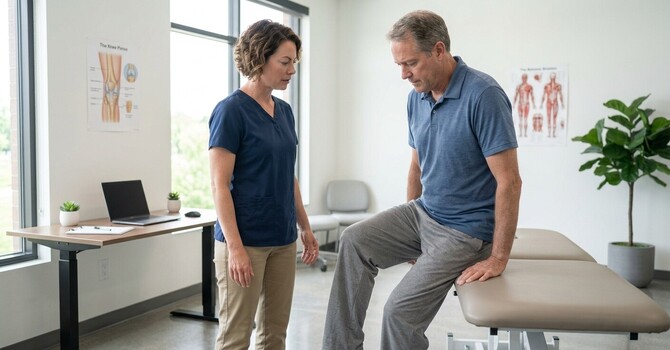
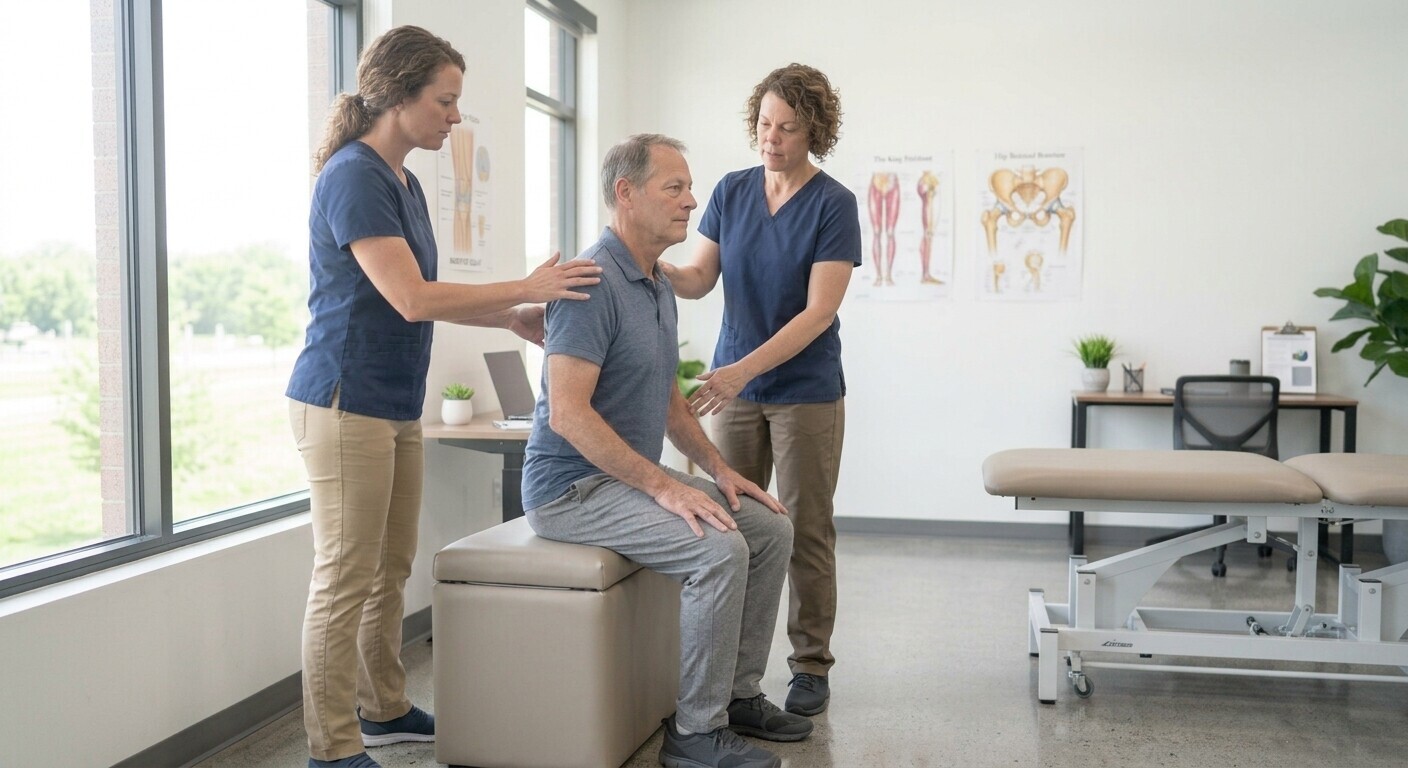
A useful evaluation considers the task that hurts, how the knee responds to different levels of demand, and what you want to return to doing. That information can guide a plan rather than relying on generic instructions to strengthen or stretch one muscle.
CTA: If knee pain is keeping you from squatting at the gym or handling everyday tasks, schedule an evaluation to better understand your symptoms and identify an appropriate path forward.