If you've ever had back pain, you've probably heard a lot of different explanations.
“It's your posture.”
“It's your core.”
“It's a disc.”
“It's your SI joint.”
“Your hips are tight.”
“Your back is out of alignment.”
Sometimes one of those factors may be relevant.
But none of them should automatically become the answer for every patient.
At Optimal Health, the starting point is understanding the individual in front of us.
First: what happened?
A useful evaluation begins with your history.
When did the symptoms start?
Was there an injury?
Did your activity level change?
What makes it better or worse?
How is it affecting your sleep, work, exercise or daily activities?
What have you already tried?
And what are you trying to get back to?
The last question matters.
A golfer, a runner, a parent, an office worker and a strength athlete may all walk into the office saying, “My back hurts.”
But their bodies are being asked to do very different things.
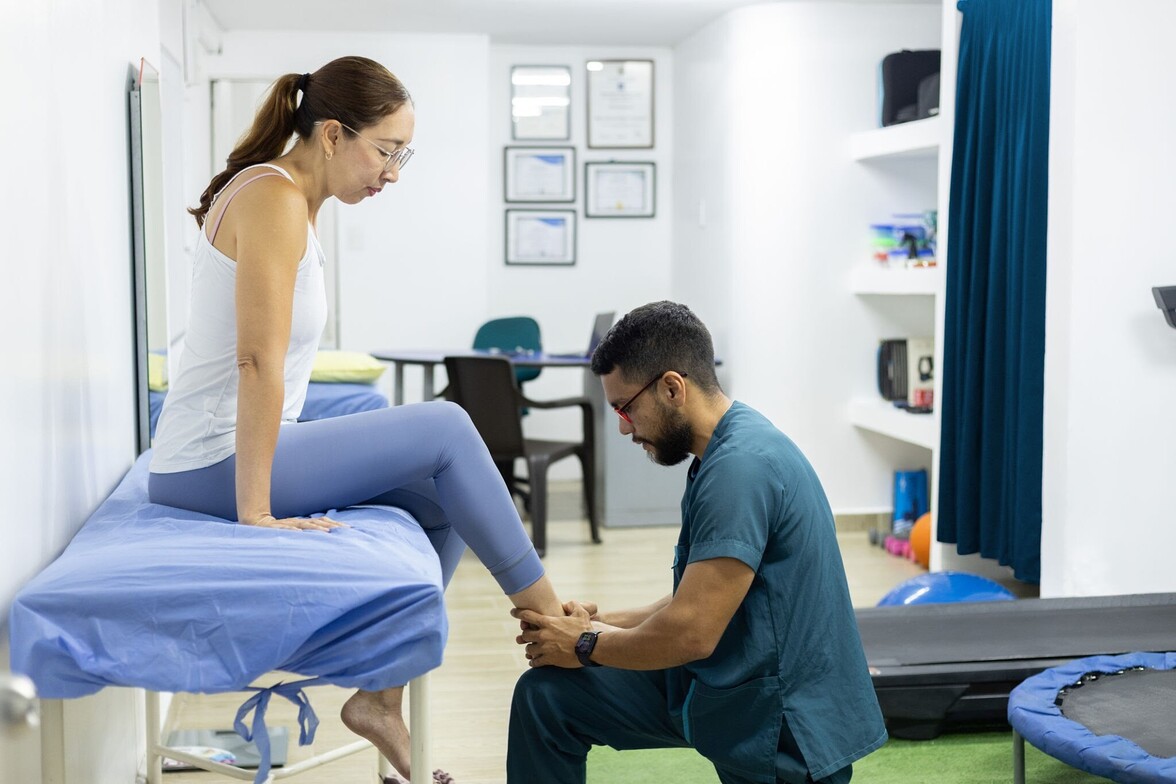
Then we examine how you move
A movement-based evaluation can include mobility, strength, coordination, balance and functional tasks.
We may look at your lumbar spine, but we don't automatically stop there.
The hips, pelvis and lower extremities may provide important information too.
We want to understand how your body handles the movements and loads that matter to you.
The curriculum's core philosophy is exactly this: evaluate the movement pattern rather than assuming the painful location tells the entire story.
We also look at how your symptoms respond
Movement isn't just something we test.
It can be information.
If a particular movement consistently changes your symptoms, that's worth paying attention to.
A clinician may use repeated movements, different positions or functional tasks to see what happens.
This doesn't mean every response gives us a definitive diagnosis.
It means we're collecting information and testing a clinical hypothesis.
Treatment should follow the evaluation
This is where individualized care becomes important.
One person may benefit from exercise focused on strength or endurance.
Another may need mobility work.
Someone else may benefit from manual therapy as part of a broader plan.
For some patients, chiropractic manipulation may be appropriate. For others, it may not be necessary.
The point isn't to use every available technique.
The point is to choose the tools that fit the person and the current stage of care.
Guidelines for low back pain similarly emphasize individualized self-management and exercise, with manual therapy considered as part of an appropriate treatment package rather than as a standalone answer.
Then we reassess
This part gets overlooked.
If we change something, we should have a reason to believe it helped.
Did your movement improve?
Did your symptoms change?
Can you perform an activity more comfortably?
Can you tolerate more load?
Has your function improved?
Reassessment helps determine whether the plan is working or needs to change.
The goal is bigger than pain relief
Pain matters.
But it's not the only thing that matters.
The bigger goal may be getting back to lifting, running, golfing, exercising, working, traveling, playing with your kids or simply moving through the day without constantly thinking about your back.
That's why we don't want every low back patient following the same script.
Your back pain is yours. Your evaluation should be individualized too.