You've probably been told to “lift with your legs” or “keep your back straight.”
Those instructions are common, but they're also incomplete.
Your spine is designed to move.
Your hips are designed to move.
And real-life lifting usually involves some combination of both.
So what's the difference between a hip hinge and bending through your back?
What is a hip hinge?
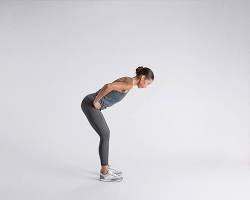
A hip hinge is a movement where you primarily move by folding at the hips while controlling the position of your trunk.
Think about pushing your hips backward to close a car door with your backside.
Or setting up for a deadlift.
Your hips move backward, your knees bend as needed, and your trunk changes position as your body coordinates the movement.
The important part isn't keeping your spine perfectly frozen.
It's learning how to control the relationship between your hips, pelvis and trunk.
What does “bending through your back” mean?
Your lumbar spine can flex, and that isn't inherently dangerous.
Spinal movement is normal.
The difference is that during certain tasks, you may want to control how much movement comes from the lumbar spine versus the hips.
For example, when lifting a heavier object from the floor, a person may benefit from using their hips and legs effectively rather than relying on repeated lumbar movement alone.
That doesn't mean lumbar flexion is forbidden.
It means movement strategy should match the task.
Why do clinicians teach the hip hinge?
The hip hinge can be useful because it gives people another way to organize lifting and bending.
It's especially relevant when you're learning to:
- Lift from the floor
- Pick something up repeatedly
- Perform a deadlift
- Load your hips and legs
- Protect your current tolerance while rebuilding capacity
It's a movement skill, not a rule that says your back should never bend.
Is bending your back bad?
No.
That distinction matters.
If we tell people that spinal flexion is dangerous, they may become afraid of normal movement.
Your spine needs to move throughout everyday life.
The goal isn't to eliminate movement.
It's to develop the ability to control and tolerate the movements your life requires.
What if your back hurts when you hinge?
Then we need to ask why.
Does the movement reproduce your familiar symptoms?
Is the load too high?
Is the range of motion too large right now?
Are your hips contributing enough?
Is your endurance limited?
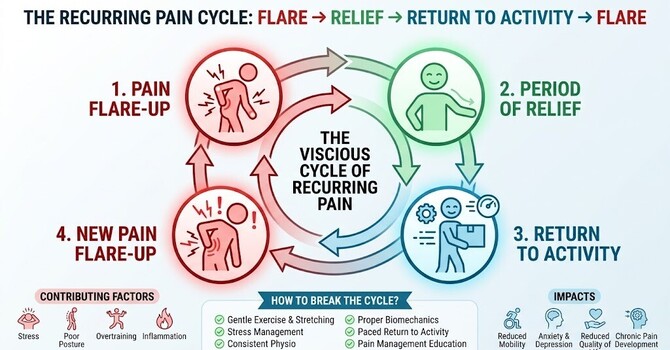
Have you recently increased your activity?
There are many possible contributors.
Simply telling someone to “hinge better” doesn't answer those questions.
Practice should eventually become useful
A hip hinge shouldn't stay an exercise you perform in a clinic forever.
If it's relevant to your goals, it should eventually show up in meaningful activities.
That might mean progressing from an unloaded hinge to lifting a light object, then a heavier object, then returning to the specific demands of your work, training or sport.
That's the difference between practicing movement and actually rebuilding function.
The bigger picture
A hip hinge is one movement strategy.
It isn't the answer to every back problem.
Some people need more mobility.
Some need more strength or endurance.
Some need to modify a task temporarily.
Some may need to work on several of these things.
The goal is to understand what your body needs and then build the capacity to perform the movements your life demands.