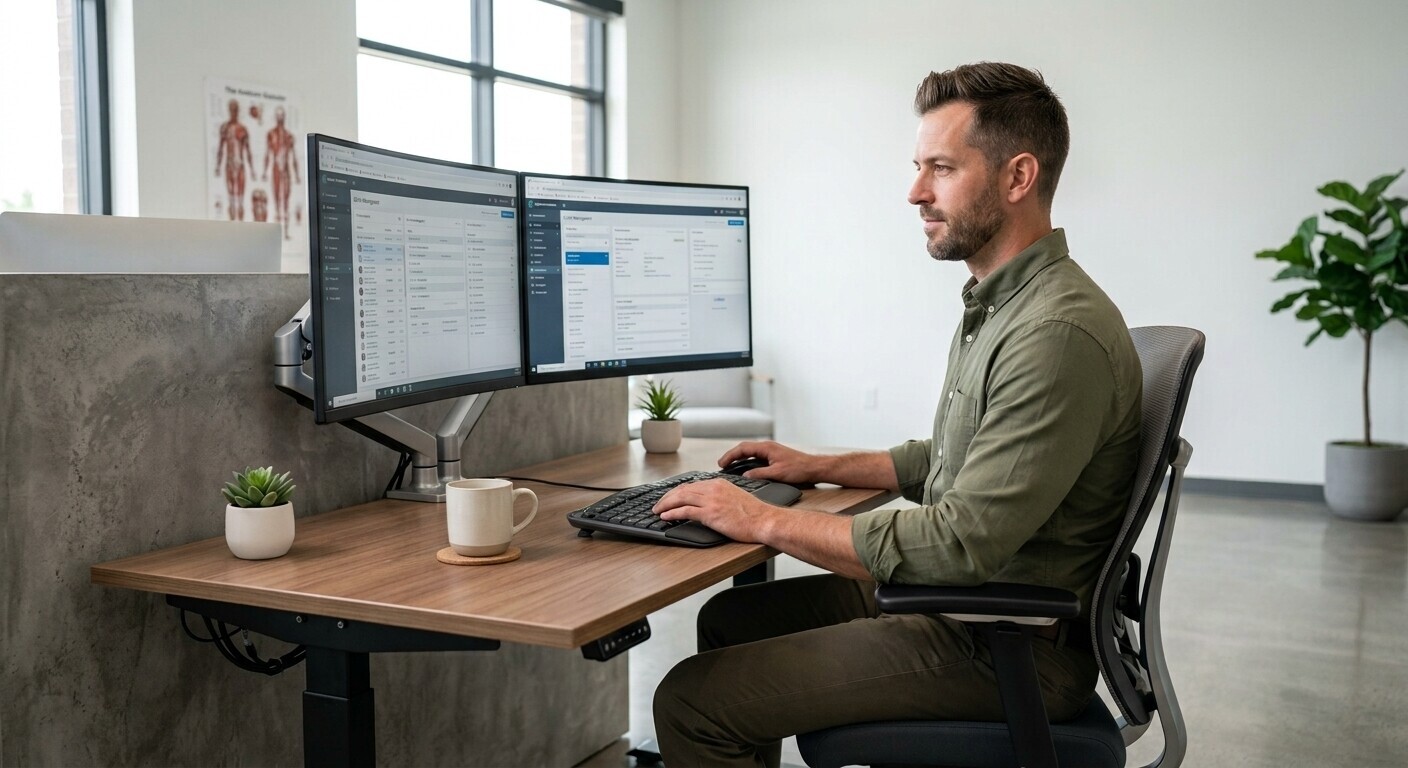
You start the workday feeling fine. By lunchtime, your shoulders feel tense. By late afternoon, your neck is stiff enough that turning your head feels uncomfortable.
If this happens regularly, you may assume your desk setup is the problem.
Your workstation may matter, but neck discomfort during computer work can involve more than chair height or monitor position.
Why symptoms can build throughout the day
Computer work often requires prolonged attention and relatively sustained positions. Even if your posture feels comfortable at first, staying in a similar position for hours can become uncomfortable.
Your symptoms may also reflect how much work you're doing, how often you take breaks, whether you are under time pressure, your current strength and endurance, and how your neck has been feeling outside the office.
That doesn't mean sitting is inherently harmful or that one posture will inevitably cause pain. It means the combination of task, duration and individual tolerance deserves attention.
Do you need a perfect desk setup?
A comfortable workstation can make work easier, but there isn't one arrangement that suits every person.
As a starting point, consider whether your screen allows you to work without repeatedly craning your neck, whether your shoulders can relax, and whether your keyboard and mouse are positioned comfortably.
More important, give yourself opportunities to change positions. You might stand briefly, walk to refill your water, move your neck and shoulders comfortably, or alternate tasks when possible.
You don't need to interrupt your work every few minutes with a complicated routine. Small, practical changes that fit your actual schedule are more likely to be sustainable.
What if changing your setup doesn't solve it?
That's where a closer look may help.
If your neck pain keeps returning despite adjustments, the problem may involve more than workstation ergonomics. A clinician may examine neck and upper-back movement, shoulder function, strength, endurance and how symptoms respond to different positions or activities.
The assessment should also consider what happens away from your desk. Do you have difficulty driving, sleeping, exercising or turning your head? Does the pain disappear on weekends, or does it persist regardless of work?
Those details help distinguish a problem that is mainly task-related from one that needs a broader assessment.
What may help?
Depending on your findings, a plan might include:
-
Comfortable neck and upper-back movement.
-
Progressive strengthening or endurance exercises when appropriate.
-
Practical changes to your workstation and work habits.
-
Gradual increases in activity tolerance.
-
Hands-on treatment as one part of care when indicated.
No single exercise or ergonomic adjustment is guaranteed to resolve neck pain. The plan should be tested against what happens during your workday and adjusted as you respond.
Your workday is part of the evaluation
If your neck pain repeatedly builds while you work, that pattern is useful information. It can help identify the demands your body is struggling to tolerate and the changes most likely to be practical.
At Optimal Health, an evaluation can help connect your symptoms with your movement and work demands. The goal isn't to make you sit perfectly all day. It's to help you work more comfortably and participate in the rest of your life without constantly thinking about your neck.