For years, we’ve been told that sitting is the problem—and that standing more is the solution. While it’s true that prolonged sitting can contribute to stiffness and discomfort, standing all day isn’t the answer either. Just like sitting too long, standing for hours without enough movement can place stress on your body and lead to pain over time.
So why does this happen?
At Optimal Health, we see this often in people across South Jersey, including those who work in healthcare, retail, education, and service-based jobs. Many spend most of their day on their feet and still experience back pain, foot pain, or tight hips—even without a specific injury.
The Problem with Standing Still
The issue isn’t standing itself—it’s standing without movement variety.
When you stay in one position for long periods, your muscles work continuously to hold you upright. Over time, this can lead to fatigue, tension, and strain. Your joints also remain in the same ranges for too long, which limits circulation and places repeated stress on the same tissues.
Just like sitting all day, standing all day creates a “static load” on the body. Without regular movement, your tissues don’t get the variation they need to stay healthy.
Why Standing All Day Can Be Hard on Your Body
The human body is designed for movement. It thrives on variety—walking, bending, twisting, and resting. It struggles, however, with static postures.
A "static posture" is any position you hold for a long time without moving. We often criticize sitting for being static, but standing still is just another form of the same problem. When you stand in one place for hours, your body has to work surprisingly hard to keep you upright against gravity.

The Fatigue of Standing Still
When you walk, your muscles contract and relax in a rhythmic cycle. This pumping action helps circulate blood from your legs back up to your heart.
When you stand still, however, your leg muscles are under constant tension to keep you balanced. They don't get that relaxation phase. Over time, this leads to muscle fatigue. Simultaneously, without the muscle pump of walking, blood and fluids can pool in your lower legs and feet, leading to that heavy, swollen feeling by the end of the day.
Joint Loading and Weight Shifting
Standing puts a significant load on your weight-bearing joints—your hips, knees, and ankles. To cope with fatigue, most of us naturally shift our weight. We lean heavily on one hip, lock our knees, or slouch our shoulders.
While this might feel like a momentary relief, "hanging" on your joints creates uneven pressure. Locking your knees, for example, shuts off your thigh muscles and transfers all the weight directly into the knee joint and lower back. Leaning on one hip jams the joint and can create imbalances in the pelvis and spine.
Common Issues from Prolonged Standing
It's important to be aware of some common problems that can arise from standing too long without enough movement variety:
- Foot Pain: This discomfort can result from pressure on the plantar fascia, leading to conditions like plantar fasciitis. The arches of the feet may also experience strain, causing aching and fatigue.
- Swelling: Standing for long hours can lead to fluid accumulation in the feet and ankles, resulting in swelling.
- Muscle Fatigue: Prolonged standing can cause muscle fatigue in the feet, legs, and lower back. Over time, this fatigue can lead to cramping and decreased strength, making it challenging to perform daily activities.
- Poor Circulation: Standing too long can impede blood flow, especially in the lower extremities. Poor circulation can cause numbness, tingling, or a feeling of heaviness in the legs and feet.
- Joint Issues: Excessive standing can place stress on the joints, particularly the knees and hips. This can exacerbate existing conditions like arthritis and lead to chronic pain over time.
Why Standing Desks Aren’t a Complete Solution
If sitting all day is bad, and standing all day hurts, what is the answer?
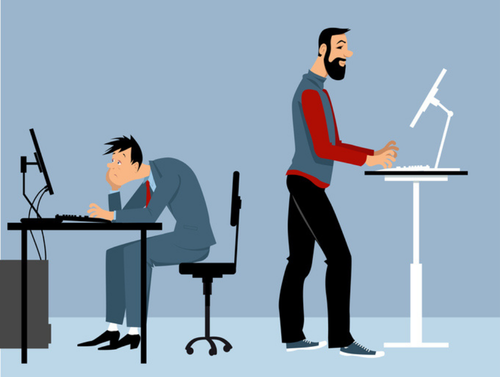
Many people bought standing desks hoping for a magic bullet, only to find themselves trading tight hip flexors (from sitting) for sore feet and lower back pain (from standing).
The problem isn't the position itself—it's the lack of variety.
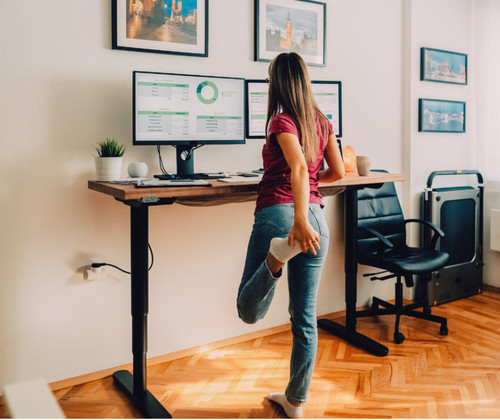
A standing desk is a fantastic tool, but only if used correctly. If you stand rigid for four hours straight, you aren't doing your body many favors compared to sitting rigid for four hours. The goal shouldn't be to stand instead of sitting; the goal should be to interrupt prolonged stillness with movement.
The "best" posture is usually your next posture.
How to Protect Your Body When Standing All Day
Whether you have a choice (like using a standing desk) or your job requires you to be on your feet (like healthcare or service industry roles), there are practical ways to reduce the strain on your body.
1. The "Captain Morgan" Stance
If you must stand in one spot, try to find a small stool, box, or ledge. Place one foot up on it for a few minutes, then switch. This simple shift changes the angle of your pelvis and takes significant pressure off your lower back.
2. Move Often, Even in Place
Don't be a statue. Shift your weight intentionally from side to side. Do subtle calf raises while you work. Walk in place for a few seconds. Any movement is better than no movement.
3. Check Your Footwear
If your job keeps you vertical, your shoes are your most important piece of equipment. Avoid completely flat shoes with no support, but also avoid high heels that pitch your weight forward onto the balls of your feet. Look for shoes with a wide toe box (so your toes can spread) and adequate cushioning.
4. Use an Anti-Fatigue Mat
If you stand at a counter or workstation, an anti-fatigue mat can make a world of difference. These mats are slightly squishy, which forces your feet and legs to make tiny, micro-adjustments to maintain balance. This subtle muscle activity helps keep blood flowing and reduces stagnation.
5. Listen to Your Body
Pain is a signal. If your back starts to ache after 45 minutes of standing, sitting down for 15 minutes isn't "failing"—it's listening. The ideal workflow often involves alternating between sitting and standing every 30 to 60 minutes.
Tips to Mitigate the Effects of Standing
- Wear Supportive Footwear: Choose shoes that provide adequate arch support and cushioning.
- Take Regular Breaks: Sit down or stretch periodically to relieve pressure on your feet and improve circulation.
- Use Anti-Fatigue Mats: If possible, use anti-fatigue mats for extra cushioning and support to help reduce discomfort from standing.
- Practice Good Posture: Distribute your weight evenly between both feet and avoid locking your knees, which can lead to strain.
- Stay Active: Activities like walking, swimming, or yoga can help improve overall foot health and endurance.
How Optimal Health Can Help
Sometimes, despite good shoes and best efforts, the pain persists. That’s where we come in.
At Optimal Health, we believe that pain shouldn't be just "part of the job." If you are dealing with chronic discomfort from being on your feet, it often points to an underlying issue in how your body is loading and moving.
We take an integrated approach to care.
- Chiropractic Care: We can check for restrictions in your ankles, hips, and spine that might be forcing you into poor standing postures. Restoring proper joint motion can help distribute your weight more evenly.
- Physical Therapy: Our therapists can assess your standing posture and identify muscle weaknesses—like weak glutes or core muscles—that are causing your back to take the brunt of the work. We can give you specific exercises to build the endurance needed for your workday.
We focus on long-term solutions, not just quick fixes. We want you to finish your shift feeling strong, not defeated.
When to Seek Guidance
If standing all day is leaving you sore, stiff, or worn down, you don’t have to push through it. Persistent discomfort is a sign that your body may need more support.
If you’re in South Jersey and spend long hours on your feet, a professional evaluation can help identify what’s driving your pain and guide you toward long-term solutions focused on education, movement variety, and sustainable care—not quick fixes.