Snow days in South Jersey can be beautiful—but shoveling after a storm can quickly turn into an unexpected source of back, shoulder, and muscle pain. Every winter, people show up at our office after hurting themselves while clearing their driveways.
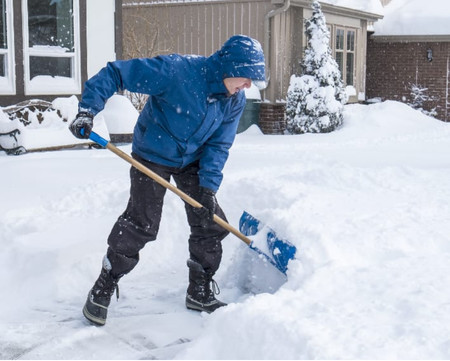
Shoveling may not feel like a workout, but it places high demand on your body—especially when you’re lifting, twisting, and working in the cold. Understanding why injuries happen and how to move smarter can help you stay safe during the next storm.
Why Is Shoveling Snow So Physically Demanding?
You might think of shoveling as just another household chore, but your body sees it as a serious workout. It combines several factors that, when mixed, can easily lead to injury.
Cold Muscles and Tissues
When you step out into the cold, your muscles, ligaments, and tendons are less flexible than they are at warmer temperatures. Think of it like a rubber band left in a freezer—it becomes stiff and brittle. Trying to do strenuous work with cold, tight muscles increases your risk of strains and tears.
The Awkward Combination of Lifting and Twisting
Shoveling snow isn't a simple lift. It’s a repetitive cycle of bending down, scooping a heavy, awkward load, and then twisting your body to toss it aside. This combination of lifting while rotating is one of the most stressful movements for the lower back, particularly for the discs that cushion your vertebrae.
It's a Full-Body, Repetitive Workout
Shoveling uses nearly every major muscle group in your body, from your legs and core to your back, shoulders, and arms. Repeating this motion over and over again for an extended period can lead to significant muscle fatigue. When your primary muscles get tired, your body starts to compensate by using smaller, less-equipped muscles, or by sacrificing good form—both of which open the door to injury.
Common Injuries from Snow Shoveling
The physical demands of shoveling can lead to several common injuries, ranging from minor aches to more serious problems.
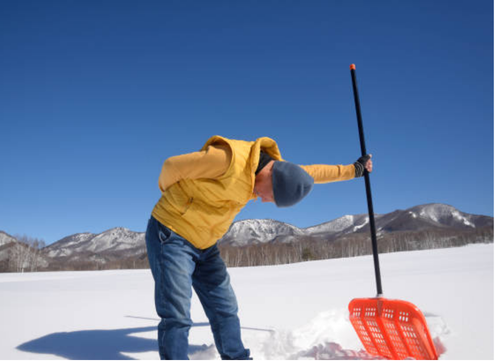
- Low Back Strain: This is the most frequent complaint. It occurs when the muscles and ligaments supporting the spine are stretched too far, causing inflammation, pain, and stiffness. It often results from improper lifting (using your back instead of your legs) or sudden twisting.
- Herniated Discs: The repetitive bending and twisting can put immense pressure on the intervertebral discs. A sudden, forceful movement can cause a disc to bulge or rupture (herniate), pressing on nearby nerves and causing sharp, radiating pain, numbness, or weakness in the legs.
- Shoulder Strain: The rotator cuff—a group of muscles and tendons that stabilize the shoulder—is particularly vulnerable during shoveling. Repetitively lifting a heavy shovel away from your body can lead to shoulder impingement or a rotator cuff tear.
- Muscle Pulls: Beyond the back and shoulders, it’s easy to pull muscles in your neck, arms, or even your glutes and hamstrings if you’re not warmed up or are using poor mechanics.
How to Shovel Safely: Your Guide to Smarter Movement
The good news is that most of these injuries are preventable. The secret isn't about having more strength; it’s about using better strategy.
Watch & Learn:
We’ve put together two helpful videos to support your safe snow shoveling:
- Proper Shoveling Form with Dr. Neil: Watch Dr. Neil demonstrate the key steps to safe and effective snow shoveling to avoid injury. Click here to watch the video.
- Self-Treatment for Lower Back Pain: If your back feels stiff or sore after shoveling, check out Dr. Rachel's top self-care tips to ease discomfort and promote recovery. Watch the self-treatment video here.
1. Warm-Up Before You Start
You wouldn’t run a 5k without warming up, so don’t tackle a driveway full of snow with cold muscles. Spend 5-10 minutes indoors getting your body ready.
- March in Place: Get your heart rate up and blood flowing to your legs.
- Arm Circles: Do 10 small circles forward and 10 backward, then 10 large circles in each direction to warm up your shoulders.
- Torso Twists: Stand with your feet shoulder-width apart and gently twist your upper body from side to side.
- Cat-Cow Stretch: On your hands and knees, gently alternate between arching and rounding your back to mobilize your spine.
- Leg Swings: Hold onto a wall or chair and swing one leg forward and backward, then side to side. Repeat on the other leg.
2. Choose the Right Shovel
Look for a shovel that is ergonomic. A curved shaft or an adjustable handle length can reduce the amount you have to bend. A smaller, lighter blade is also better—it prevents you from trying to lift too much snow at once. It’s better to move smaller loads more frequently than to risk injury with a single, heavy scoop.
3. Master the Hip Hinge, Not the Back Bend
This is the most important rule of safe shoveling.
- Stand with your feet wide, about shoulder-width apart, to create a stable base.
- Keep your back straight in a neutral position.
- Bend at your hips and knees, not your waist. Push your hips back as if you’re about to sit in a chair. This is called a hip hinge, and it loads your powerful leg and glute muscles instead of your vulnerable lower back.
4. Push, Don't Lift
Whenever possible, push the snow to the edge of the area you are clearing instead of lifting it. This dramatically reduces the strain on your entire body.
5. Keep the Load Close and Avoid Twisting
When you do need to lift, follow these steps:
- Keep the shovel blade close to your body. The further the load is from your center of gravity, the heavier it feels and the more strain it places on your back.
- Tighten your core muscles as you lift.
- Lift with your legs. Drive up from your hips and knees.
- Pivot your whole body. To throw the snow, turn your feet and hips in the direction you want to toss it. Never twist your spine while holding a load.
6. Pace Yourself and Take Breaks
Treat shoveling like a marathon, not a sprint.
- Shovel for 15-20 minutes, then take a 5-minute break to stand up straight, stretch, and rehydrate.
- If the snow is deep, remove it in layers. Skim a few inches off the top first, then go back for the next layer.
- Listen to your body. If you feel pain, stop. Pushing through it is how minor strains become major injuries.
When Pain Lingers: How Optimal Health Can Help
Even with the best technique, aches and pains can happen. If you find yourself stiff and sore after shoveling, or if you experience sharp or persistent pain, it’s important to get it checked out.
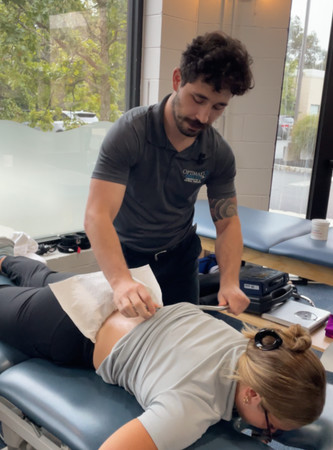
At Optimal Health, we specialize in helping people recover from musculoskeletal injuries. Our movement-based approach focuses on finding the root cause of your pain.
- Chiropractic Care can help restore proper motion to joints in the spine and extremities that may have become restricted from the strain of shoveling.
- Physical Therapy is crucial for recovery and prevention. Our therapists can provide hands-on treatment to relieve muscle tightness and guide you through specific exercises to strengthen your core, improve your posture, and teach you safer movement patterns for the long term.
Our goal is not just to get you out of pain, but to empower you with the knowledge and tools to prevent it from happening again.
Don't Let Snow Shoveling Sideline You
Living in this part of the country means that shoveling snow is a part of life. But it doesn’t have to be a source of pain or injury. By warming up, using proper technique, and listening to your body, you can keep your back safe all winter long.
If you’re dealing with pain after a recent snowstorm, don't just wait for it to go away. Let us help you recover properly and move with confidence. Whether you’re closer to our Egg Harbor Township or Washington Township clinic, our team is ready to help you feel your best.