If you've never had a movement assessment, you might imagine someone watching you squat, bend forward and walk around the room.
That's part of it.
But a good movement assessment is more than watching someone move.
It's an organized way of gathering information.
The goal isn't to find one bad muscle or one perfect posture.
It's to understand how your body is currently moving, what may be limiting you and how those findings relate to the activities you want to do.
It starts before you move
The assessment begins with your history.
What brings you in?
When did the symptoms start?
What activities make them worse?
What makes them better?
Have you changed your workout, work schedule or activity level?
What are you unable to do now?
And what do you want to get back to?
A golfer, runner, weightlifter and desk worker may all report “back pain,” but their movement demands are completely different.
Then we look at mobility
Mobility testing may include the lumbar spine, hips and other relevant joints.
But we're not necessarily looking for maximum range.
We're asking whether you have enough usable motion for the tasks you need to perform.
For example, if you're having difficulty with a squat, hip and ankle mobility may be relevant alongside your lumbar movement.
Then we look at strength and control
Strength isn't simply about how much weight you can lift.
A person may have adequate maximum strength but limited endurance.
Another person may be strong but struggle to control a movement.
Another may have difficulty producing force in a particular position.
Those differences can change the rehabilitation plan.
We look at functional movement
This is where the evaluation becomes connected to real life.
Depending on the person, that might include:
- Squatting
- Hinging
- Walking
- Stepping
- Lifting
- Reaching
- Rotating
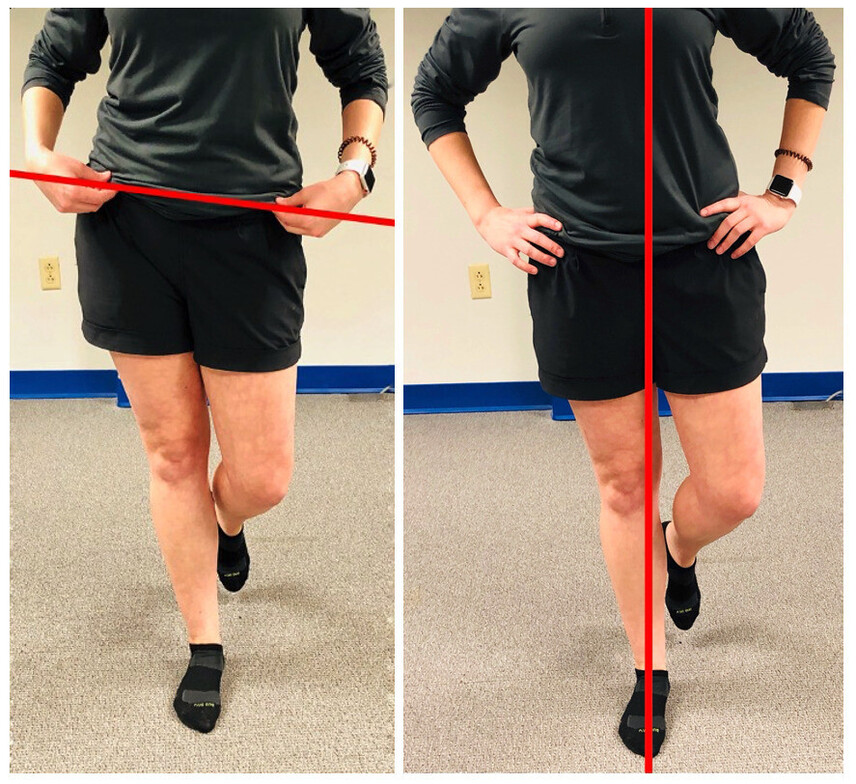
- Single-leg tasks
- Sport-specific movements
The exact tests should depend on the patient's presentation.
We pay attention to symptom behavior
Remember what we discussed earlier this week.
The way symptoms respond to movement can be useful information.
Does a movement reproduce your familiar pain?
Does changing the position change the symptoms?
Does repetition make the symptoms better or worse?
Does the pain move?
Those observations can help us develop and test a clinical hypothesis.
We don't assume every difference is a problem
This is an important part of the process.
Bodies aren't symmetrical machines.
People move differently.
A movement that looks different doesn't automatically need to be corrected.
The real question is whether the difference is relevant to the person's symptoms, function or goals.
Then we build the plan
Once the evaluation is complete, the findings should lead somewhere.
Maybe the plan emphasizes mobility.
Maybe strength or endurance.
Maybe movement retraining.
Maybe progressive loading.
Maybe manual treatment is useful as one component.
Maybe the first priority is modifying an aggravating activity while symptoms settle.
The plan should match the person.
And it should change as the person changes.
Reassessment matters
A movement assessment isn't something you do once and forget.
If treatment is working, we should see meaningful changes in symptoms, movement, tolerance or function over time.
If something isn't changing, that's information too.
It may mean the plan needs to be modified.
The goal is not perfect movement
There is no single perfect squat, hinge, walking pattern or posture that every human needs.
The goal is more practical:
Can you move?
Can you tolerate the loads your life requires?
Can you perform your work?
Can you exercise?
Can you golf, run, lift, travel or play with your kids?
Can you keep doing those things with confidence?
That's what makes a movement assessment useful.
It's not about finding what's wrong with your body.
It's about understanding your body well enough to figure out what it needs next.